The Alchemy of Friction: When Dreams of Irritation Forge Wholeness
Irritation is the psyche’s grit. It is the small, sharp stone in the shoe of the soul, the persistent buzz in a silent room, the misaligned seam in an otherwise smooth garment. In dreams, this theme rarely arrives with the grand drama of terror or ecstasy. It comes instead as a low-grade fever of the spirit, a somatic whisper that something within the system is out of phase. Before the mind can name it—conflict, frustration, resistance—the body knows. It is a clenched jaw in sleep, a tension in the shoulders that the mattress cannot soothe, a restless energy that thrums beneath the skin like a mismatched frequency. This is the Somatic Echo: not pain, but the profound discomfort of parts of yourself rubbing against each other, waiting for the conscious mind to attend to the friction.
The Dreamer's Log
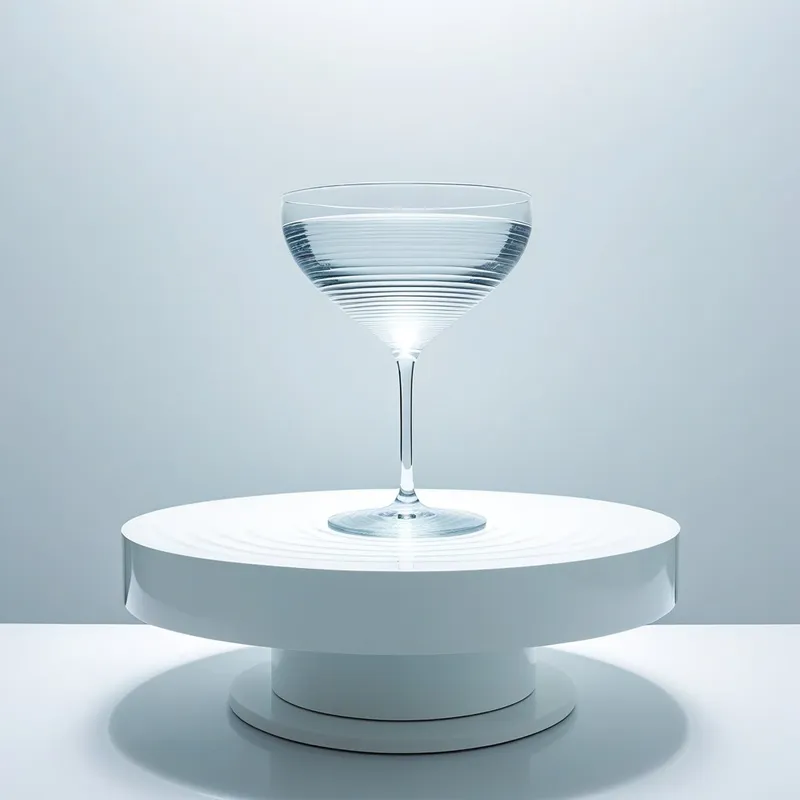
The dream is simple, maddening. I am in a white, silent room, trying to pour water from one crystal glass into another. My hands are steady, my focus absolute. Yet, every time I tilt the pitcher, the water arcs not into the waiting vessel but splashes onto the immaculate floor, a spreading stain of failure. No one is there to witness it, but the humiliation is total.
Here, the alchemical process is one of failed transmission; the essential self cannot flow into its intended vessel, creating a mess where there should be grace.
The False Lead
This is not a dream about mere daily annoyances or predicting petty arguments. To dismiss it as a psychic replay of a bad day is to mistake the symptom for the disease. The irritation in these dreams is structural, not situational. It is not about the content of the conflict—the missed train, the rude stranger, the stuck zipper—but about the architecture of conflict itself within you. It points to a fundamental impedance, a place where your energy, your will, or your truth is meeting an internal resistor. This is the psyche highlighting a faulty circuit in your being, not forecasting external bad luck.
Psychological Architecture
Beneath the dream’s surface annoyance lies the deep Shadow work of Individuation. Consider your psyche not as a monolithic self, but as an internal family—a council of parts, each with its own history, fears, and desires. The dream of irritation is the council in disarray. Perhaps the ambitious Ruler part is slamming its fist on the table, demanding order and progress, while the weary Orphan part huddles in the corner, whispering of past betrayals and the need for safety. The creative Creator wants to tear up the blueprints and start something wild, while the responsible Caregiver frets about the mess and who will clean it up.
This internal conflict is not a flaw; it is the evidence of a rich, complex psyche. The shadow here is in the disowning. We exile the “difficult” parts—the angry part, the lazy part, the fearful part—labeling them as irritants. The dream, in its frustrating logic, is dragging these exiles back into the chamber. It forces a confrontation. The grinding gears you feel are the old, rigid structure of your identity refusing to accommodate these forgotten voices. The alchemy begins when you stop trying to silence the cacophony and instead listen for the specific note each part is singing. The conflict is the heat required to melt the separations.
Mythic Resonance
We see this eternal process in the Norse myth of the god Tyr. To bind the monstrous wolf Fenrir, who represented chaotic, destructive potential, the gods needed a fetter stronger than any yet made. They commissioned the dwarves to craft Gleipnir, a ribbon forged from impossible things: the sound of a cat’s footfall, the beard of a woman, the roots of a mountain. To get Fenrir to submit to being bound, one of the gods had to place a hand in the wolf’s mouth as a pledge of good faith. Tyr, the god of law and heroic glory, offered his hand. Fenrir was bound, Tyr lost his hand, but order was preserved—at the cost of a sacred sacrifice and enduring pain. The dream of irritation is your Tyr moment. It asks: What part of your familiar, functioning self—your “hand,” your old way of grasping the world—must you willingly place in the maw of your own unresolved chaos to achieve a deeper, more binding integration? The friction is the feeling of that sacrifice being demanded.
Symbolic Nodes
- Stuck Objects: Jammed doors, keys that don’t turn, pens that won’t write, frozen screens.
- Failed Communication: Phones with no signal, mute screams, text that blurs, speaking to someone who turns away.
- Minor Contaminants: Splinters, grit in food, a hair on the tongue, a persistent stain.
- Uncooperative Environments: Slippery floors that prevent running, slow-motion resistance, gravity that feels wrong.
- Mirrors & Reflections: That are distorted, cracked, or show something subtly off about yourself.
Archetypal Resonance
The energy most active in the theme of Irritation/Conflict is that of The Shadow Ruler. This is not the Sovereign in its mature, integrative form, but the Tyrant in its latent state. The Shadow Ruler cannot tolerate dissonance; it demands absolute control, seamless order, and the suppression of any internal dissent to maintain its idea of a perfect kingdom—your personality. The somatic echo of clenched control and frustrated will is its signature. Its alchemical potential, however, is immense. The very irritation it creates is the pressure needed to break its rigid, isolating throne. By feeling the friction of its failed control, you are forced to move from tyranny to true sovereignty—a state that doesn’t silence the inner populace but learns to govern its diverse energies with wisdom and consent.
The Alchemical Process
The transmutation here is from Friction to Traction. The prima materia, the base substance, is the raw, grating experience of internal opposition. The alchemical vessel is your conscious awareness, which must hold the conflict without fleeing into distraction or forced resolution. The heat is applied by sustained attention to the irritation itself—not the story around it, but the visceral, gritty feeling.
This is the nigredo, the blackening. It feels like a stuckness, a maddening loop. The pressure builds as you resist the ego’s urge to blame an external cause or to spiritually bypass the discomfort with positivity. You must simply be present to the grind. In that heat and pressure, a separation occurs. The pure metal of your authentic need (to create, to rest, to speak, to change) begins to separate from the dross of the outdated rule (you must be perfect, you must not need, you must be agreeable). The old, tyrannical structure cracks. Then, in the albedo (whitening), a new insight emerges: the irritation was not an enemy, but a signal. It was the traction of your soul trying to gain purchase on the smooth, polished surface of a false self. The conflict transforms into dialogue; the grinding gears, once lubricated with awareness, begin to turn a new, more complex machinery of being.
The Integration Protocol
Question 1: In the dream, where exactly was the point of failure or friction? Not in the story, but in the mechanism—was it in transmission (speaking, pouring), in a tool (key, vehicle), or in the environment itself (the ground, the air)?
Question 2: If the irritating element in the dream (the stuck door, the buzzing insect, the uncooperative person) were a part of your own psyche that you have been trying to ignore or silence, what might its one-sentence grievance or demand be?
Question 3: What in your waking life feels “out of phase” in the same way—where your effort does not produce the expected, fluid result, creating a low hum of frustration instead?
Action 1 (Somatic Cartography): For one day, do not analyze your irritations; map them somatically. The moment you feel a flicker of frustration, pause. Close your eyes if possible. Where in your body is the sensation? Is it a knot, a buzz, a heat, a clench? Give it a shape, a color, a texture. Just note it. This grounds the psychic pattern in the physical vessel.
Action 2 (Unstructured Council Minutes): Take two pages of paper. On one, let the voice of the “Shadow Ruler”—the part that is furious about the mess, the inefficiency, the disobedience—write freely. Let it rant, blame, and demand. On the second page, let the voice of the “Irritant”—the stuck thing, the rebellious part, the failed tool—respond. Don’t write a dialogue; write two monologues. Then place them side by side and simply read them as minutes from a fractured internal council.
Action 3 (Ritual of Re-alignment): Find a small, simple object that represents “flow” or “ease” to you—a smooth stone, a feather, a small vial of water. Go to a threshold in your home (a doorway, a window). Hold the object and feel the current dream irritation in your body. Then, step across the threshold, and as you do, consciously state: “I carry the friction, but I step toward integration.” Place the object in a new spot in the next room. This ritualizes the movement from stuckness to intentional relocation of energy.
Final Validation
The path of irritation is a wearying one. It lacks the cathartic release of a nightmare or the glorious vision of a transcendent dream. It is the work of the psychic janitor, the mechanic of the soul, attending to the leaks and grinds in the machinery of self. This work is undramatic, deeply necessary, and profoundly sacred. Your frustration is valid; it is the honest response of a complex being encountering its own unresolved geometry. Do not spiritualize it away. Instead, honor the grit. For it is only through attending to these precise, maddening points of friction that the disparate kingdoms within you cease their civil war and learn the difficult, beautiful art of federation. The irritation is not your failure; it is your forge.