
The Somatic Architecture of Insecurity
Before it is a thought, insecurity is a tremor in the ground of being. It is not an idea of lack, but a visceral, pre-verbal knowing that the floor beneath your feet is not solid. The body registers it first: a subtle, cold hollowing just below the sternum, a slight constriction in the throat as if the air itself has thinned. The shoulders may draw in, not in fear, but in a primal instinct to protect a center that feels perilously exposed. It is the somatic echo of a foundation being tested, a silent alarm from the deep psyche that the architecture of the self is undergoing a seismic review. This is the body’s log of a structural inquiry, a feeling that the ground of your identity is not bedrock, but something more fluid and ancient, waiting to be truly met.
The Dreamer's Log
I am standing in a vast, silent library that is also a server farm. Rows of humming black towers stretch into darkness. My task is to present a crucial piece of data—a single, glowing tablet—on a central podium. But as I approach, I see the podium is made of splintering wood, and the tablet in my hands is webbed with cracks, light bleeding out from its fractures. The shadows between the server racks seem to breathe, holding a silent, judging audience.
Alchemical Interpretation: The dream reveals the core alchemy of insecurity: the terrified protector-part (the shadow) fears the exposure of perceived fragility (the cracked tablet), while the soul’s purpose (the data) insists on being delivered through that very fragility.

The False Lead
Insecurity is not a prophecy of failure, nor is it a sign of inherent inadequacy. To mistake it for such is to confuse the blueprint’s stress-test with a condemnation of the entire structure. This theme is not about the random misfortune of a storm hitting your house; it is about the profound, unsettling, and necessary discovery that the house was built upon sand, not stone. The grief and terror are not warnings of impending collapse, but invitations to a more honest and resilient foundation. It is the psyche distinguishing between a temporary setback and a fundamental call to rebuild.
Psychological Architecture
To engage with insecurity is to enter the shadowlands where the Inner Critic holds court, but it is a court built over a fault line. This is deep Shadow work—the process of meeting the exiled parts of ourselves that carry the belief “I am not enough.” These are often young, frozen aspects: the child who was shamed for a mistake, the adolescent whose authenticity was met with rejection. In the individuation process, insecurity arises when the conscious persona—the face we show the world—is being outgrown. The old identity feels shaky because a larger, more authentic Self is pressing upward from the unconscious, demanding a wider foundation. The insecurity is the tremor of expansion, the old walls cracking to make room for a greater sovereignty. It is the death rattle of a outmoded self-concept, masquerading as a threat.
Mythic Resonance
We see this universal firmware in the myth of Psyche and her tasks. Sent to the underworld by a jealous Aphrodite, Psyche’s final and most perilous task is to fetch a box of beauty cream from Persephone. She is given specific instructions: do not open the box. Overcome by a creeping insecurity—Is it enough? Am I enough for Eros without this divine beauty?—she opens it, only to be plunged into a deathlike sleep. The insecurity was not a moral failing, but the crucial flaw that led to her ultimate transformation and apotheosis. Similarly, the Wizard of Oz presents a collective dream of insecurity: the Scarecrow, Tin Man, and Lion all project their sense of lack onto an external authority (the Wizard), only to discover the sought-after qualities were within them all along, awaiting integration. The trembling yellow brick road is the path of insecurity itself.
Symbolic Nodes
- Exposed or Crumbling Structures: Buildings with missing walls, shaky bridges, dissolving floors.
- Being Unprepared or Naked: Finding oneself on stage without lines, in an exam for a class never taken, or publicly unclothed.
- Faulty or Lost Tools: Pens that won’t write, keys that don’t fit, weapons that shatter.
- Shifting or Unstable Ground: Quicksand, earthquakes, walking on water that begins to give way.
- Critical, Unseen Audiences: Faceless crowds, whispering shadows, judging silhouettes.
Archetypal Resonance
The energy of insecurity finds its most potent expression in The Shadow Ruler. The core Ruler archetype seeks to create order, structure, and a secure, thriving kingdom—in this case, the inner kingdom of the Self. Its shadow emerges when that drive for order curdles into a terror of chaos, leading to rigid control, tyranny over one's own emotions, and a deep-seated fear of being exposed as an illegitimate sovereign. The somatic echo—the hollow, shaky feeling—is the Shadow Ruler’s panic that its control is an illusion, that the kingdom is built on sand. The alchemical potential lies in the fire of this realization: to move from the Shadow Ruler’s brittle, fear-based control to the mature Ruler’s capacity to establish true, flexible, and compassionate sovereignty from within, building a kingdom worthy of the soul.
The Alchemical Process
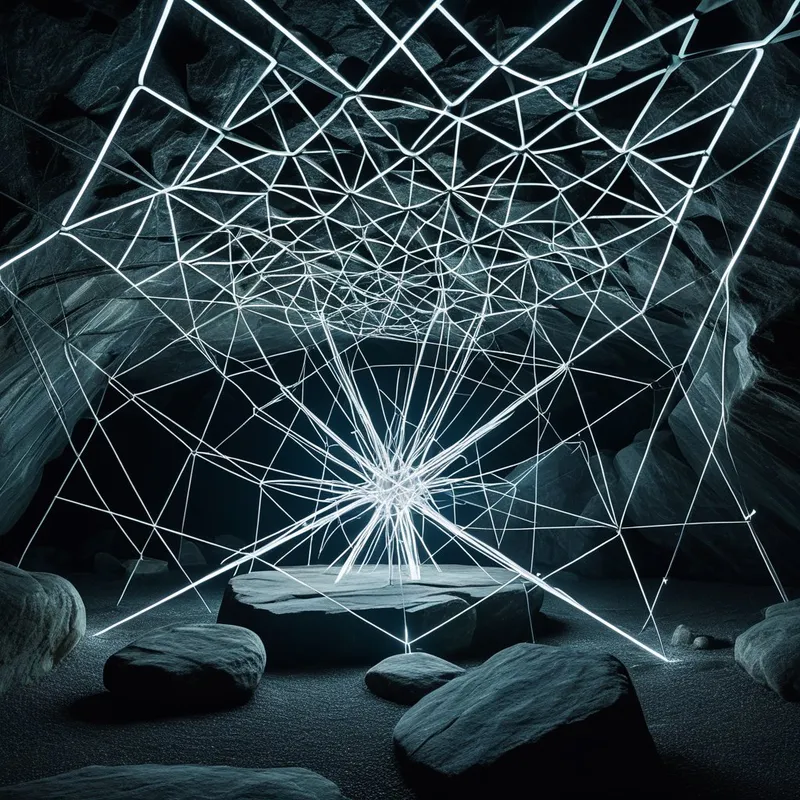
The transmutation of insecurity requires the heat of conscious endurance. The prima materia is the raw, shame-filled belief of “I am not enough.” The alchemical fire is applied by consciously dwelling in the discomfort without fleeing into distraction or grandiosity. This is the solve—the dissolution. You must allow the shaky ground to truly shake, to feel the full terror of the crumbling podium, to witness the cracked tablet in your hands without throwing it away. This heat burns away the illusion of the perfect, impermeable self. Then comes the coagula—the coagulation. From the ashes of the old identity, you consciously gather the scattered, real materials: not the fantasy of flawless strength, but the authentic qualities of resilience learned through failure, compassion born of your own fragility, and wisdom earned in the dark. You rebuild the inner citadel not on the fantasy of unshakable bedrock, but on the conscious, chosen acceptance of the ever-shifting, creative ground of your own being.
The Integration Protocol
Question 1: When you feel the somatic hollow of insecurity, what is the first, oldest memory or feeling that whispers beneath the panic? Don't analyze it—just describe its texture and age.
Question 2: If the part of you that feels insecure were a character guarding a sacred but wounded treasure, what is it protecting, and what does it fear will happen if it stands down?
Question 3: Imagine your sense of self as a structure. Is the insecurity signaling a needed repair to a weak joint, or the necessary demolition of an entire wing to make space for something new?
Action 1 (Somatic Re-grounding): When the tremor arises, place both feet flat on the floor. Breathe deeply into the hollow space below your sternum. With each exhale, imagine roots growing from your feet, not seeking solid rock, but weaving into the shifting earth itself, finding stability through connection and flexibility, not rigidity.
Action 2 (Unstructured Expression): Take a large piece of paper and two contrasting drawing tools (e.g., a soft charcoal and a metallic pen). With your non-dominant hand, let the charcoal express the feeling of the "shaky ground"—its form, its chaos. Then, with your dominant hand, use the other tool to draw how you would choose to build upon that exact ground. Do not create a perfect structure; create a dialogue between the chaos and the choice.
Action 3 (Ritual of Sovereign Acceptance): Find a small stone or object. Hold it, feeling its weight and texture. Acknowledge aloud: "This is solid, and it is limited. I am fluid, and I am limitless." Then, place the object in a bowl of water, observing how its solidity is now held by a greater, adaptive element. Let it sit on your altar as a reminder that sovereignty is not about being an unmoving stone, but about being the conscious vessel that holds both stone and water.
Final Validation
To walk with insecurity is to consent to a profound and often lonely humility. It is the erosion of convenient fictions, and that erosion hurts. Honor that difficulty; it is the honest cost of authenticity. Yet within that very tremor lies your emancipation. The ground shakes not to bury you, but to break open the sealed chambers of a self-built prison. From this raw and honest place—the only true place—you are granted the supreme authority: to become the architect of your own foundation, choosing, at last, to build upon the unshakeable ground of what you truly are, not what you fear you are not. The insecurity was the messenger. The rebuilding is your sovereignty.