
The Unvarnished Core: Dreaming of Inner Truth
The Somatic Echo
It begins not as a thought, but as a pressure. A tectonic shift deep in the viscera, a silent tremor that travels up through the diaphragm to lodge itself behind the sternum. This is the somatic echo of Inner Truth—a dense, undeniable weight that feels both foreign and profoundly familiar. It is the body’s archive activating, a cellular memory surfacing before the mind’s elaborate defense systems can spin their narratives. You might feel it as a sudden hollowness in the gut when you speak a polished lie, or a grounding solidity in the bones when you finally utter a difficult fact. It is the pre-verbal compass, the internal gyroscope that recalibrates in the dark. Before an image forms in the dream, this is the signal: a deep, internal yes or no that resonates in the marrow, bypassing all negotiation.
The Dreamer's Log (Case Vignette)
In the dream, I am in my apartment, but it is stripped bare, all personal items gone. On a glass table in the center of the empty room sits a single, heavy book I’ve never seen before. Its leather cover is worn, and it emits a soft, persistent light. I am terrified to open it, knowing its contents will change everything.
Here, the psyche presents its foundational record, the unedited ledger of the self, in a space purged of distraction. The terror is not of the truth itself, but of the irrevocable responsibility that comes with knowing it.

The False Lead
This theme is not about receiving a convenient answer, a cosmic thumbs-up, or a divine instruction manual. It is not a message of “good luck” or “bad luck.” To mistake it for such is to confuse the bedrock with the weather. The dream of Inner Truth is often profoundly unsettling because it dismantles the convenient fictions we live by. It is the structural engineer’s report on the integrity of your soul’s architecture, not a fortune cookie. It points to a fundamental realignment, not a superficial event. The grief or terror it carries is the death rattle of an old, unsustainable story.
Psychological Architecture
To encounter this theme is to be summoned to the deepest level of Shadow work—not to battle monsters, but to audit the kingdom. It is the process of Individuation in its most raw form: the conscious assimilation of contents that have been exiled for being too painful, too glorious, or too disruptive to the persona’s polite society. This is not about adding a new trait to your collection; it is about discovering the immutable core around which the collection was built. The psyche, in its infinite wisdom, uses the dream state to stage this confrontation in a space where the ego’s guards are off-duty. You are presented with the neglected child of your intuition, the banished king of your authority, or the silenced witness of your trauma. Integrating this is not an act of will, but one of surrender—a willingness to let the false self contract and crack so the essential self can breathe.
Mythic Resonance
We see this eternal process in the myth of Psyche and Eros. Psyche’s ultimate task, after her many trials, is not to fight a beast but to journey to the underworld and retrieve a box of beauty from Persephone. The catch? She is forbidden to look inside. Of course, she opens it, and is plunged into a deathlike sleep. This is not a punishment for curiosity, but the final, necessary ordeal. The “beauty” in the box is the unmediated truth of her own mortal, complex, and divine nature—a truth so potent it obliterates her current consciousness. Her awakening comes only through Eros’s intervention, symbolizing that the integration of such a truth requires the healing touch of a deeper, more authentic love (for the self). The truth does not set you free while you remain as you are; it first annihilates the you that is built on falsehood.
Symbolic Nodes
- Unopenable/Glowing Containers: Locked boxes, sealed scrolls, radiant books, encrypted drives. The truth is present but not yet accessed.
- Bare or Architecturally Exposed Spaces: Empty rooms, houses stripped to their beams, skeletal frameworks. The stripping away of persona to reveal structure.
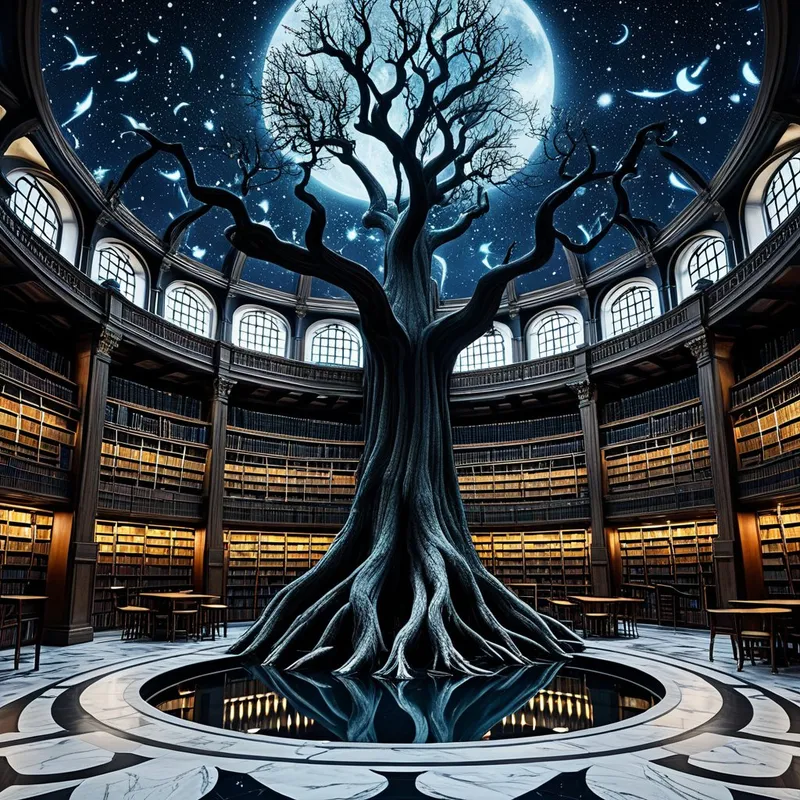
- Immutable Natural Objects: A single, unmovable stone; an ancient, deep-rooted tree; a persistent underground spring. Symbols of enduring, foundational reality.
- A Relentless Sound or Pulse: A heartbeat from the walls, a hum from the earth, a distant, unignorable bell. The truth as a rhythmic, somatic fact.
- A Mirror That Shows Something Else: Reflecting a childhood self, a future self, or a distorted, essential shape. The truth about identity.
Archetypal Resonance
The energy of this theme resonates most powerfully with The Sage Archetype, particularly in its pure, seeking form before it calcifies into the Shadow Sage’s dogma. The Sage’s core drive is the discovery of truth for the purpose of inner understanding and enlightenment. This archetype does not seek truth to control others (the Ruler’s domain) or to rebel against something (the Rebel’s fuel), but to know, fundamentally and without illusion. The somatic echo of a Sage-activated truth is that deep, quiet certainty in the gut, the “aha” that feels less like a spark and more like a settling. The alchemical potential here is the transformation of confusing, painful, or fragmented life experiences into coherent wisdom—not intellectual knowledge, but embodied knowing that guides from within.
The Alchemical Process
The alchemy of Inner Truth is the Opus Contra Naturum—the work against the habitual nature. The base metal is the compounded narrative of the adapted self, layered over a lifetime. The heat is applied not from without, but from the intense, uncomfortable pressure of the truth itself as it insists on recognition. This is the nigredo, the blackening: the despair and disorientation as old certainties crumble. The fire is the sustained courage to stay with the feeling, to open the book in the dream, to listen to the hum in the walls. The transmutation occurs in the albedo, the whitening, when the chaos begins to re-order around this new, central fact. The profound sovereignty—the gold—is earned when you realize the truth was not an external verdict to be feared, but the very ground of your being you had forgotten. You become the author of the book, not its terrified reader.
The Integration Protocol
Question 1: In the dream, what was my most immediate, visceral feeling before my mind offered a story or interpretation about what was happening?
Question 2: What one belief or story about myself, others, or the world would become impossible to sustain if the truth presented in this dream were fully accepted?
Question 3: If this Inner Truth were a benevolent but firm guardian, what is it protecting me from continuing to do or be?
Action 1 (Somatic Anchoring): For one minute upon waking, place a hand over your sternum and simply feel the physical quality of your body. Do not analyze the dream. Note only sensations: weight, temperature, density, vibration. This grounds the revelation in the corporeal self.
Action 2 (Unstructured Scripting): Set a timer for 10 minutes. Write from the perspective of the central dream symbol (the book, the stone, the pulse). Let it speak. Use the prompt: "What you do not yet understand about me is..." Do not edit or judge the output.
Action 3 (Ritual of Acknowledgment): Find a small, natural object—a stone, a twig, a leaf. Hold it and privately, aloud, state one simple, difficult truth the dream has pointed toward. Then, place the object somewhere in your living space where you will see it daily, not as a shrine, but as a neutral witness to your new foundation.
Final Validation
This is not easy work. To feel the ground of your self-concept shift is one of the most disorienting experiences a human can endure. The terror is real; the grief for the simpler, untrue story is valid. Honor that. And then, consider this: the dream did not show you this truth to destroy you. It showed you because you are now strong enough to hold it. The psyche only reveals its deepest blueprints to a consciousness that has earned the right to read them. The truth was always there, a silent, supporting pillar in the dark. The dream is simply the light by which you finally see it—and in seeing, begin to build a life that rests upon something real.