The Civil War Within: Dreaming of Inner Conflict
It begins not as a thought, but as a tremor. A deep, somatic dissonance. You feel it in the clenched jaw that greets the morning, the tightness across the shoulders that no stretch can release—a body holding two opposing truths at once. It’s the stomach that knots in both fear and longing, the breath that hitches, caught between an inhale of desire and an exhale of duty. This is the Somatic Echo of inner conflict: the physical ground zero where psychic factions have declared a silent war. The mind will later craft stories of indecision, but the body knows the truth first. It is the site of a profound structural tension, a living paradox where you are both the battlefield and the opposing armies.
The Dreamer's Log
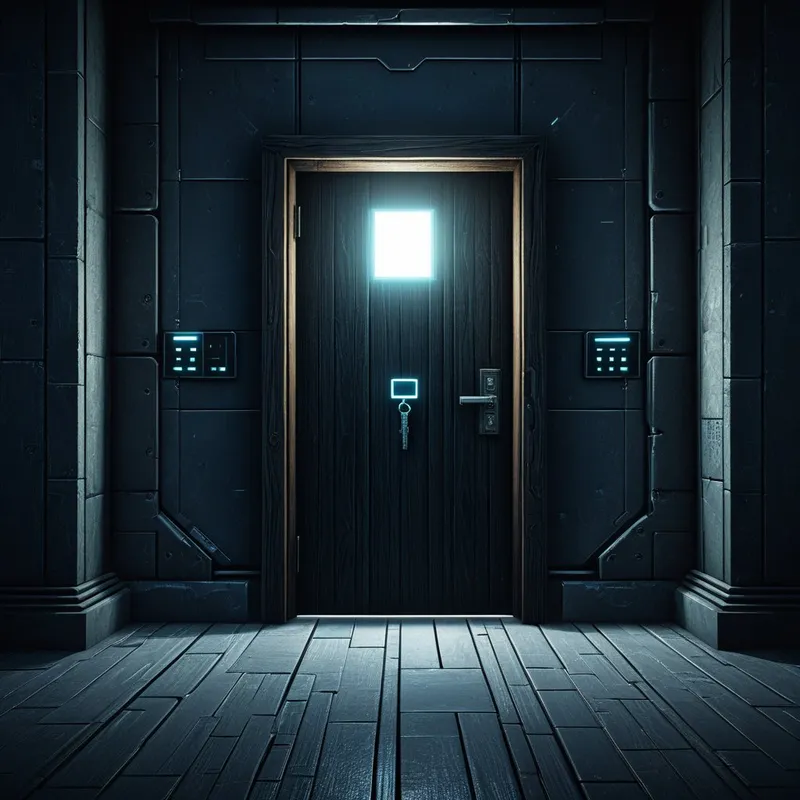
I am standing in a vast, humming server room, all cold steel and blinking blue lights. I hold a modern keycard, but the only exit is a single, ancient wooden door, locked with a heavy iron padlock. I know the keycard is useless, yet I cannot stop swiping it against the old, grainy wood, over and over, as the hum of the servers grows into a deafening roar.
Alchemical Interpretation: The dreamer’s modern, logical mind (keycard) is futilely attempting to solve a problem of the soul (ancient door) that requires an older, forgotten wisdom.
The False Lead
This is not mere indecision, the trivial paralysis of choosing between vanilla and chocolate. Nor is it the external friction of “bad luck” or opposition from the world. To mistake it for such is to pathologize a sacred process. Inner conflict, in its profound form, is the signal of a system upgrading its firmware. It is the death rattle of an outdated self-concept and the birth pangs of a more complex one. The tension is not a flaw to be eliminated, but a forge to be entered.
Psychological Architecture
To understand this architecture is to step into the parliament of the self. You are not one voice, but a chorus—often a cacophonous one. The responsible ruler argues with the wild rebel. The cautious orphan pleads with the boundless explorer. The nurturing caregiver silences the hungry lover. In our daylight hours, we appoint a dictator—a single, acceptable persona—to maintain order. But in the sovereign state of the dream, the parliament is in session, and every faction has the floor. Shadow work here is not about hunting monsters in a dark cellar; it is the delicate, fierce diplomacy of granting asylum to exiled parts of your own being. It is recognizing that the voice screaming “You can’t!” is not an enemy, but a protector frozen in an old trauma, speaking the only language it knows. Individuation is not the victory of one faction over the others, but the arduous, alchemical process of building a container spacious enough to hold them all—to transform a civil war into a commonwealth of the soul.
Mythic Resonance
We see this eternal drama in the Mesopotamian epic of Gilgamesh. Here is a king, two-thirds divine, one-third human—a being of inherent conflict. His unchecked, tyrannical energy (the Shadow Ruler) meets its match in Enkidu, the wild man of nature. They clash in a titanic struggle, a perfect metaphor for the conscious ego confronting the untamed instinctual self. They do not destroy each other. Instead, their conflict transmutes into a profound bond. This is the mythic blueprint: the fiercest inner war often precedes the birth of your greatest ally, the part of you that complements rather than opposes, initiating the journey toward wholeness.
Symbolic Nodes
Dreams of inner conflict speak in the language of impossible choices and paralyzed will:
- Being Chased, Yet Running in Slow Motion: The body’s imperative versus a crippling inertia.
- A Vehicle with Failing Brakes or No Steering: The loss of agency between competing impulses.
- Two Doors, Two Paths, Two Lovers: The classic symbol of a dichotomized self.
- A Broken Tool or Weapon at a Critical Moment: The failure of a once-trusted psychological function.
- A House with a Secret, Warring Room: The self containing a compartmentalized, unresolved trauma.
Archetypal Resonance
The energy at the heart of profound inner conflict is most purely embodied by The Rebel Archetype. Not its shadow form of anarchic destruction, but the Rebel in its essential, revolutionary function. Its somatic echo is that electric jolt of “no” that tightens the muscles, the heat of a boundary being drawn. The Rebel’s core drive is to tear down what is not authentic, to dismantle the internal prison of shoulds and inherited scripts that cause the conflict in the first place. Its alchemical potential lies in its ruthless commitment to truth—not to leave you in ruins, but to clear the ossified structures so the true, sovereign self can be built. The conflict arises when this archetype turns its revolutionary gaze inward, declaring war on the inner tyrant, the outdated rulebook, the compliant persona that has long outlived its purpose.
The Alchemical Process
The transmutation of inner conflict is not a gentle negotiation; it is a descent into the nigredo, the blackening. It requires the intense heat of holding the tension of the opposites without fleeing into the comfort of one side or the other. You must let the protector and the risk-taker scream at each other within you. You must feel the full grief of the orphan who believes safety is everything and the full terror of the explorer for whom safety is a cage. This pressure-cooker state is the alchemical fire. The “gold” that emerges is not a resolution where one side wins, but a third, transcendent perspective—the Sovereign Self. This Sovereign is the magician who can hold the dialectic, who understands that courage needs caution as a grounding wire, and passion needs responsibility as a vessel. The warring elements don’t disappear; they become integrated, like sparring partners who make each other stronger, their conflict now a dynamic dance that fuels a more resilient, adaptable whole.
The Integration Protocol
The work begins not with choosing a side, but with witnessing the battle with compassionate curiosity.
Question 1: If the two opposing forces in my dream were allowed to speak freely, without judgment or the need to win, what would each one truly want—not for the other, but for me?
Question 2: What old, internal rule or forgotten vow is this conflict attempting to shatter? What contract with myself is up for renegotiation?
Question 3: Where in my waking life do I feel this same somatic echo—that specific clutch in the chest or knot in the stomach—and what tiny choice am I avoiding there?
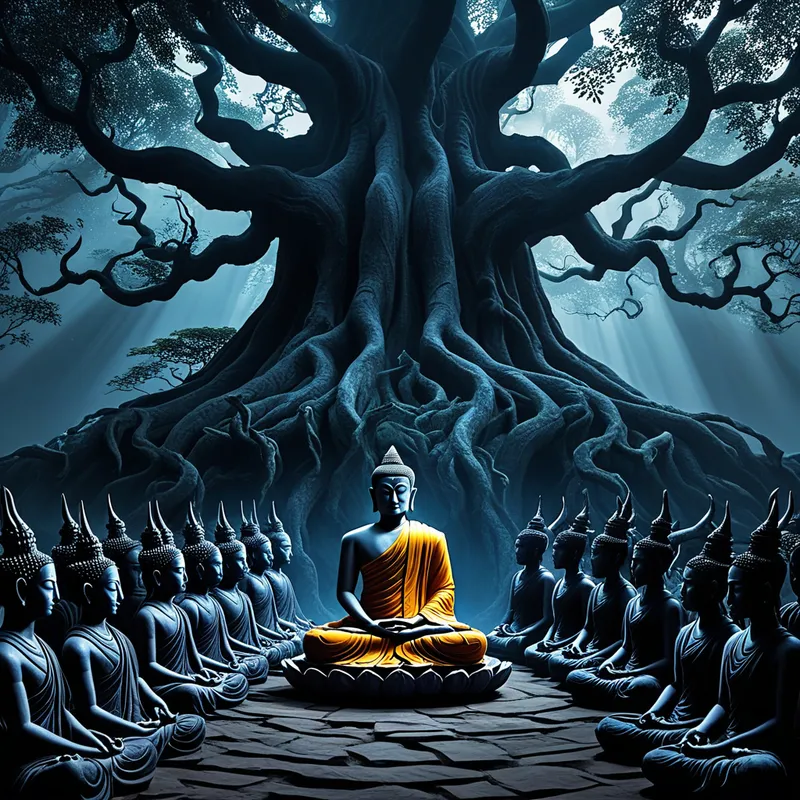
Action 1 (The Internal Council): Sit in quiet meditation. Visualize the two warring figures from your dream (or feeling-states) sitting across from each other. Instead of listening to their arguments, feel the core need behind each position—safety? freedom? expression? connection? Acknowledge each need as valid. Your goal is not to decide, but to understand.
Action 2 (Ambidextrous Journaling): Take a physical notebook. On the left-hand page, write from the voice of one side of the conflict. Let it rant, plead, and justify. On the right-hand page, let the opposing voice answer. Use your non-dominant hand for one of the voices. This bypasses the inner censor and gives literal, physical expression to the divided self.
Action 3 (Ritual of Synthesis): Find two small objects that symbolically represent the opposing forces (e.g., a smooth stone for stability, a feather for flight). In a quiet space, hold one in each hand. Feel their weight, their texture. Slowly, bring your hands together, allowing the objects to touch. Place them side-by-side on a small cloth or in a box, creating a dedicated space where they can coexist. This simple ritual physically enacts the creation of a container that holds the tension.
Final Validation
This friction is agonizing. To feel at war with yourself is a special kind of loneliness, a fracture at the very core of being. It is exhausting. Honor that. You are not broken because you contain multitudes; you are human because of it. This conflict is not a sign of failure, but a testament to your depth—a signal that parts of you, long silenced, are now strong enough to demand a seat at the table. The path forward is not through annihilation of one side, but through the courageous, alchemical hospitality of inviting all of you home. The integration is the sovereignty.