
The Sovereign in the Shadows: Dreams of Independence
The Somatic Echo
Before the mind conjures images of open roads or solitary rooms, the body knows. It is a specific, hollow ache behind the sternum—not of loneliness, but of a profound, echoing vacancy where a foreign will once resided. The shoulders feel lighter, yet strangely unaccustomed to their own weight, as if a supporting hand has been removed and the muscle memory of leaning must now be unlearned. There is a cool, clear vibration in the spine, a sensation of vertical alignment that feels both terrifying and electrically correct. The breath comes from a deeper, more private well. This is the somatic prelude to independence: the visceral recognition of a psychological tenant moving out, leaving you alone in the architecture of your own being.
The Dreamer's Log (Case Vignette)
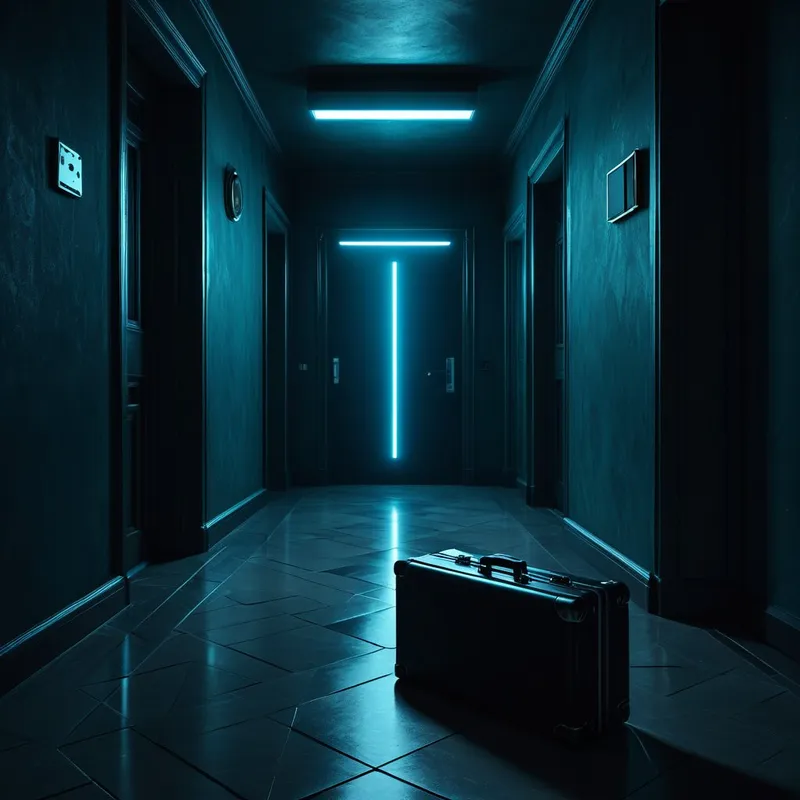
I am in a beautiful, fully furnished apartment that is not mine. Everything is tasteful, but it feels like a museum. I walk to the bedroom and find my own suitcase, packed and zipped, sitting on the bare floor. Without a word to the absent occupants, I pick it up. The door unlocks from the inside. I step into an empty, white hallway that stretches into infinity, and the weight of the suitcase in my hand is the only thing that feels real.
This dream is not about leaving a place, but leaving a role; the suitcase contains not clothes, but the condensed essence of a self that can travel light, departing the furnished set of another person’s expectations.
The False Lead
Do not mistake this theme for mere rebellion or isolation. Independence is not the petulant slam of a door, nor is it the lonely exile of the hermit. Those are its shadows, its caricatures. The dream of true independence is rarely angry or desolate; its core emotion is a solemn, awe-filled gravity. It is not about destroying a bond, but about discovering the irreducible core of self that exists prior to any bond. It is the difference between cutting a puppet’s strings and realizing you were never a puppet to begin with—you were only performing the motions of one. A dream of mere "escape" is often frantic, pursued. A dream of sovereignty is calm, deliberate, and initiated from within.
Psychological Architecture
This dream marks the most delicate and dangerous operation within the psyche’s internal family system: the moment the Self—the innate, central organizing principle—must diplomatically yet firmly relieve the inner Caregiver, Ruler, or Orphan of their provisional executive authority. These are the parts that, for survival, internalized the rules, fears, and blueprints of our early world. They built the government-in-exile that has been running things from a script written by others.
The shadow work here is exquisite and painful. It requires you to sit in council with these loyal, terrified inner ministers and thank them for their service—for keeping you safe, for getting you this far—while gently informing them their term has ended. The grief is real. You are grieving the loss of an identity that was, however constricting, coherent. You are facing the terror of the blank page, of the unmapped territory of your own authentic desires. This is the heart of Individuation: not becoming "special," but becoming specific. It is the process of differentiating your own law from the inherited constitution, of moving from a subject in your own psyche to its sovereign.
Mythic Resonance
We see this alchemy in the story of Theseus. His journey to Athens to claim his birthright is not the myth; that is merely travel. The myth is his voluntary journey into the Labyrinth. He does not destroy it from the outside. He enters the terrifying, complex maze—a perfect symbol for the internalized, confusing rules of a oppressive legacy (in his case, King Minos’s demand for tribute). He navigates it to its center, confronts the monstrous embodiment of that legacy (the Minotaur, born of a broken vow), and then, crucially, he finds his way back out using his own thread. The thread is not a rescue from the outside; it is the nascent, fragile line of his own consciousness, laid down as he walks in, so he can walk out under his own power. Independence is not slaying the monster; it is developing and trusting the internal thread that makes the return to self possible.
Symbolic Nodes
- Empty, Clean Rooms or Apartments: Not barren, but purposefully vacant, awaiting your furnishing.
- A Single Key (that fits no known lock): The tool for a door you have not yet discovered.
- Unpacking a Suitcase (or finding it packed): Consolidating and taking possession of your essential self.
- A Vehicle You Are Driving Alone, on an Unknown Road: The autonomous movement of consciousness.
- Removing a Uniform or Costume: Shedding a prescribed identity.
- A Seed Pod Breaking Open: The necessary destruction of a former container for new life.
- Signing a Document with Your Own Name: The ratification of a personal treaty.
Archetypal Resonance
The energy here resonates most powerfully with The Ruler Archetype, specifically emerging from its latent state into conscious expression.
This archetype’s core energy is not about controlling others, but about establishing right order within one’s own domain. The somatic echo—the vertical alignment, the weight of self-authority—is the Ruler taking the throne of the inner kingdom. Its alchemical potential lies in transmuting the chaos of inherited loyalties and conflicting internal voices into a cohesive, self-governed sovereignty. The Shadow Ruler (Tyrant/Control-Freak) is what we fear independence might become: a cold, isolated dictatorship over our own emotions and connections. The integrated Ruler, however, is the compassionate architect of an inner world where all parts are heard, but where the central, authentic Self holds the final, benevolent authority. This dream is the coronation of that Self.
The Alchemical Process
The alchemical vessel for independence is not a crucible of fire, but one of silence. The intense pressure required is the pressure of sustained, unmediated self-confrontation—the heat of your own attention with nowhere else to deflect it. The prima materia, the base matter, is the amalgam of introjected voices: the "shoulds," the inherited fears, the pleasing persona. The process begins with Calcination: the burning away of the illusion that these voices are you. This feels like a dissolution, a loss of identity.
Then comes Separation, performed not with knives but with mindful discernment: "This thought feels like my mother. This fear feels like my culture. This ambition feels like a script." You sort the inner parliament into "self" and "other." The most critical stage is Conjunction, the terrifying marriage. Here, you must take the purified, lonely essence of your authentic will (the discovered king) and consciously re-relate to the world from this new center. You don't destroy the old bonds; you re-negotiate them from a position of internal sovereignty. The resulting Rubedo, the reddening, is not a flashy triumph. It is the warm, steady glow of action taken from a core of unshakable, quiet certainty—the philosopher's stone of self-rule.
The Integration Protocol
Question 1: In the dream, what or who am I leaving behind? Describe it not as a person, but as a function (e.g., "the part that always approves," "the voice that defines safety as smallness").
Question 2: What is the first, smallest, most authentic desire I can feel in my body right now, stripped of any "should" or story about what it means?
Question 3: If the "me" who stepped through that final door in the dream were to design a single, non-negotiable law for my inner kingdom, what would that one law be?
Action 1 (The Silent Council): Sit in a quiet space. Imagine each of your major life roles (professional, familial, social) as an advisor standing before you. One by one, dismiss them from the room with thanks, until you are physically alone. Sit for five minutes in the silence of being nobody's anything. Note the sensations that arise.
Action 2 (Manifesto of the Interior): Take a blank piece of paper. Do not write prose. Using only single words, short phrases, or simple line drawings, map the borders and founding principles of your inner sovereignty. What is welcomed here? What is deported? What is the landscape like? This is a creative, non-linear constitution.
Action 3 (The Sovereign's Ritual): Perform one mundane, daily act (making coffee, choosing clothes, taking a walk) with deliberate, exaggerated slowness. At each micro-decision point, pause and ask: "Is this choice for me, or for a ghost?" Do not judge the answer, simply note it. This grounds sovereignty in the cellular reality of the present moment.
Final Validation
This path is not the wide, sunlit road of popular "self-empowerment." It is a narrow, interior passage hewn from the rock of your own solitude. The ache of that hollow space behind the sternum is the price of admission. It is real, and it is valid. But know this: that hollow is not a wound. It is the throne room, waiting. The vacancy is not an absence, but a clearing. And the weight you now feel fully on your own shoulders is not a burden, but the legitimate, formidable, and utterly unique gravity of a world you are finally ready to rule.