The Dream of Hunting: A Somatic Summons to the Shadow
The Somatic Echo
Before the mind conjures the image of a bow, a rifle, or a pack of hounds, the body knows the hunt. It begins as a low-voltage hum in the solar plexus—a taut, anticipatory string. The breath becomes shallow, held in the upper chest, a predator’s stillness. There is a prickling at the nape of the neck, a hyper-awareness of the space behind you, as if you are both the tracker and the tracked. Muscles coil with a purpose that has not yet found its name. This is not anxiety, which scatters the senses; this is focus distilled to a single, burning point. It is the body’s ancient firmware booting up a protocol of pursuit, a deep somatic knowing that something of immense value—or immense threat—has entered the perimeter of the self and must be engaged.
The Dreamer's Log
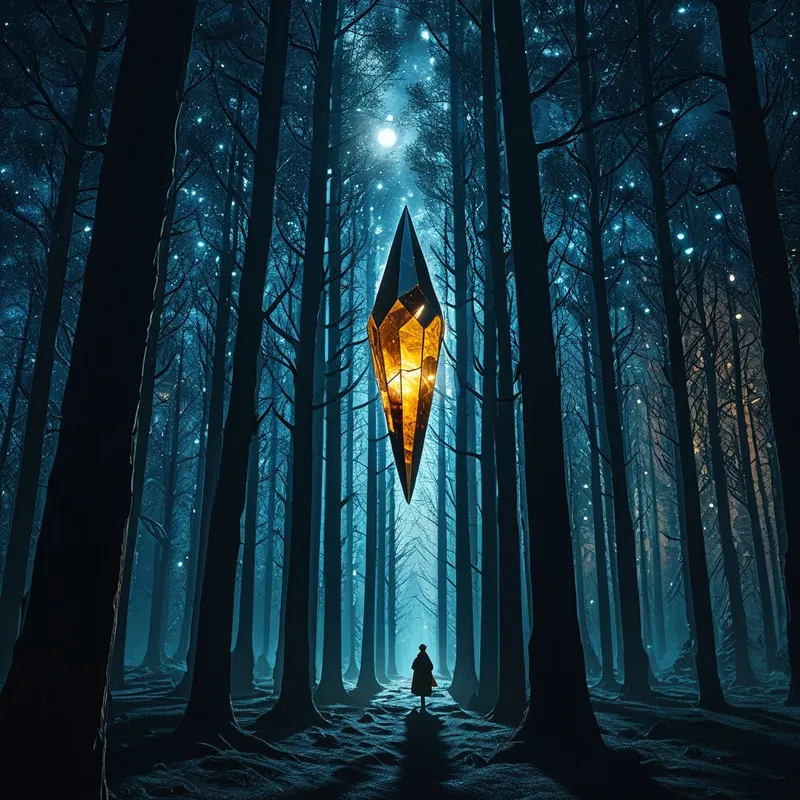
The dreamer finds themselves in the silent, cavernous halls of a derelict data center. Flickering server racks cast long, jagged shadows. They are holding not a weapon, but a delicate, humming tuning fork. They are not chasing, but following a faint, phosphorescent trail of paw prints that glow with a cold, blue light. They know, with a certainty that bypasses thought, that they must find the source of the signal before it winks out forever.
This is the alchemical hunt: the pursuit of a lost frequency of the self, a vital data-stream of instinct or intuition that has gone offline within the psyche’s architecture.

The False Lead
The dream of hunting is not a literal prescription for aggression, dominance, or the conquest of external obstacles. To interpret it as a simple metaphor for ambition or a desire to “catch” a goal is to follow a false scent. It is not about the violence of the kill, but the sacred tension of the pursuit. Conversely, it is not merely a symbol of being persecuted. While the fear is real, the dream’s intelligence lies in revealing that the hunter and the hunted are internal factions. The terror of being stalked is often the panic of a conscious ego finally sensing the approach of a long-ignored, powerful shadow aspect that now demands an audience. The hunt is always interior.
Psychological Architecture
To dream of hunting is to receive a summons to the deepest levels of Shadow work. Here, the psyche is not a unified kingdom but a contested wilderness. Exiled parts of the self—raw anger, wild creativity, forbidden grief, untamed sensuality—have been pushed to the periphery, labeled dangerous game. These are your internal familiars, your instinctual energies living feral in the psychological underbrush. The conscious ego, often playing the role of a cautious gamekeeper, has tried to fence them out.
The hunt begins when this arrangement fails. The exiled part grows hungry or desperate; its call becomes a disruptive howl in your night, a sabotage of your daily life. The dream is the ritual space where the ego must pick up the trail. This is the individuation process in its most dynamic form: a voluntary descent into the interior wild to track, confront, and ultimately reclaim sovereignty over these disowned energies. You are not destroying a beast, but taming the distance between you and it. The goal is integration, not eradication—to bring the wild thing home to the hearth of awareness, where its power can be metabolized rather than feared.
Mythic Resonance
This psychic drama echoes in the oldest stories. Consider Artemis, the Greek goddess of the hunt and the wild. She is not a mere sportswoman; she is the protector of sacred boundaries, of the untamed spaces within and without. Her hunt is a sacred, precise act of communion with the wild, a reminder that to engage with the fierce, instinctual self requires respect, skill, and a purity of intent. In another vein, the myth of the Fisher King speaks of a wounded ruler whose infertility mirrors the desolation of his lands. The healing quest, often involving a hunt for a sacred object like the Grail, is not for personal glory but for the restoration of a lost, vital essence—the libido or life-force—without which the whole internal kingdom suffers.
Symbolic Nodes
- The Weapon (Bow, Rifle, Spear): The focused application of will, attention, or a specific skill needed for the pursuit.
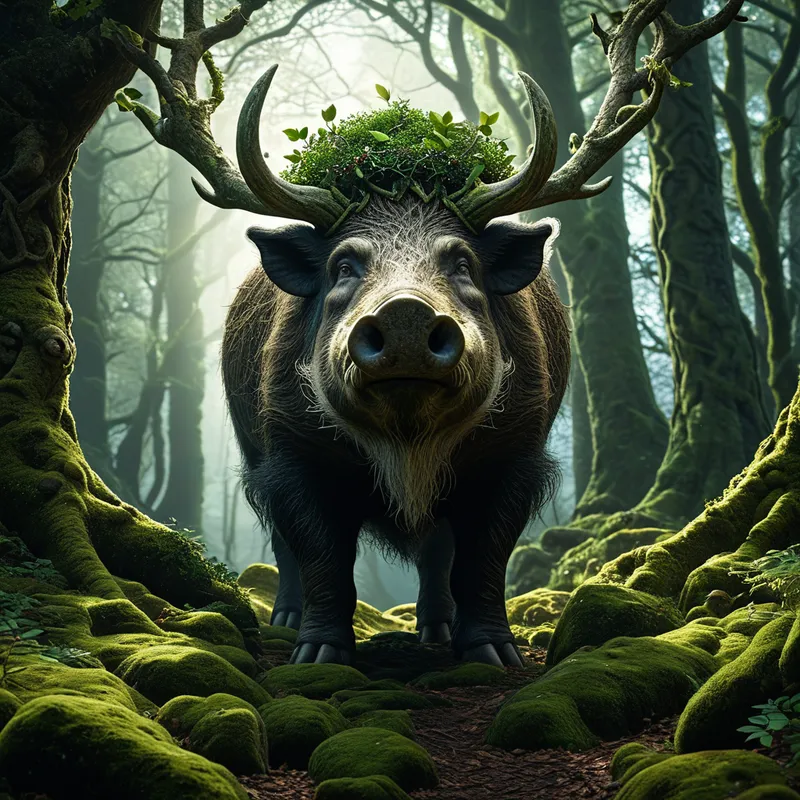
- The Prey (Stag, Fox, Bird, Mythical Beast): The specific quality of the exiled self. A stag may be sovereign grace; a fox, cunning intelligence; a bird, a spirit of freedom.
- The Pack/Hounds: The mobilized instincts, drives, and unconscious impulses driving the pursuit.
- The Trail/Tracks: Intuition, synchronicity, or the subtle clues left by the unconscious.
- The Forest/Wilderness: The unexplored, instinctual territory of the personal unconscious.
- Being the Hunted: The ego’s experience of being pursued by a powerful, emerging shadow content.
Archetypal Resonance
The Explorer Archetype is the primary energy activated in the hunting dream. This is not the Explorer as casual tourist, but as the dedicated seeker, the one who must map the terra incognita of the self. The somatic echo of focused anticipation is the Explorer sensing a new frontier. The alchemical potential lies in the journey itself—the willingness to leave the known camp of the persona and venture into the wilds of the shadow. The Shadow Explorer manifests here not as aimless wandering, but as a compulsive, alienated pursuit that has lost its sacred object, turning the hunt into a frantic, endless chase that never allows for the crucial moment of facing and integrating what is found.
The Alchemical Process
The transmutation in the hunting dream is the conversion of projected pursuit into conscious integration. The initial, raw material is the psychic energy bound up in fear, obsession, or a sense of lack—the feeling that something vital is "out there" and must be captured. The heat is applied in the sustained tension of the chase, the uncomfortable focus required to stay on the trail of a discomfiting truth about oneself. The pressure is the moment of confrontation, when the hunter finally corners the prey and must look into its eyes, seeing not a monster, but a mirrored fragment of the self.
This is the nigredo, the blackening: the terrifying recognition. The alchemical turn happens when the intention shifts from "capture or kill" to "recognize and dialogue." The weapon is lowered. The wild thing is seen not as food or threat, but as a lost familiar. In that moment of non-violent recognition, the chased energy begins to lose its feral autonomy. It is invited, not subdued. The pursuit dissolves into presence. The sovereign self is not the one who kills the beast, but the one who can stand in the clearing with it, having reclaimed the authority to name it as part of the whole.

The Integration Protocol
Question 1: In the dream, what was the precise feeling that accompanied the sighting of the prey? Was it excitement, dread, hunger, or reverence? This feeling is the key to the quality of the exiled energy.
Question 2: If the prey in your dream could speak one sentence to you upon being cornered, what would it say? Do not censor the answer.
Question 3: In your waking life, what situation, relationship, or creative endeavor feels like a "safe enclosure" where this hunted part of you might finally be allowed to rest and be seen?
Action 1 (Somatic Stillness): For five minutes, sit and physically replicate the poised, listening stillness of a hunter. Notice where in your body the focus gathers. Then, ask internally: "What is it you want me to track?" Note the first image, word, or memory that arises, without judgment.
Action 2 (Unstructured Writing): Write a letter from the perspective of the prey you were hunting or being hunted by. Let it describe its life in the wilderness of your psyche, its grievances, and what it needs to cease being a fugitive.
Action 3 (Ritual of Recognition): Find a small, natural object—a stone, a feather, a twisted branch—that symbolically is the prey. Create a simple, respectful space for it on your altar or desk. This act physically externalizes the intention to host, rather than banish, this part of yourself.
Final Validation
To dream of the hunt is to be tasked with a profound and often frightening labor. It asks you to become a diplomat to your own wilderness, to track the very things you were taught to fear within yourself. This is not easy work; it requires the courage to follow a trail that leads away from comfort, into the thicket of your own complexity. Yet, this difficult pursuit is the sacred mechanism of your own becoming. Each time you have the courage to corner a shadow and meet its gaze, you are not capturing a trophy—you are reclaiming a kingdom. The true prize of the hunt is never external; it is the hard-won sovereignty of a self that is no longer at war within its own borders.