
The Alchemy of the Fall: Decoding Dreams of Humbling Experience
The Somatic Echo
It begins not as a thought, but as a hollowing. A sudden, silent evacuation of certainty from the chest cavity. The spine, once a pillar of self-assurance, feels porous, a column of ash waiting for a breath to scatter it. There is a weightlessness that is not freedom, but a terrifying un-anchoring. The gut churns not with fear, but with a profound, cellular knowing that the ground upon which you’ve built your name is illusory. This is the somatic prelude to the dream of humbling—a visceral tremor in the architecture of the persona, a silent quake that registers in the body long before the mind can construct its defenses. It is the feeling of gravity itself being recalibrated, pulling you not down, but inward, toward a center you had forgotten existed.
The Dreamer's Log
I stood in the grand hall of my own making, a cathedral of chrome and accolades. I moved to ascend the dais to address the silent, admiring crowd, but my legs refused. I looked down. My fine robes were gone. I was dressed in simple, rough cloth, and at my feet lay a single, weathered wooden tool—a humble mallet. The crowd was not a crowd at all, but a forest of ancient, watching trees.
Alchemical Interpretation: The dream dismantles the edifice of achieved identity (the chrome hall) to return the dreamer to the essential, foundational tool (the mallet), witnessed not by human praise but by the timeless, judging truth of nature.
The False Lead
This is not a dream of mere failure or embarrassment. Those are wounds to the ego’s surface. A true humbling experience in dreams is a structural demolition. It is not about tripping on the stage; it is about the stage itself collapsing to reveal the raw earth beneath. It is not the critique of your performance, but the erasure of the script, the role, and the very concept of an audience. To mistake this profound, archetypal descent for a simple narrative of “things going wrong” is to drink saltwater when you are dying of thirst—it parodies the cure while deepening the malady. The dream is not punishing you; it is liberating you from a fiction you have come to believe is stone.
Psychological Architecture
The psychology at play is the death of the provisional personality. We construct a self—competent, respected, in control—to navigate the world. This self is necessary, a useful scaffold. But in the quiet of the soul, this scaffold can become a citadel, walling off the wild, untamed, and vulnerable parts of our being—the Shadow. Dreams of humbling are the Shadow’s most elegant and devastating siege engine. They do not attack with monsters, but with truth. They expose the scaffold as a scaffold: flimsy, temporary, and separate from the true ground of being.
This is the core of Individuation: the dismantling of the persona by the Shadow, not to leave you in ruins, but to force a reunion. The grief you feel is for the loss of a familiar, if limiting, identity. The terror is of the formless void that follows. But this void is not empty. It is the fertile prima materia, the chaotic first matter of alchemy, from which a more authentic, integrated self can be born—one that includes your fragility, your ignorance, your dependence, not as flaws to hide, but as threads in the tapestry of a whole human.
Mythic Resonance
We see this firmware update in the myth of Phaethon, who seized the chariot of the sun to prove his divine lineage, only to scorch the earth and be struck down by Zeus’s thunderbolt. His humbling was catastrophic and final, a mythic warning of ego inflated beyond its rightful capacity. More subtly, it echoes in the story of the Buddha himself, who began as Prince Siddhartha, ensconced in a palace of perfected pleasure—a citadel of the persona. His humbling was the Four Sights: age, sickness, death, and asceticism. Each sight was a dream-image that dismantled his palace walls, not through battle, but through the unbearable weight of reality, forcing him onto the path that led to the true ground of being beneath all temporary shelters.
Symbolic Nodes
- Lost or Ineffective Tools: A master’s instruments turning to clay, a musician’s hands becoming numb, a scholar’s books containing blank pages.
- Shrinking or Disappearing Assets: A mansion reverting to a hut, a vast fortune becoming a single coin, a powerful vehicle stalling into a child’s toy.
- Exposure in Simple Settings: Being naked or absurdly dressed in a formal context, giving a grand speech to an empty room or to uncomprehending animals.
- Return to Basic Elements: Being knee-deep in mud, tending a simple fire, or carrying water in a cracked vessel after a life of complexity.
- The Silent, Judging Witness: A parent’s disappointed gaze, the eyes of ancient statues, or the impassive observation of natural forces (oceans, mountains, stars).
Archetypal Resonance
The energy of the humbling dream resonates most powerfully with The Shadow Ruler.
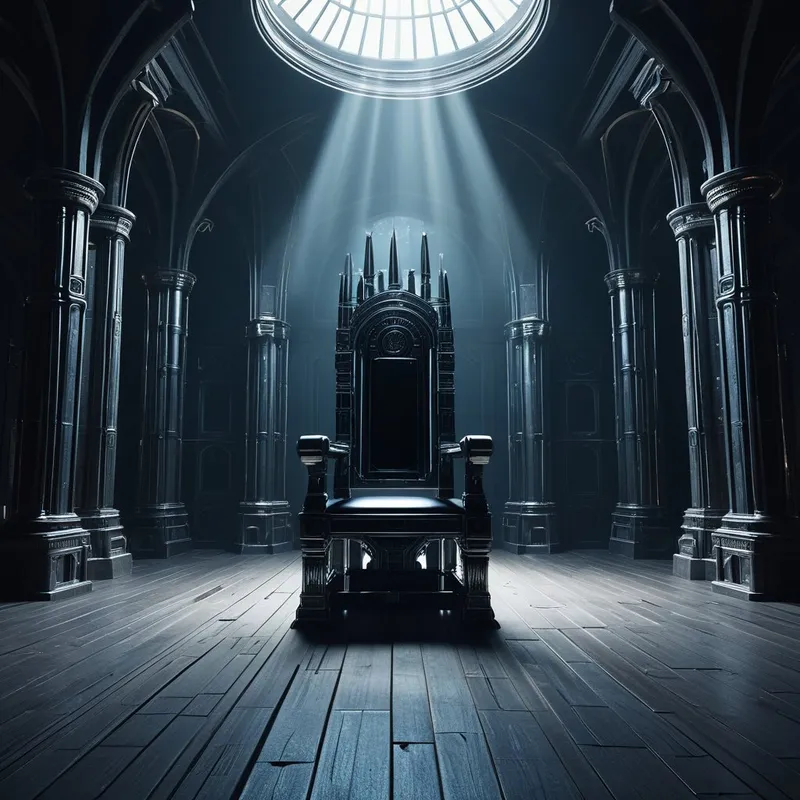
The Ruler archetype governs order, control, sovereignty, and responsibility. Its shadow emerges when this need for control becomes rigid, tyrannical, and divorced from the authentic, messy reality of the inner kingdom. The somatic echo of the humbling dream—the hollowing of the chest, the dissolution of the spine—is the direct experience of the Shadow Ruler’s citadel being breached. The dream is the rebellion of the neglected inner populace (the exiled parts of the Self) against a regime that has grown arrogant in its isolation. The alchemical potential here is immense: the heat of this humiliation is the precise force needed to melt the tyrant’s crown, not to destroy sovereignty, but to reconstitute it. True sovereignty is not control over, but harmonious relationship with—including relationship with one’s own vulnerability and limits. The humbling dream forces the Ruler to step down from the isolated throne and walk among the subjects, thus beginning the transformation from a tyrant of control into a true sovereign of the integrated self.
The Alchemical Process
The transmutation here is Calcinatio followed by Solutio—Fire and Water. The intense, dry heat of shame and exposure (Calcinatio) burns away the dross of arrogance, the false identifications, the brittle pride. This is the painful, necessary reduction to ash. But it is not the end. The ash must then be dissolved (Solutio) by the waters of grief—not grief for the lost status, but grief for the self that was so lost it needed that status to exist. This dissolution is a merciful flood. It washes the calcified ego-structures into a solution, a psychic soup where old boundaries dissolve. In this saturated state, the essential, indestructible core—the lapis—can begin to separate from the temporary identifications. The pressure is the unbearable tension between who you thought you were and what the dream reveals you to be. The alchemical vessel is your own conscious awareness, forced to contain this violent reaction without fleeing into denial or self-pity. The product is humility: not humiliation, but a grounded, earthy knowing of your place in a vast and mysterious order.

The Integration Protocol
Question 1: Where in my waking life have I constructed a "throne room"—a role, identity, or achievement I fear losing, upon which I have placed too much of my sense of worth?
Question 2: What vulnerable, "un-kingly" part of me was exiled in order to build and maintain that throne? What does that exiled part most need to be heard or felt?
Question 3: If my dream's humbling scene was not a punishment, but a compassionate correction of my course, what more authentic direction is it subtly pointing me toward?
Action 1 (Grounding in the Base): For five minutes each day, stand barefoot on the actual ground—earth, grass, stone. Feel its solidity, its indifference, its support. Breathe and imagine the grandiose energy of the persona draining down through your feet, while a steady, humble strength rises up. You are not above this; you are of this.
Action 2 (The Exile's Chronicle): Engage in unstructured, creative writing. Let the exiled, humble part of you (the one from Question 2) speak. Write from its perspective in a stream of consciousness. What does it see from outside the citadel? What does it remember? What simple, forgotten truth does it hold? Do not edit or judge the output.
Action 3 (Ritual of the Useful Tool): Find a simple, physical tool—a hammer, a spade, a kitchen knife, a needle. Clean it, care for it, and use it for a practical, mundane task: mending a garment, repotting a plant, preparing a meal. Perform the task with full attention, honoring the tool and its purpose. This ritual re-anchors value in utility, service, and tangible reality, countering the abstract inflation of the ego.
Final Validation
To have this dream is to be chosen for a difficult grace. It feels like annihilation because the part of you that does the feeling is, in fact, being asked to die. This is not a small thing. Honor the grief, the disorientation, the raw terror of the unmade self. Yet, within that very acknowledgment lies the seed of your sovereignty. The dream does not humble you to make you small. It shatters the crystal prison of a limiting self-concept so that you, in your true, unbounded complexity, can finally grow. The ground you are being pushed toward is the only ground that is real. It is from here, and only here, that a life of authentic power can be built.