The Uncharted Territory Within: Dreaming of Human Nature
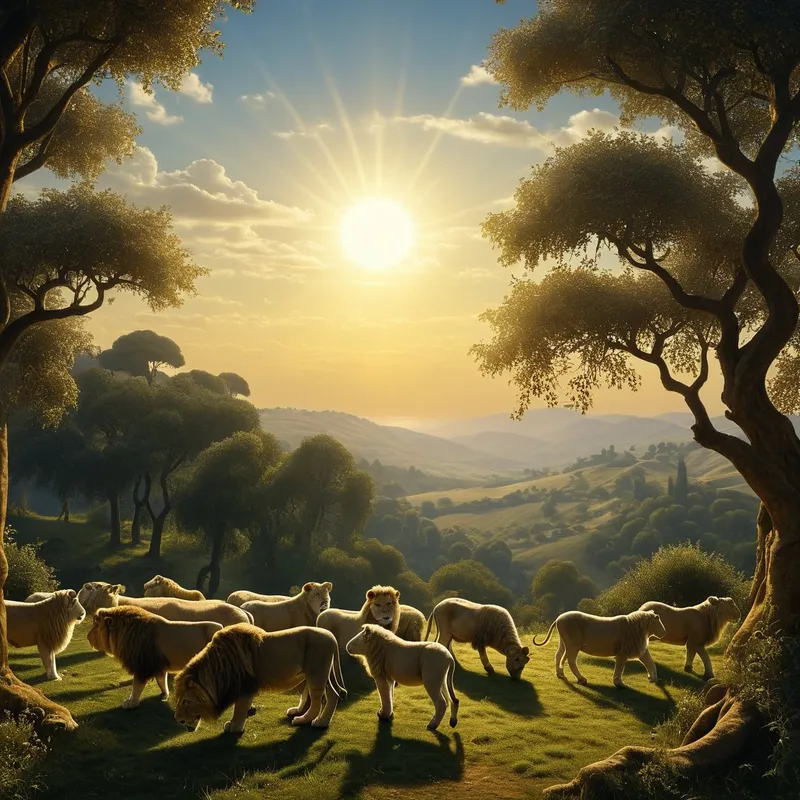
We do not dream of human nature as a concept. We dream of it as a territory—a vast, internal wilderness we have been taught to cordon off, to pave over with the neat roads of persona and propriety. To dream of this theme is to receive a summons to a forgotten frontier. It is not an intellectual inquiry, but a somatic expedition into the bedrock of being.
The Somatic Echo
Before the images form, the body knows. It is a tremor in the solar plexus, a deep, tectonic shift that feels less like emotion and more like a fundamental law of your internal universe being rewritten. There is a gravity to it, a pull toward a center you did not know you possessed. It can manifest as a profound, grounding solidity—the feeling of roots reaching into a dark, nourishing earth. Or, it can feel like a terrifying liquefaction, as if all the familiar structures of your personality are turning to sand, threatening to slide into a formless sea. The breath catches, not in panic, but in awe at the sheer, untamed scale of what you are. This is the echo of the primal self, vibrating up through layers of civilization, asking to be felt before it is understood.
The Dreamer's Log
The dreamer stands in the heart of a vast, silent library that exists outside of time. Shelves stretch into darkness, holding every book ever written. Yet, when they pull one down—a heavy tome bound in what feels like skin and starlight—the pages are utterly blank. In the center of the library, on a stone pedestal, a single book lies open. Above it, a complex, holographic double helix rotates, but it is woven from strands of living shadow and piercing light. The dreamer knows, with a certainty that bypasses thought, that this is the only book that matters, and they must learn to read its empty pages.
Alchemical Interpretation: The blank book is the unscripted potential of the essential self, awaiting the inscription of conscious experience, while the hologram reveals that our nature is not a fixed text, but a dynamic interplay of luminous awareness and fertile darkness.

The False Lead
This theme is not a dream about becoming more "civilized" or socially adept. It is not a mandate to suppress your so-called "animal" instincts in favor of a polite, sanitized version of yourself. That is the voice of the collective persona, the inner censor. Conversely, it is also not a license for unbridled, reactive id—a justification for cruelty or selfishness framed as "just being human." That is the shadow’s parody of authenticity. Dreaming of human nature is an invitation to witness the entire spectrum, from the raw, creative pulse to the capacity for profound compassion, and to hold it all within the vessel of a conscious life. It is the move from fragmentation to a difficult, glorious wholeness.
Psychological Architecture
To engage with this dream territory is to undertake the most fundamental shadow work: the reclamation of your own bedrock. We exile parts of our nature—our rage, our wild joy, our primal grief, our naked need—into internal hinterlands, labeling them unacceptable. We build cities of personality atop this buried land. The dream of human nature is an earthquake. It collapses the neat avenues, exposing the raw, psychic geology beneath. The process of individuation here is not about adding new rooms to the house of the self, but about descending into the cellar and acknowledging the ancient, damp earth that the entire structure rests upon. It is to meet the exiled ones—the furious child, the sensualist, the silent hermit—not as monsters to be slain, but as lost family members, essential to the clan of you. This is the architecture of foundation, not facade.
Mythic Resonance
We see this eternal process in the myth of the Sumerian goddess Inanna’s descent into the underworld. To enter the realm of her sister, Ereshkigal, she must pass through seven gates, surrendering at each one a symbol of her worldly power: her crown, her jewels, her royal robes. She arrives naked and bowed, only to be killed and hung on a hook. This is not a tale of defeat, but of essential reduction. To meet the raw core of being (Ereshkigal, the fierce, unadorned queen of the deep), the constructed self must be utterly stripped away. The return journey, and her resurrection, speaks to the integration of that deep, dark wisdom into a renewed and more complete sovereignty. Similarly, the alchemical Nigredo—the blackening, the putrefaction—is not an end, but the necessary first step where all complex forms break down into their primal, unified matter, the materia prima, from which new gold can be born.
Symbolic Nodes
- Wild Animals (especially wolves, bears, big cats): Untamed instinct, primal power, and the wisdom of the body.
- Ancient or Primal Landscapes (deep forests, caves, volcanoes): The archaic, foundational layers of the psyche.
- Nakedness or Rudimentary Clothing: Exposure of the essential self, without the armor of persona.
- Forgotten or Hidden Rooms in a House: Unexplored aspects of the self coming to light.
- Raw Elements (unshaped stone, flowing water, fire, rich soil): The basic, unrefined substances of consciousness and potential.
- Meeting a "Wild" or "Primal" Version of Oneself: A direct encounter with the disowned core identity.
Archetypal Resonance
The energy of this theme resonates most powerfully with The Orphan Archetype. Not the Shadow Orphan, lost in victimhood, but the Orphan in its essential, realist form—the part of us that knows we are, at base, elemental and unadorned. This archetype does not wear the crown of the Ruler or the armor of the Hero; it stands in the raw truth of existence, connected to the fundamental ground of being. Its somatic echo is that deep, grounding tremor or terrifying liquefaction, the feeling of being reduced to your core substance. The Orphan’s alchemical potential lies in this very reduction. By consenting to feel fundamentally "un-parented" by society’s stories and stripped of our achievements, we touch the prima materia of the self. From this honest, fertile ground of pure being, true and authentic creation—the domain of the Creator or Sovereign—can authentically spring. The Orphan’s journey is the necessary return to source.
The Alchemical Process
The transmutation here is from fragmented persona to integrated essence. The required heat is the intense, uncomfortable pressure of radical self-honesty. It is the fire of asking, "What remains when all my stories of who I am are burned away?" The pressure is the weight of feeling everything you have denied—the grief for your own wildness, the terror of your own power, the loneliness of your uniqueness. This is the alchemical vessel: your conscious awareness, willing to hold these contradictory elements without fleeing into judgment or distraction. In this crucible, the lead of your exiled instincts and denied passions does not turn to gold by being eliminated, but by being recognized as inherently precious. The wild animal is not tamed; it is welcomed home and given a voice at the council fire of your psyche. The darkness is not illuminated away; it is understood as the fertile soil from which compassion and creativity grow. Sovereignty is born from this act of reclamation—not rule over others, but full authorship of the self.

The Integration Protocol
Question 1: When in my waking life do I feel a deep, somatic pull toward or recoil from something "instinctual"? (e.g., a desire to roar, to flee, to sink into silence, to create without a plan). What part of my nature is knocking at the door?
Question 2: Which "wild" or "unacceptable" aspect of myself have I exiled to the shadowlands of my psyche, and what archaic rule or fear necessitated that exile?
Question 3: If my essential nature were a landscape, what would it look, sound, and feel like? Is it a forest, a desert, a deep ocean trench, a volcano? What weather systems move through it?
Action 1 (Primal Grounding): Stand barefoot on the earth, if possible. If not, imagine roots descending from your feet into the core of the planet. Breathe deeply and feel the weight of your body, its animal reality. For five minutes, do nothing but feel the fact of your physical being, without narrative.
Action 2 (Unscripted Expression): With non-dominant hand, or with eyes closed, engage in unstructured drawing or clay modeling. Do not aim to create an image of anything. Let the hand move, press, and scribble. Allow the marks to be raw, messy, and meaningless. This bypasses the inner critic and gives form to pre-verbal states of being.
Action 3 (Council of Selves Ritual): Light a candle in a quiet space. Speak aloud, giving voice to one of your "exiled" aspects—your inner fury, your wild joy, your primal sorrow. Let it speak its truth without censorship. Then, respond as the conscious, witnessing self. Do not seek to resolve or fix, but to listen and acknowledge its right to exist within you.
Final Validation
To dream of human nature is to be assigned the most daunting and glorious task: to become fully human. This means facing the parts of yourself that civilization, family, and even you have labeled monstrous, messy, or too much. It is a profound and often terrifying responsibility. Yet, within that terror lies your liberation. For in reclaiming the totality of what you are—the dark soil and the reaching vine—you cease to be at war with yourself. You become, at last, a complete ecosystem, a sovereign territory where every creature belongs. The wilderness is not outside you; it is the source of your authenticity. Welcome home.