The Dream of History: An Archaeology of the Psyche
The Somatic Echo
It begins not as a memory, but as a density. A weight in the marrow, a sediment in the blood. You wake with the taste of dust and ozone, a phantom ache in bones you cannot name. It is the gravity of forgotten foundations, the pressure of strata laid down long before your conscious story began. This is the somatic echo of History—not the chronicle of events, but the living geology of the self. It is the feeling of walking on ground that is not solid, but composed of countless compressed layers of choice, trauma, inheritance, and silenced narrative. Your body remembers what your mind has filed away. Before an image forms, there is this: a profound, wordless knowing that you are standing on a fault line within your own being.
The Dreamer's Log (Case Vignette)
I am in a library older than time. The shelves, carved from black basalt, stretch into a darkness above. I am searching for a specific book—my book. I find it, bound in cold iron. When I open it, the pages are blank, but the weight of it pulls me to my knees. I hear a chorus of whispers, not from the shelves, but from the stone floor beneath me.
Alchemical Interpretation: The dreamer is called to witness the foundational text of their identity, only to discover it is an empty vessel awaiting the inscription of their own conscious authorship, pressured by the chorus of unlived lives from their psychic substrata.

The False Lead
This theme is not a simple nostalgia for a better past or a dread of past mistakes. It is not about "learning from history" in a linear, moralistic sense. To interpret a dream of ancient ruins, ancestral ghosts, or forgotten libraries as merely a sign to "let go of the past" is to commit a profound error. That is the voice of the spiritual bypass, attempting to whitewash the cathedral. The dream of History is not about release, but about reclamation. It is the psyche's insistence that you cannot build a sovereign future on a foundation you refuse to fully acknowledge and integrate. The terror is not in the memory itself, but in the seismic potential of its reintegration.
Psychological Architecture
To dream of History is to be summoned to the deepest level of Shadow work: the excavation of the psychic substrate. This is the Individuation process in its most architectural form. You are not just confronting a repressed memory or a disliked trait (a single figure in the shadow). You are confronting the very ground upon which your personality is built—the inherited beliefs, the transgenerational wounds, the cultural scripts, and the survival strategies that crystallized into your core structure.
Think of your psyche as a city. Your conscious ego lives in the modern towers above. The dream of History takes you down, below the subway lines and sewer pipes, into the catacombs. Here, you find the original settlement, the first walls, the reasons the streets were laid in this particular, confining pattern. This is Internal Family Systems at a mythic scale: you are meeting not just your inner "exiles" and "managers," but the original exiles, the primal managers whose blueprints everyone else follows. The work is one of respectful archaeology. You do not dynamite these ruins. You learn their language. You understand why this fortress was necessary. And in that understanding, you gain the right to redesign the city from its foundations up, not by destroying the old, but by transmuting its purpose.
Mythic Resonance
This process echoes in the myth of Aeneas, who did not simply flee the burning ruins of Troy. He was tasked with carrying his father on his back and the household gods in his hands into an unknown future. He could not found Rome by himself; he had to bear the literal and spiritual weight of his history into the new world. The past was not a burden to drop, but a sacred charge to integrate. Similarly, the Egyptian god Osiris is dismembered and scattered—a metaphor for traumatic fragmentation across time and memory. His reconstitution by Isis is not a return to a prior, naive wholeness, but a re-membering that creates a new, sovereign form fit to rule the underworld, the realm of all that is buried. Wholeness, these myths tell us, comes not from amnesia, but from a conscious, painful, and sacred gathering of the fragments.
Symbolic Nodes
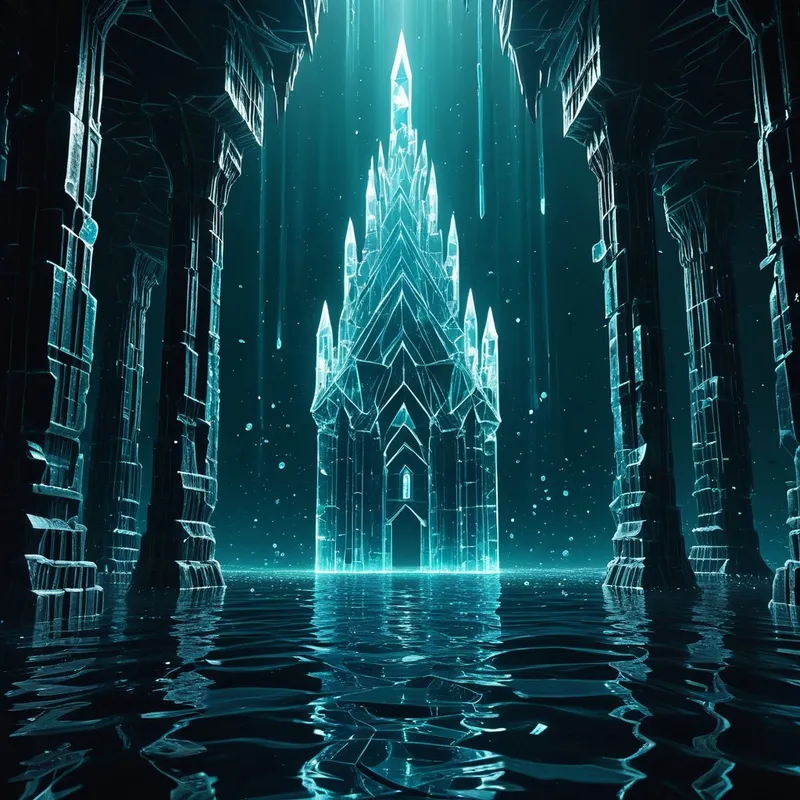
- Ancient/Impossible Architecture: Ruined castles, endless libraries, submerged cities, labyrinthine basements, stone arches leading nowhere.
- Ancestral Figures: Ghosts that are not frightening but solemn, portraits with moving eyes, unnamed relatives who hand you an object.
- Geological Strata: Caves with visible layers, fossilized remains, digging and uncovering, earthquakes.
- Heavy or Blank Texts: Iron books, stone tablets, scrolls that crumble, pages that are blank or in an unknown language.
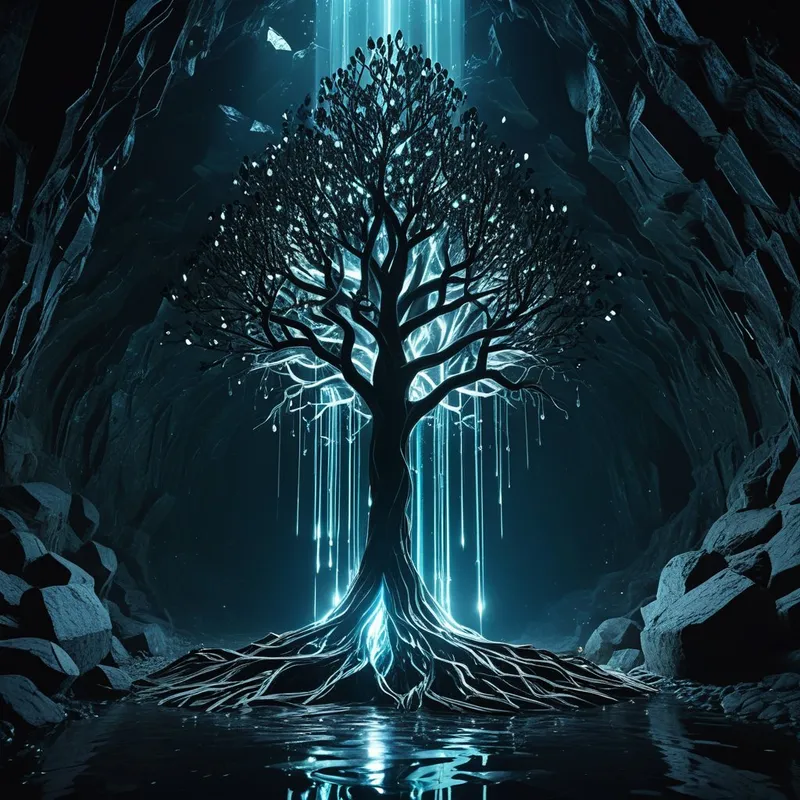
- Foundational Objects: Cornerstones, family seals, buried keys, rusted tools, the roots of a great tree.
Archetypal Resonance
The energy here is most potently that of The Sage Archetype, specifically in its shadow phase of deep, often dogmatic, excavation. The Sage seeks the foundational truth, the original blueprint. In its shadow, this becomes an endless, circular descent into the archive, mistaking the accumulation of data for wisdom, becoming paralyzed by the weight of all that is known and unknown. The somatic echo of density and pressure is the shadow Sage's burden—the library so vast it becomes a tomb. The alchemical potential lies in the Sage's ultimate aim: not to possess the truth of the past, but to understand its pattern so completely that one can finally be free to author the present. The shift is from archaeologist to architect, using the excavated materials to build a new structure of meaning.
The Alchemical Process
The transmutation here is from sediment to substrate. The intense heat and pressure required is the courage to dwell in the disorientation of un-belonging. You must allow the old narratives—"this is who I am because of what happened"—to dissolve. This is the nigredo, the blackening, where you sit in the library of blank books and feel the chorus of whispers without yet understanding the language. The grief is for the self that was constructed upon this hidden land. The terror is the ground falling away.
The alchemical fire is conscious witnessing without immediate interpretation. You hold the heavy, blank book. You feel the pull of the whispers. You do not rush to fill the pages with old stories. You sustain the tension of the empty vessel. Slowly, under this heat, the compacted sediment of inherited history—the trauma, the expectation, the silent loyalty—begins to liquefy. It ceases to be a rigid, defining stratum and becomes a rich, fertile medium. This liquid history is no longer a fate; it is nourishment. It is the prima materia from which you can now consciously grow, not as an escape from your past, but as its most intelligent, compassionate, and sovereign flowering.
The Integration Protocol
Question 1: What is the oldest, heaviest "truth" about who you are or what you deserve that you carry? Do not analyze its origin yet. Simply feel its weight and shape in your body. Where do you feel it?
Question 2: If your life to this point were not a linear story of cause and effect, but a sacred text being written in multiple layers simultaneously, what is one sentence from the deepest, foundational layer that has been dictating the plot?
Question 3: What forgotten or disowned part of your lineage (biological, spiritual, or chosen) is asking to be remembered not as burden, but as a source of peculiar strength?
Action 1 (Grounding the Echo): For five minutes upon waking, before thought takes over, lie still and locate the somatic echo of the dream. Is it a weight, a hollowness, a vibration? Place your hand there. Breathe into that space, not to change it, but to acknowledge its reality as a part of your present-moment architecture.
Action 2 (Creative Re-inscription): Take the "blank book" from your dream or feeling. Using any medium—paint, charcoal, collage, digital art—create a single "page" for it. Do not illustrate a memory. Let your hand express the texture of the history: is it jagged, smooth, fibrous, granular, fluid? Let the abstract image be the first inscription on the blank page.
Action 3 (Ritual of Acknowledgment): Find a small stone. Hold it as the "cornerstone" of your old foundation. Go to a crossroads—a literal intersection, a shoreline, the base of a tree. Speak one sentence of acknowledgment to that stone: "I feel your weight. You were necessary for a time." Then, leave it there. You are not abandoning it; you are moving it from the center of your foundation to the periphery of your landscape.
Final Validation
It is a formidable thing to be called to the foundations. To feel the ground of your being shift is perhaps the most profound disquiet a soul can know. The urge to rebuild quickly on the surface, to plaster over the cracks with new affirmations, is strong. Honor that you have felt the tremor. This is not a sign of breaking, but of a deeper integrity seeking to form. You are not collapsing into your past; you are being asked to become the first conscious ancestor of your future. The sovereignty that awaits is not the light, unburdened freedom of one who has forgotten, but the grounded, unshakable authority of one who has met the chorus in the stone and has chosen, with compassion and clarity, the notes of their own song.