The Weight of What Was: Dreams of Historical Significance
The Somatic Echo
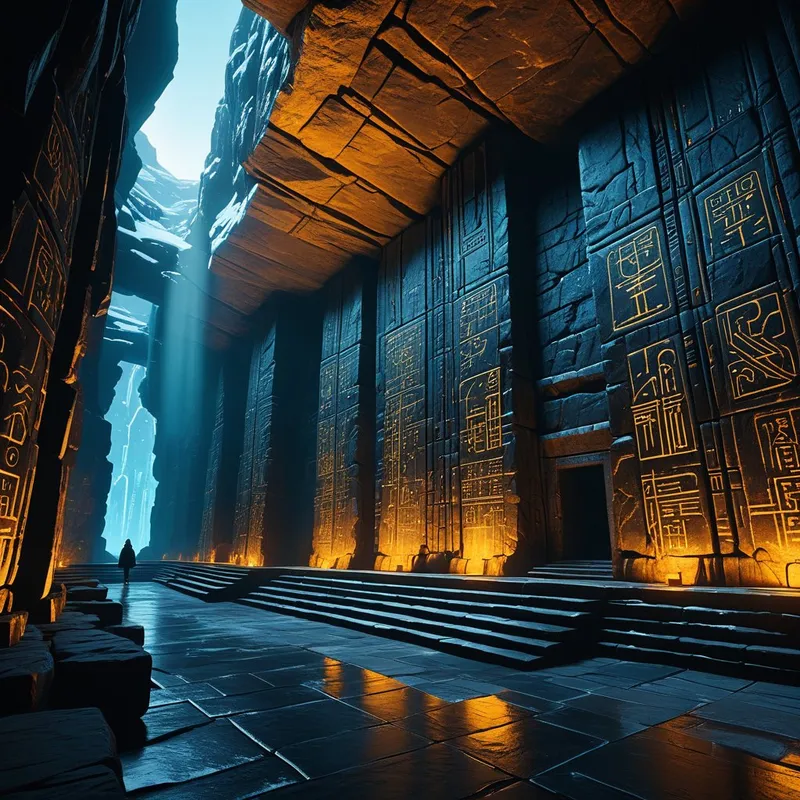
It begins not as a thought, but as a density. A specific gravity in the chest, a pressure in the bones that feels less like emotion and more like geology. You wake with the residue of a gravity that is not your own, a solemnity that seems to belong to epochs, not individuals. The air in the room feels charged with the silence of a museum after hours, or the deep stillness of an archive. This is the somatic echo of historical significance—the body registering a psychic event of structural proportions. It is the feeling of being a site where tectonic plates of personal narrative grind against the bedrock of inherited story. The mind may rush to fill the void with images of kings, wars, or ancient artifacts, but the body knows first: something foundational is being surveyed. The weight you carry is the weight of legacy, of pattern, of the deep code written into the family system or the cultural unconscious long before your first breath. It is the profound and often lonely sensation of being both an artifact and an archaeologist of your own soul.
The Dreamer's Log
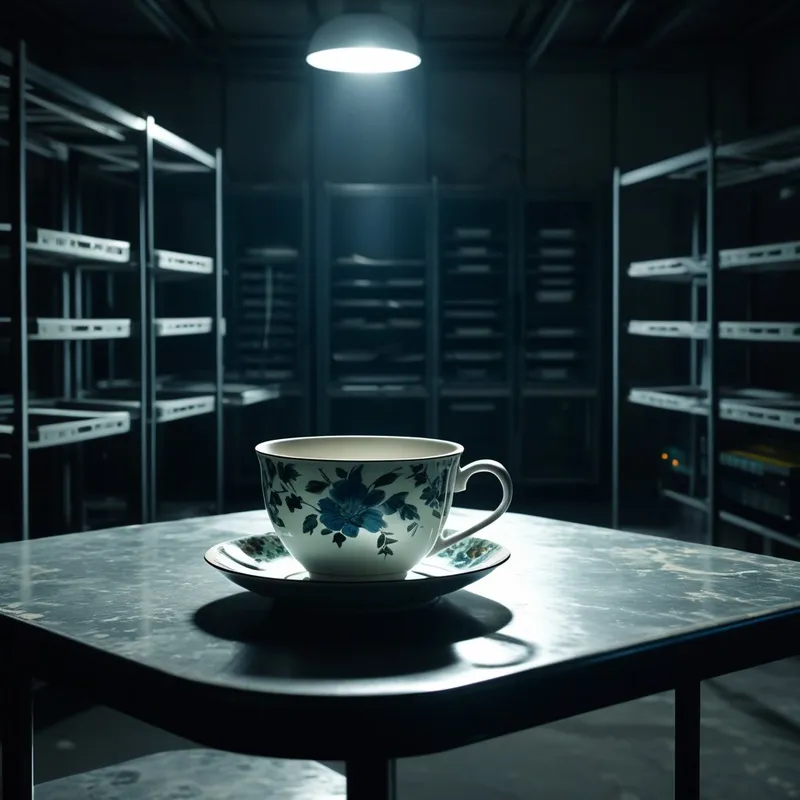
She stands in a derelict server farm, the hum of machinery long silent. Rows of dark, monolithic server racks stretch into infinity. On a steel table in the center of the room rests a single, cracked porcelain teacup, its delicate floral pattern glowing with a soft, persistent light. She knows, with a certainty that bypasses thought, that this cup contains the last record of a forgotten language, and its safety is her sole responsibility.
Alchemical Interpretation: The dream transmutes the overwhelming responsibility for familial or cultural legacy (the server farm of data) into a single, fragile, yet luminous vessel of personal meaning (the teacup), initiating the process of moving from archivist to curator.
The False Lead
This theme is not a simple nostalgia for a romanticized past, nor is it a premonition of world events. To mistake it for either is to bypass its profound personal utility. The dream is not reporting on external history; it is revealing your internal historical record—the architecture of trauma, blessing, expectation, and identity that has been passed down. It is not about predicting the future course of nations, but about understanding the foundational laws that have governed the inner kingdom. A dream of causing a historical catastrophe is rarely about latent megalomania; it is far more likely about the psyche’s recognition of its own power to irrevocably alter its inherited narrative patterns. The terror here is not of changing the world, but of changing the self at a structural level.
Psychological Architecture
When the dreamscape adopts the robes of history, it signals that the work of individuation has reached the sub-basement. You are no longer redecorating the rooms of your conscious personality; you are being asked to inspect the bedrock upon which the entire structure rests. This is shadow work of the deepest order—excavating the family myths, the cultural scripts, the unspoken loyalties and inherited griefs that form the invisible load-bearing walls of your identity.
In the language of Internal Family Systems, you are not just working with an "exile" or a "manager"; you are encountering the system itself—the original, often traumatic, blueprint that necessitated the creation of all those parts. To dream of historical significance is to have the Self, the core consciousness, descend into this blueprint room. The pressure you feel is the weight of recognition: seeing that the anger you carry is not yours, but your grandfather’s; that the relentless drive is not a personal virtue, but a survival mechanism forged in your mother’s childhood poverty. The grief is for the lives not lived, the choices not made, the love not expressed, all of which have flowed down to you as psychic sediment. The work is one of gentle, terrifying archaeology—brushing the dust from these foundational stones, not to live in the past, but to understand what you are truly building upon, and what you are now free to rebuild.
Mythic Resonance
Consider the Greek Titan Atlas, condemned to bear the weight of the celestial heavens on his shoulders for eternity. His is not a story of simple punishment, but of a foundational, structural burden. The sky he holds is the dome of reality, the agreed-upon world. In our dreams, we become Atlas, feeling the unbearable weight of the "sky" of our family system, our cultural conditioning, our genetic legacy. The myth shows us the agony of this position—static, crushing, isolating.
The alchemical turn in the dream is the whisper of the Hercules archetype, who, in one of his labors, temporarily relieves Atlas. This is not about escaping the burden, but about the momentary, revolutionary experience of setting it down. The dream of historical significance often contains this fleeting moment—the crack in the teacup that lets light out, the single document saved from the burning library. It is the psyche’s rehearsal for the ultimate task: not to carry the sky forever, but to find a way to integrate its weight into one’s own spine, to become the mountain that supports the firmament, rather than the slave crushed beneath it.
Symbolic Nodes
- Ancient Text/Codex/Server: The inherited program, the family myth, the cultural script.
- Monument or Ruin: The psyche’s foundational structure, in states of preserved glory or necessary decay.
- Solemn Archive or Museum: The internal repository of memory and legacy, often felt as a sacred, lonely space.
- Ancestral Figure (faceless or iconic): The personification of an inherited pattern, not a literal ancestor.
- Buried Artifact/Relic: A lost or repressed truth, talent, or trauma seeking exhumation.
- Unchanging Landscape (desert, tundra, stone plain): The perceived immutability of one’s foundational conditions.
Archetypal Resonance
The energy here is most purely that of The Ruler Archetype, specifically in its shadow phase of confronting the burden of legacy before claiming true sovereignty. The Shadow Ruler is not yet the tyrant; first, it is the heir apparent drowning under the weight of the crown they did not forge. The somatic echo—the density in the chest—is the weight of that unbidden crown, the throne of a kingdom (the psyche) built by others. This archetype resonates because the theme is fundamentally about governance: who or what governs the inner realm? Is it the chaotic edicts of forgotten trauma, the rigid laws of ancestral expectation, or the conscious, compassionate authority of the integrated Self? The dream is the court summons, the moment the heir is confronted with the dusty scrolls of law and lineage. The alchemical potential lies in moving from feeling ruled by this history to becoming the sovereign who understands it, honors its truths, and rewrites its laws with conscious authority.
The Alchemical Process
The transmutation here is from Lead of Legacy into Gold of Sovereignty. The prima materia is the crushing, passive weight of inherited narrative—the leaden feeling that your life is a footnote in someone else’s story. The nigredo, the blackening, is the descent into that story’s darkest chapters: facing the full, unvarnished truth of the pain, limitation, or expectation that has been passed down. This is the heat—the shame, grief, and rage that surface when you truly behold the blueprint.
The albedo, the whitening, is the moment of clarity and separation. It is the realization, often symbolized in the dream by a single illuminated object (like the glowing teacup), that you are not the archive; you are the one reading it. You differentiate your consciousness from the historical record. The pressure here is immense, for it requires holding two contradictory truths: "This shaped me" and "I am not bound by it."
The final rubedo, the reddening, is the integration. It is not an erasure of history, but a conscious incorporation. The weight is not gone; it is transformed into foundation. The grief of the ancestor becomes the compassion in your heart. The survival skill becomes a chosen strength, not a reflexive prison. You take your seat on the throne not as a usurper, but as a legitimate sovereign who has earned authority by facing the kingdom’s entire history, thereby freeing yourself to rule the present moment.
The Integration Protocol
Question 1: If the weight you felt upon waking was not an emotion, but a physical object from a specific time period, what would it be? Describe its texture, temperature, and inscription.
Question 2: What is one "law" or "rule" you live by that feels ancient and unquestionable? If you imagined the original scribe who wrote it, what pain or limitation were they facing?
Question 3: In the dream's historical landscape, were you a passive monument, an active archaeologist, a terrified witness, or a reluctant leader? What does that role say about your current relationship to your own foundational story?
Action 1 (Somatic Mapping): For one week, upon waking, place a hand where you feel the "historical weight" in your body. Breathe into that space for three cycles. Then, gently tap that spot three times, a silent, physical acknowledgment: I feel this record. I am not made of paper.
Action 2 (Unstructured Writing): Set a timer for 10 minutes. Write a "Letter of Inheritance" from your ancestors to you. Do not think, just let the hand move. Then, write your "Letter of Legacy" from you to those who come after. Burn or bury the first; keep the second.
Action 3 (Ritual of Re-context): Find a small, ordinary object in your home (a stone, a key, a spoon). For one day, treat it as if it is the most significant historical artifact in existence—the sole key to understanding a lost civilization. Place it with intention, handle it with reverence, and observe the shift in your own perception of the "ordinary" foundations of your daily life.
Final Validation
It is a terrifying and lonely thing to feel the centuries in your bones, to wake with the dust of archives on your skin. This weight is real. The lineage of joy and sorrow you carry is real. To dismiss it is to fracture your own foundation. But hear this: the very fact that you can feel this gravity, that your dreams dare to show you the blueprints, means you are not doomed to repeat them. You are the point in the lineage where the record becomes conscious. You are the heir who has entered the vault, not to be buried there, but to read the scrolls by their own light, and in doing so, become the author of the next, more liberated chapter. The history is yours to know, and the present is yours to govern.