The Living Blueprint: When History Visits Your Dreams
The Somatic Echo
It begins not as a story, but as a texture. A weight in the marrow, a density in the breath. You wake with the taste of dust and ozone, a metallic tang on the tongue that feels both ancient and electric. There is a pressure behind the eyes, not of tears, but of immense, silent witnessing. The body remembers what the conscious mind has forgotten: that you are not a point in time, but a continuum. You are the living archive. This somatic echo is the felt sense of the psyche’s own archaeology—layers of personal and ancestral experience sedimented into bone and nerve, waiting for the dream’s gentle tremor to bring them to the surface. It is the gravity of a story not yet told, a timeline not yet integrated, pulling at your center of gravity.
The Dreamer's Log
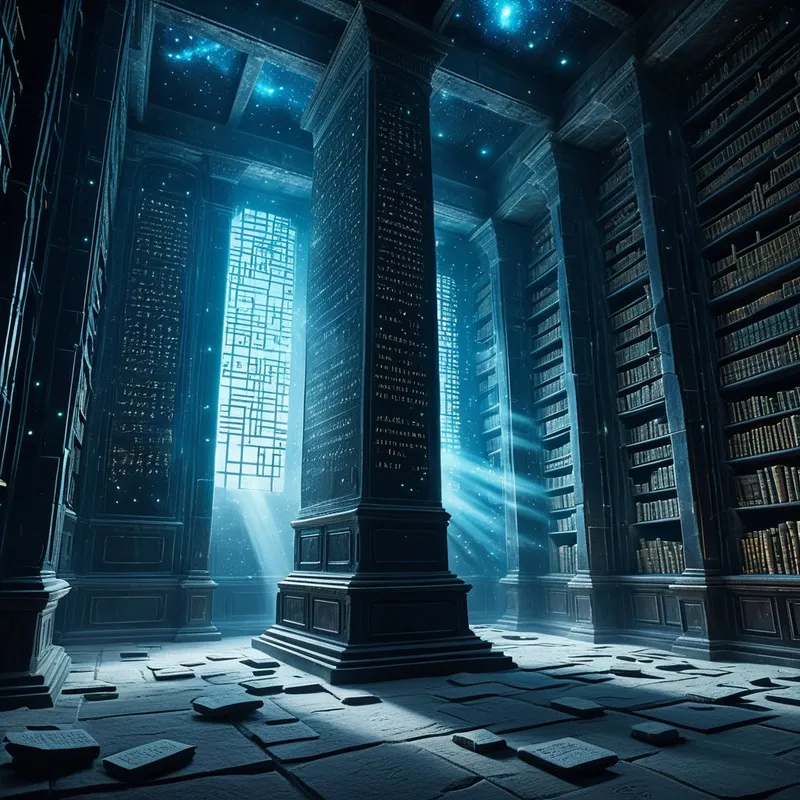
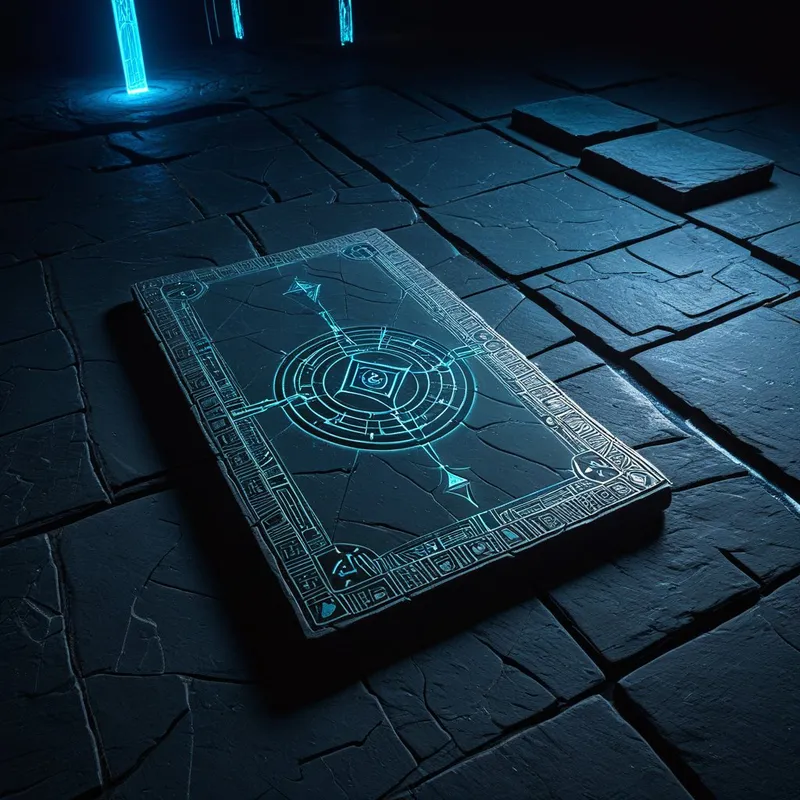
I stood in a vast, silent archive. The air was cold and smelled of old paper and static. Before me, on a stone plinth, lay a single clay tablet, cracked down the middle. As I reached for it, the etched symbols began to glow with a faint, unstable blue light, and I knew, with a certainty that chilled me, that I was both the scribe who had written it and the archaeologist tasked with its translation.
This dream is an alchemical summons: the fractured record of a personal covenant, a foundational story you authored but have forgotten how to read, now demanding a conscious, integrative translation.
The False Lead
This is not nostalgia. It is not a passive replay of "the good old days" or a melancholic fixation on trauma. The dream of historical narratives is not an invitation to live in the past, but a profound call to renegotiate your relationship with time itself. The false lead is to interpret these dreams as simple memory or prophecy. They are neither. They are architectural. They show you the load-bearing walls and the hidden fault lines in the structure of your identity. To mistake this for mere reminiscence is to walk past the blueprint for your own reconstruction.
Psychological Architecture
Here, Shadow work is not about hunting monsters in a dark closet. It is the patient, meticulous work of an archivist in a flooded library. You are sorting through waterlogged manuscripts—the half-remembered family legends, the unspoken generational vows, the personal myths you constructed to survive a childhood chapter. The process of Individuation, in this light, is the conscious authorship of your own central narrative. It requires you to read these water-stained pages, not to be bound by them, but to understand their grammar. You must differentiate between the chronicle (the raw events, the "facts" of your history) and the historiography (the perspective, the voice, the meaning you assign). The dream presents the chronicle; your waking task is to consciously craft the historiography. This is the deep architecture: moving from being a character acted upon by history to becoming the sovereign author of its meaning.
Mythic Resonance
Consider the Norse myth of the Norns, the weavers at the foot of Yggdrasil. They do not merely spin a fixed thread of fate. They weave—an active, ongoing process that intertwines past actions (Urðr), present becoming (Verðandi), and future potential (Skuld). Your dream is an encounter at this root-level loom. You are shown a strand of your own weaving, a pattern that feels immutable. The alchemical task is not to cut the thread, but to take up the shuttle yourself, to introduce a new color, to change the pattern from within the weave. Similarly, the Greek concept of kairos—the opportune, decisive moment—suggests that within the linear flow of chronological time (chronos), there are fissures where the timeless can enter. Your historical narrative dreams often point to these kairotic moments in your personal timeline, junctures where a choice, then or now, can redefine the entire story.
Symbolic Nodes
- Ancient Texts/Tablets/Scrolls: The encoded self, the foundational "script."
- Ruins or Excavation Sites: Buried aspects of self or lineage coming to light.
- Ancestral Figures or Period Clothing: Personified patterns, legacy energies seeking integration.
- Museums or Archives: The psyche's curated collection of identity; what is on display vs. what is in storage.
- Clocks Melting or Timelines Splintering: The dissolution of a linear, deterministic view of personal history.
- Reliving a Specific Memory with Different Choices: The psyche's sandbox for testing new historiographies.
Archetypal Resonance
The Sage Archetype is the sovereign of this domain. Not as a distant, omniscient judge, but as the active historian and philosopher of the self. The Sage’s energy resonates in the somatic echo of deep knowing—that pressure of untranslated truth. Its core drive is not just to know, but to understand the pattern, the cause, the foundational logic. In the context of historical narratives, the Sage archetype is activated to move beyond being a victim or hero of your past, and to become its most insightful interpreter. Its shadow—the Dogmatic Sage—is the risk here: becoming rigidly attached to one interpretation of your history, using "that's just how I am" as an unchangeable decree. The alchemical potential lies in the Sage’s gift of perspective, allowing you to hold the entire timeline of your becoming with compassion and clarity, and thus, to edit its ongoing narrative from a place of conscious wisdom.
The Alchemical Process
The transmutation here is one of temporal sovereignty. The base material is the leaden weight of deterministic history—the feeling that "my past made me this way." The prima materia is the intense, often painful, heat of re-contextualization. This is the psychological pressure of revisiting a memory not to re-feel its old pain, but to witness it with new eyes. It is the fire of asking, "What if this event meant something else? What if the villain of my story was also a wounded child? What if my greatest failure was the necessary foundation for a strength I now possess?"
This heat dissolves the literal, fixed meaning. In the dissolution, the elemental parts of your story—the grief, the triumph, the betrayal, the love—are separated. Then, in the coagula stage, you consciously recombine them. You integrate the liberated insight from the Shadow archive. You take the raw chronicle and, with the Sage’s discernment, write a new historiography. The gold produced is not a changed past, but a changed relationship to your past. It is the profound sovereignty that comes from knowing you are the author of the meaning, even if you were not the author of all the events.

The Integration Protocol
Question 1: If the central event or feeling from this dream was a chapter title in the book of your life, what would that title be? Now, rewrite that title from the perspective of your oldest, wisest future self.
Question 2: What one "historical fact" about yourself or your family do you treat as an immutable law? What single piece of new evidence, if discovered, would force a rewrite of that law?
Question 3: Where in your body do you feel the weight of this history most acutely? Describe its texture, temperature, and shape as if it were a physical artifact you could hold.
Action 1 (Somatic Archaeology): For one week, upon waking, before your mind narrates the dream, place your hands on the part of your body that holds the echo of it. Breathe into that space for three minutes. Do not seek a story; simply acknowledge the sensation as a living record.
Action 2 (Creative Anachronism): Take the key symbol from your dream (the tablet, the ruin, the clock). Draw it, but draw it incorrectly. Merge it with a symbol from a completely different era of your life or a piece of future technology. Let the anachronism itself speak. What new meaning emerges from this impossible fusion?
Action 3 (Ritual of Context): Find a small object that represents the "past" narrative. At dusk, light a candle. Hold the object and verbally acknowledge its old story and its service. Then, place it in a new context—on a different shelf, in a box with a symbol of your future goal, or outside under the sky. The ritual is a physical declaration that the object (the memory) remains, but its context (its meaning) has been sovereignly changed.
Final Validation
It is a formidable thing, to be handed the blueprints of your own becoming and to see the cracks in the foundation. The weight is real. The confusion of the archive is valid. To feel unmoored in time is a disorienting grief. Yet, this is the precise pressure that creates a sovereign. You are not being asked to rebuild the ruin, but to understand its architecture so thoroughly that you can design the next iteration from a place of unshakable knowing. The history in your dreams is not a chain; it is the raw ore of your legend. You are not its prisoner. You are its alchemist.