The Gnostic Dream: The Somatic Revolt Against Inherited Reality
The Somatic Echo
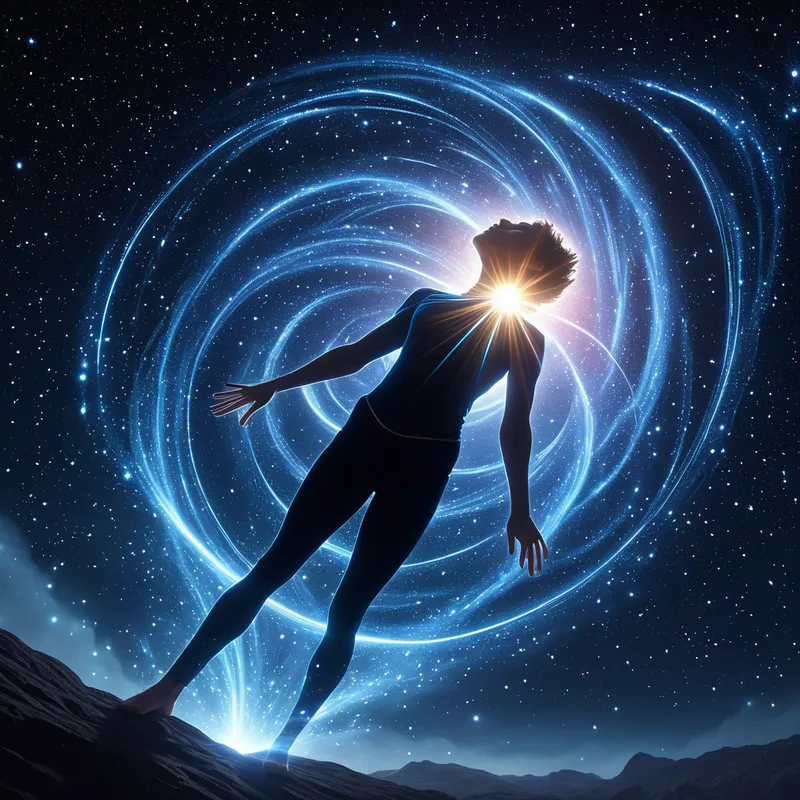
It begins not as a thought, but as a tremor in the foundation of feeling. A deep, cellular dissonance. The body, that ancient and forgotten oracle, registers a profound mismatch long before the mind can articulate it. It feels like a low-grade fever of the soul, a persistent hum of wrongness beneath the skin of your daily life. You move through consensus reality—the job, the conversations, the routines—but it feels like wearing a suit tailored for someone else’s skeleton. There is a pressure behind the eyes, a sense that the world you see is a projection on a scrim, and just behind it, something immense, silent, and true is waiting. This is the pre-verbal ache of the gnostic impulse: the body’s innate knowledge that it has been speaking a borrowed language, living in a rented psyche.
The Dreamer's Log
The dreamer finds themselves in a derelict data archive, a cathedral of dead servers. They are not searching for a file, but for a specific frequency—a hum felt in the teeth. In a sub-basement, they discover a terminal alive with a language of light, not code. As they touch the screen, the symbols flow up their arm, not into their mind, but directly into the marrow of their bones, translating not as information, but as a forgotten sense of weight and temperature.
This is the alchemy of direct knowing: the system’s encrypted truth bypassing the interpreting ego to be written directly into the flesh.

The False Lead
This is not a dream of mere intellectual curiosity or a passing fascination with the occult. It is not about acquiring secret facts to feel superior. The gnostic dream is often mistaken for a call to simply reject the world, to become a cynical hermit cursing a fallen reality. That is the shadow, the arrested development of the impulse. The true call is not to escape the world, but to see through the consensus interpretation of it—to dissolve the intermediary and experience the thing-in-itself, however terrifying or sublime. It is a rebellion against the psychic middle-man, not against matter itself.
Psychological Architecture
The work here is the most perilous of interior excavations: the dismantling of the inherited self. We are born into a world already explained, into a psyche pre-furnished with the myths, traumas, and assumptions of our family and culture. This is the archonic structure—the inner governing committee of introjected voices, societal shoulds, and trauma responses that mistake their programming for free will. The gnostic dream marks the moment when the central, authentic spark (the pneuma) recognizes itself as a prisoner in this automated palace.
The Shadow work is immense. You must confront the part of you that is the warden, that clings to the safety of the known prison. You must befriend the exiled parts of yourself that the archonic system labeled dangerous, shameful, or useless—for they often hold the keys. Individuation in this realm is not about building a better, shinier ego within the old walls. It is the slow, deliberate process of feeling for the seams in the reality-tunnel, of listening to the body’s dissonance as your only true compass, and having the courage to deconstruct the very foundation of your perceived identity to find what is authentically, inalienably you beneath the persona.
Mythic Resonance
This is the journey of the Sumerian goddess Inanna, who descends through the seven gates of the underworld. At each gate, a piece of her regalia—her crown, her lapis beads, her royal robe—is stripped away, not by an enemy, but as the required toll for passage. She arrives in the depths naked and bowed, only to be killed and hung on a hook. Her resurrection comes not from fighting the system, but from submitting to its utter deconstruction. She returns not with her old power, but with a deeper, unadorned sovereignty. Each piece she surrendered was a label, a role, a consensus truth about who she was. The gnostic dream is that first step through the first gate, feeling the initial, terrifying loss of a cherished identity.
Symbolic Nodes
- Encrypted Texts/Unreadable Code: The psyche’s truth, waiting for the correct key (somatic feeling, not intellectual analysis).
- False Gods/Simulated Authorities: Figures of hollow power, smiling bureaucrats, or familiar faces speaking alien scripts.
- The Spark in the Machine: A single living plant in a sterile room, a warm light in a cold system, the feeling of blood in a world of plastic.
- The Sub-Basement, The Forgotten Archive: The deep unconscious, the place before the programs were installed.
- Direct Transmission (light into body, sound into bone): Bypassing the cognitive mind for embodied knowledge.
Archetypal Resonance
The energy here is pure The Rebel Archetype. Not the cartoonish anarchist, but the sacred destroyer whose revolution is interior. The Rebel’s core question is “What rules or structures must be broken to restore authenticity?” This resonates perfectly with the somatic echo of wrongness and the dream’s drive to shatter the consensus reality-tunnel. The Rebel does not seek chaos, but the destruction of the false to make space for the true. Its alchemical potential lies in its terrifying willingness to declare, from a place of deep bodily knowing, “This reality is not mine. This self is not mine. I will dismantle it, even if all I have left, initially, is the rubble and my own two hands.”
The Alchemical Process
The transmutation is from captive spark to embodied sovereign. The prima materia is the grief of alienation—the profound sorrow of realizing how much of your life has been lived through a filter, and the terror of the blankness that follows deconstruction. The required heat is sustained somatic attention. It is the pressure of staying with the bodily feeling of dissonance without rushing to explain it away with old stories or new ideologies. You must let the old inner software crash without immediately rebooting it.
The alchemical fire is lit in the gap between stimulus and conditioned response. In that moment of pause, as you feel the archaic impulse to people-please, to perform, to flee, you instead drop your awareness into the body. What is the physical sensation of that program running? The tightness, the hollow ache, the buzz? You hold the fire of your attention there. This heat melts the glue binding the false identity. Slowly, the spark learns it can feel, can know, can choose from a place prior to the inherited script. The leaden grief of lost time becomes the gold of present-moment authority.

The Integration Protocol
Question 1: Where in my life do I feel the deepest sense of “performing” a reality that rings hollow in my bones? What is the physical sensation that accompanies that performance?
Question 2: What is one belief about myself (e.g., “I am not capable,” “I must be liked,” “This is just the way the world is”) that I have never genuinely chosen, but simply inherited? How does my body feel when I imagine that belief being true? How does it feel when I imagine it being false?
Question 3: If my direct, embodied knowing—not my thoughts, fears, or hopes—were the only legitimate authority in my life, what is one small thing it would have me do differently today?
Action 1 (Somatic Grounding): For one week, practice this: before answering a question or agreeing to a request, pause for three breaths. In that pause, don’t think. Feel. Drop your awareness to your solar plexus or gut. Note the subtle somatic response: a tightening, a relaxing, a warmth, a chill. Let this felt sense, however faint, inform your “yes” or “no.”
Action 2 (Creative Deconstruction): Take a large sheet of paper. In the center, draw or write a symbol of a core identity you hold (e.g., “The Good Child,” “The Responsible One,” “The Seeker”). Now, with a different color, draw the “wires” or “roots” of that identity—where did it come from? Family? Trauma? Culture? Then, with a third color, draw what is beneath or before that wiring. Use abstract shapes, textures, colors. Don’t create a new identity; visualize the space where the old one was installed.
Action 3 (Ritual of Direct Knowing): Go into nature, to a place as untouched by human narrative as possible. Find a simple, natural object—a stone, a leaf, a patch of moss. For ten minutes, practice knowing it not through your mind (naming its type, its uses) but through your senses alone. Feel its temperature, its texture, its weight. See its color without the word for the color. Listen to any sound it makes. Let the direct sensory experience be the only “truth” of the object. Carry this stone or leaf with you as a talisman of unmediated knowledge.
Final Validation
To have this dream is to be chosen for a task that is, by its nature, profoundly lonely and disorienting. It means your psyche is strong enough to no longer tolerate the anesthesia of consensus reality. The path ahead asks you to un-become everything you were told you were, to walk through the world feeling its illusory textures while sensing the immense, silent truth behind it. This is not a path of comfort, but of ultimate sovereignty. The grief for the familiar dream is real. Honor it. Then, let the hum in your bones, the tremor in your foundation, become your only compass. It is not leading you out of the world, but into its—and your—long-forgotten, authentic heart.