
The Alchemy of Escape: When the Dream Longs to Be Free
The Somatic Echo
Before the mind conjures images of open roads or broken chains, the body knows. It is a specific, cellular restlessness. A hum in the bones that feels like a low-grade electrical current. The breath becomes shallow, held captive just beneath the sternum, as if the ribs themselves have become a cage one forgot they inhabited. There is a tension in the jaw, a readiness in the calves—not for fight, but for flight. It is the somatic signature of a system that has outgrown its operating parameters. This is not anxiety’s frantic buzz; it is the deep, tectonic groan of a psyche preparing to shed a skin. The dream of escape begins here, in this silent, visceral uprising.
The Dreamer's Log
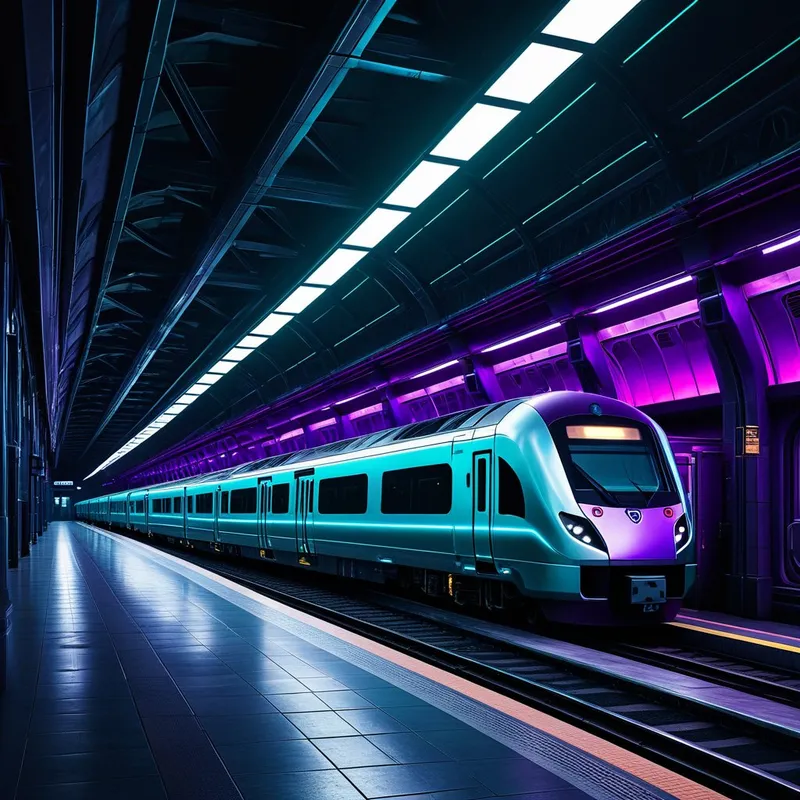
The platform is endless, made of dark, geometric stone. A train of seamless silver waits, its doors open, humming with a promise of departure. I know I must board it, but my feet are fused to the ground. I look down; my shadow has grown roots, tendrils of obsidian digging deep into the platform, holding me in a grip of terrible familiarity.
This is the alchemy of the threshold: the profound tension between the call of the unknown and the anchor of the known, where the very act of wanting to escape becomes the first crack in the foundation of your prison.
The False Lead
This theme is not about circumstantial dissatisfaction—a bad job, a difficult relationship. Those are its costumes. To mistake the dream for a simple instruction to quit or leave is to remain on the literal surface, forever rearranging the furniture in the prison cell. The true dream of Freedom & Escape is never about geography. It is about ontology. It is not fleeing from a persecutor, but from a version of yourself that has become the warden. The terror is not of the outside world, but of the internal authority you have consented to, the life sentence you have silently ratified. The dream exposes not bad luck, but a structural flaw in the architecture of the self.
Psychological Architecture
The work here is shadow work of the most intimate kind. It is the Individuation process in its raw, muscular phase. You are not integrating a fragmented “part”; you are confronting the central, governing principle of your captivity. Often, it wears the face of a noble value: duty, loyalty, safety, responsibility. This is the prison built with gold-plated bars. The dream reveals the cost of this contract. The rooted feet on the platform are not a failure; they are a brilliant diagnostic. They show you exactly where you have traded sovereignty for security, where you have allowed your identity to become calcified into a role, a function, a “should.”
The escape, therefore, happens inwards first. It is the dissolution of an internal monarchy. You must depose the inner ruler who confuses control for order, the inner caregiver who mistakes suffocation for protection. This is the revolt of the authentic self against the colonial administration of the adapted self. The grief that arises is for the life not lived, the choices unmade, the self betrayed for the sake of a peace that was, in truth, a quiet ceasefire. To move through this grief is not to destroy your life, but to stop being a ghost haunting its corridors.
Mythic Resonance
Consider Icarus. The common reading is a warning against hubris. But feel into the myth’s deeper firmware. The escape from the labyrinth was a success. The prison of the Minotaur was breached. His flight was the moment of pure, ecstatic liberation. The tragedy was not the escape, but the nature of the freedom he sought—an unbound, vertical ascent into the sun, a rejection of all limits, including the essential ones of earth and wax. His dream was pure, unchecked escape. Contrast this with the shaman’s journey, a universal mythic pattern. Here, the practitioner deliberately enters a trance state—a psychological labyrinth—to retrieve knowledge or healing. The escape is not from the underworld, but with its gifts. The goal is not to flee the depths, but to master the passage between worlds, to become sovereign of the threshold itself. This is the matured dream of freedom: not flight from constraint, but the wisdom to navigate it.
Symbolic Nodes
- Vehicles in stasis: Trains that won’t leave, cars without engines, bicycles with broken chains. The means of escape is present but non-functional, highlighting an internal, not external, blockage.
- Open doors/windows with an invisible barrier: The threshold is visible, the beyond is inviting, but an unseen force field of fear or obligation holds you back.
- Melting walls or dissolving cages: The architecture of confinement loses its solidity, signaling the psyche’s capacity to deconstruct its own prisons.
- Being pursued through familiar places: The escape is frantic, but the landscape is known. You are running from a threat within your own psychic territory.
- Finding hidden rooms or secret passages in your own home: The liberation is not somewhere else, but concealed within the very structure of your existing life.
Archetypal Resonance
The Rebel Archetype is the pure, catalytic energy of this theme. Its somatic echo is that electric hum in the bones, the urge to break the pattern. Its core drive is not chaos, but revolution—to dismantle what is oppressive, outdated, or inauthentic to make space for something true. In its mature form, the Rebel does not destroy for destruction’s sake; it deconstructs the false structures of the self. The shadow of the Rebel—the Outlaw or Anarchist—is the false lead manifest: the compulsive, externalized rebellion that leaves the internal tyrant untouched, creating only a different kind of chaos. The alchemical potential of the Rebel is to turn its force inward, to stage the coup against the inner regime, transforming blind escape into conscious, sovereign emancipation.
The Alchemical Process
The transmutation here is from the lead of constrained identity to the gold of sovereign selfhood. The required heat is immense. It is the fire of conscious discomfort—the decision to stop numbing the restlessness, to actually feel the roots holding you to the platform. The pressure is the crucible of contradiction: holding the intense desire for freedom alongside the terrifying weight of what that freedom actually demands. You must let the old identity, the one that fits so neatly into its constraints, begin to crack and blister in this heat.
This is not a gentle melting. It is a violent decoupling. The grief for the lost, safe, known self must be fully metabolized. The terror of the formless, post-revolutionary space must be endured. The alchemy occurs in that liminal void, after the prison walls have been torn down but before the new architecture is built. In that terrifying openness, you are no longer defined by what you escaped from. You are forced to ask, from a place of raw essence: What am I escaping for? The answer that forms from this emptiness is the gold. It is not a new cage, but a self-authored law.

The Integration Protocol
Question 1: Where in my waking life do I feel the most resonant echo of that "rooted foot" on the dream platform? What specific thought, obligation, or identity makes me feel fused in place?
Question 2: If the pursuing force in the dream, or the invisible barrier at the door, had a voice, what single sentence does it repeat to keep me in place? (e.g., "You will be alone," "You cannot handle it," "You owe this.")
Question 3: What is the very first, smallest, most microscopic act of internal rebellion I can commit today? Not against an external authority, but against the internal voice that demands compliance.
Action 1 (Grounding the Roots): Stand barefoot on the ground. Feel the actual earth or floor. Imagine the binding roots from your dream visibly extending from your feet. With each exhale, visualize them not retracting, but voluntarily releasing their grip, filament by filament, returning your energy to you. Feel the weight return to your own body.
Action 2 (Mapping the Labyrinth): Take a large piece of paper. In the center, draw a simple symbol of your current feeling of constraint (a box, a knot, a locked door). Without thinking, let your hand draw lines outward from it—not as an escape route, but as a map of the constraint’s architecture. What rooms are in this prison? What are they named? (Duty, Fear, The Family Script). This is not planning an exit, but understanding the blueprint of your captivity.
Action 3 (The Silent Coup): Perform a simple, quotidian ritual of sovereignty. Make a cup of tea exactly how you like it, with no consideration for anyone else’s taste. Take a walk with no destination. Sit in a room and do absolutely nothing of "value" for ten minutes. In these acts, you are not fleeing. You are quietly, peacefully, deposing the inner warden who dictates every action.
Final Validation
The longing to escape is not a flaw. It is the clearest signal your soul can send. It is the proof that a truer, more vital life is not only possible but is already pressing against the shell of your current existence. This process is arduous because it asks you to become a stranger to the person you have known yourself to be. Honor the difficulty. Then, honor the rebel spark that refuses to settle for the ceasefire. Your dream is not a map to a new land. It is the slow, deliberate, and courageous act of becoming the sovereign of the one you already inhabit.