
The Dream of Fragile Majesty
The Somatic Echo
Before the image forms, the body knows. It is a sensation held in the hollow of the throat and the cradle of the pelvis: a simultaneous lifting and sinking. You feel the expansive pull of a crown too heavy for its wearer, a regal bearing that strains the spine while a deep, tender ache whispers of hairline fractures in the foundation. Your breath catches not in fear, but in a kind of reverent dread—the awe of standing before a glacier calving into a silent sea. It is the physical recognition of a truth the mind resists: that what is most powerful within you is also what is most exquisitely breakable. This is the somatic signature of Fragile Majesty, the visceral prelude to a dream where sovereignty and vulnerability are not opposites, but the twin chambers of the same heart.
The Dreamer's Log
In the dream, I am tasked with carrying a crown of spun glass and lightning across a shattered plain. Its light is necessary to heal the land, but with every step, I feel the delicate structure vibrate, humming a note so high it is almost a scream. I am not afraid it will be stolen; I am terrified I will breathe too hard and shatter it myself.
This is the alchemical dilemma in its purest form: the burden of a transcendent potential whose very activation depends on the tenderness of its bearer.
The False Lead
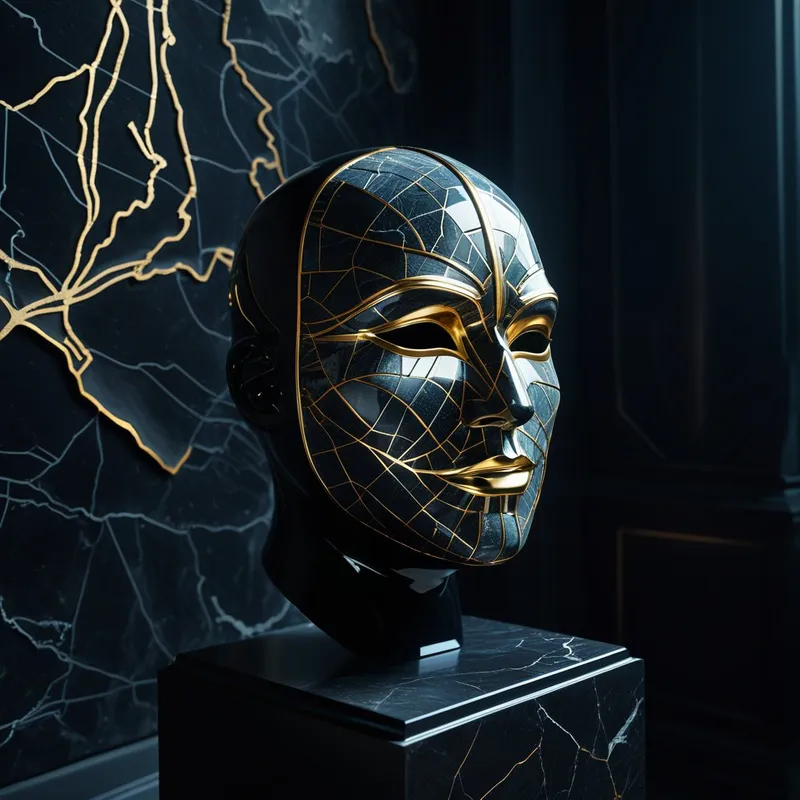
This theme is not a portent of impending failure or a sign that your power is an illusion. To mistake Fragile Majesty for mere "imposter syndrome" is to commit a profound error. The imposter feels like a fraud in a costume; the dreamer of Fragile Majesty feels the authentic, terrifying weight of a real crown that could, in fact, crack. This is not about the absence of majesty, but about its perilous, living reality. It is the opposite of a deficit; it is an overwhelming surplus of potency that the current vessel of the self struggles to contain. The fear is not of being found out, but of being responsible for a beauty and power that feels too fine for this world.
Psychological Architecture
To dream of Fragile Majesty is to stand at the precipice of a profound Individuation process, where the psyche is restructuring its core governance. Imagine an internal family system where the inner Ruler—the part that commands, organizes, and holds authority—has been operating from a place of rigid, unfeeling stone for protection. The dream introduces its counterpart: the inner Vessel, the aspect that feels, contains, and is permeable. The Shadow work here is to dethrone the tyrannical Ruler not by destroying it, but by having it lay down its stony sceptre and touch, for the first time, its own fragility.
The terror in the dream is the terror of integration. The majestic part (the glass crown, the sacred object) has been kept in a psychic vault, separate and idolized, because to bring it into daily life is to risk it. The alchemical task is to stop protecting the majesty from the self and start letting the majesty inform the self. This means allowing the competent, capable persona to be pierced by its own sensitivity, to let the leader be led by its own tenderness. The foundation isn't crumbling; it is becoming more complex, trading monolithic stability for resilient flexibility.
Mythic Resonance
We see this eternal process in the myth of the Fisher King, guardian of the Holy Grail. His kingdom is a wasteland, mirroring his own unhealed wound—a wound of fragility in his thigh, the seat of generative power. The Grail, the ultimate symbol of divine majesty and sustenance, is present in his castle, but it cannot flow, cannot heal the land, until the King himself addresses his own brokenness. The majesty is not lost; it is paralyzed, waiting for the sovereign to integrate his vulnerability. Similarly, in the tale of the Goose that Laid the Golden Eggs, the tragedy is not the lack of gold, but the impatient, forceful attempt to possess all the majesty at once, which destroys the fragile, living source. The myth warns that majesty requires a rhythm, a respect for the vessel that produces it.
Symbolic Nodes
- Cracked or Delicate Crowns/Jewels: Authority that feels inherited, burdensome, or perilously fine.
- Giant, Sleeping, or Wounded Beasts: Immense personal power that is dormant, restrained, or in a state of vulnerable stasis.
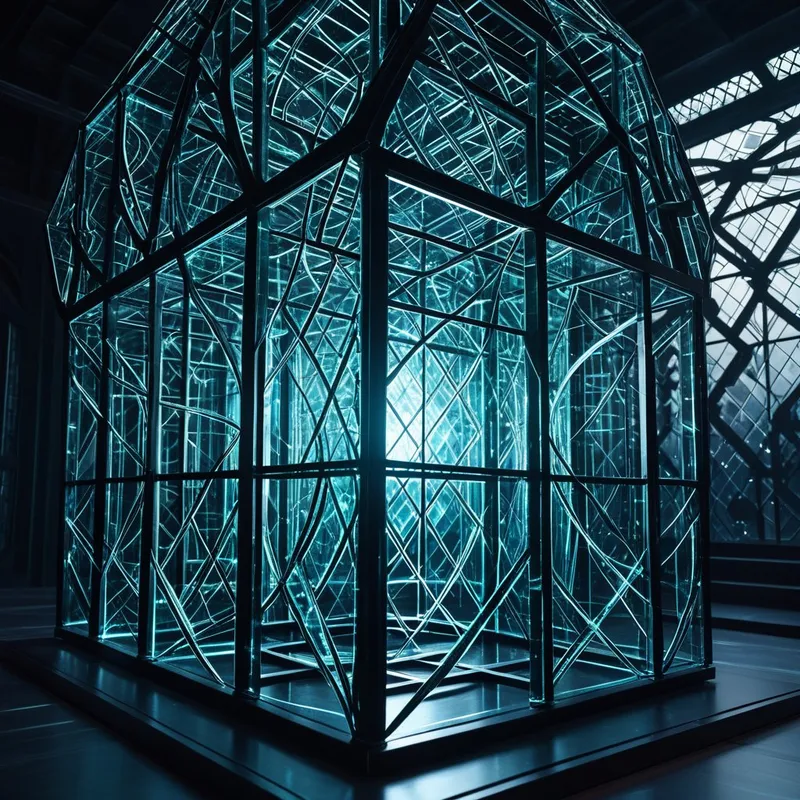
- Glass Towers or Crystal Structures: A luminous self-image or aspiration that feels transparent, beautiful, and terrifyingly easy to shatter.
- Carrying a Precious, Liquid Light: The burden of consciousness, insight, or spiritual responsibility that feels impossible to contain without spillage.
- A Sacred Object in a Battlefield: The tension between a pristine inner truth and the chaotic, abrasive demands of external reality.
Archetypal Resonance
The core energy of Fragile Majesty resonates most powerfully with The Ruler Archetype, specifically in the moment of its transformation from its Shadow to its integrated form. The Shadow Ruler operates from a place of rigid control, fearing that any crack in the armor will lead to total collapse of authority. The dream of Fragile Majesty is the psyche's rebellion against this tyranny of brittleness. It presents the Ruler with its own core truth: that true sovereignty is not about being impervious, but about wise governance that includes the governance of one's own sensitivity. The somatic echo of strained bearing is the Shadow Ruler's posture; the alchemical potential is to transform that strain into a regal ease that can hold power and permeability, to become a monarch who rules with a hand steady enough to hold a butterfly.
The Alchemical Process
The transmutation of Fragile Majesty requires the heat of conscious relationship with the fragile object itself. This is not a process of "toughening up" the glass or "melting down" the crown into something less majestic. The alchemy is in the relationship between the holder and the held. The pressure is applied by deliberately bringing the majestic symbol into contact with the parts of life you have deemed too rough for it—not to break it, but to prove its nature to yourself.
The solve (dissolution) phase is allowing the old, rigid identity of the "strong one" or the "perfect holder" to soften and admit its fear of dropping the precious cargo. The coagula (re-forming) phase is the slow, patient practice of holding the majesty with a new kind of strength: one that is attentive, responsive, and forgiving. The grief is for the illusion of invulnerability; the terror is of authentic responsibility. The sovereign Self that emerges is not a figure on an unassailable throne, but a skilled artisan, whose power lies in the knowing, delicate touch that can both create and repair the finest things.
The Integration Protocol
Question 1: Where in my waking life do I feel the same somatic tension—that simultaneous pull of expansion and caution—as I did in the dream? What "crown" am I wearing there?
Question 2: If the fragile object in my dream could speak, what one law or principle would it ask me to govern by, that my current internal "rule" is violating?
Question 3: What small, beautiful, or potent aspect of myself have I been keeping in a vault, separate from my daily life, for its own protection? What is the first, gentlest step to bringing it into the light?
Action 1 (The Conscious Breath): For one minute, three times a day, place a hand on your heart and a hand on your solar plexus. Breathe into the tension between them—the tenderness and the will. Imagine the breath weaving a resilient filament between these two centers.
Action 2 (Unstructured Vessel Writing): Take a blank page. Without narrative or purpose, write only the sensations, images, and fragmented words associated with the "fragile" part and the "majestic" part. Let them exist on the page without forcing a connection. The act of holding them both in the same space is the ritual.
Action 3 (The Ritual of Mended Sovereignty): Find a small, delicate natural object (a dried leaf, a thin shell, a flower). Carefully break it once. Then, using glue, gold paint, or simply your focused attention, mend it. Place it where you will see it daily, not as a symbol of brokenness, but as a testament to the fact that the act of repair becomes part of the object's majesty and story.
Final Validation
It is a hard thing, to be chosen as the guardian of something both magnificent and delicate within yourself. The fear is not a sign of weakness, but a proof of the value of the cargo. This tension is not your undoing; it is the forge of a more complete authority. Your sovereignty awaits not in the denial of the crack, but in the grace with which you learn to hold the light that shines through it. The integration is complete when you realize the fragility was never a flaw in the majesty, but its most essential, defining feature.