The Somatic Echo
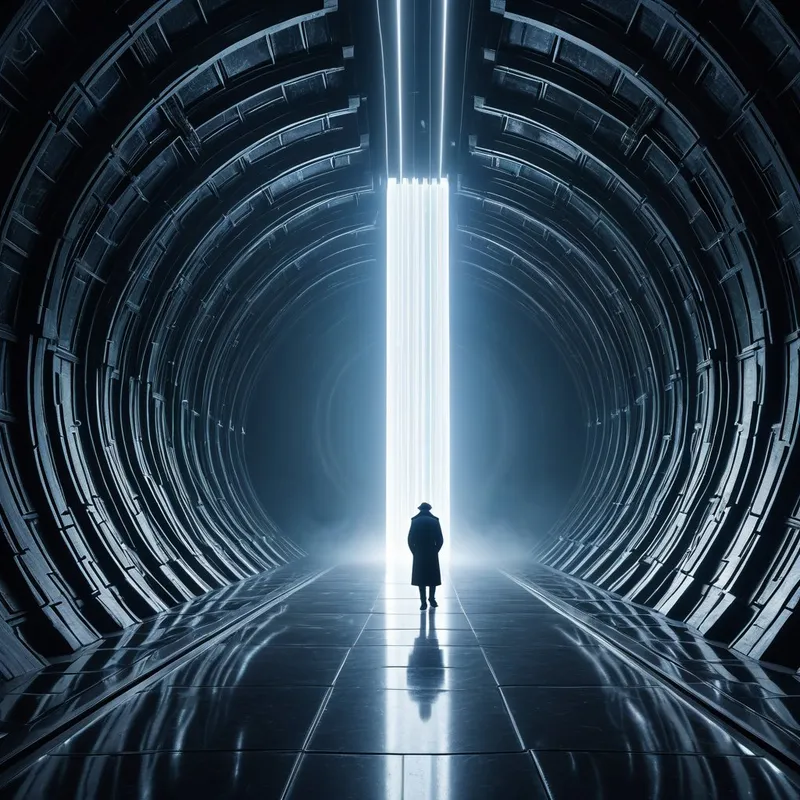
Before the image forms, the body knows. It is a specific, hollow tension—a feeling of being pulled in too many directions at once, yet anchored to none. The diaphragm feels thin, the breath shallow, as if the air itself is fragmented. There is a low-grade hum in the skull, not a headache, but the static of a dozen internal radios tuned to different stations. The hands may feel restless, wanting to grasp something, but finding nothing of substance to hold. This is the somatic signature of a psyche whose attention is dispersed, whose will is partitioned into competing factions. It is the visceral ache of a self that is not yet a sovereign, but a committee in perpetual, silent debate.
The Dreamer's Log
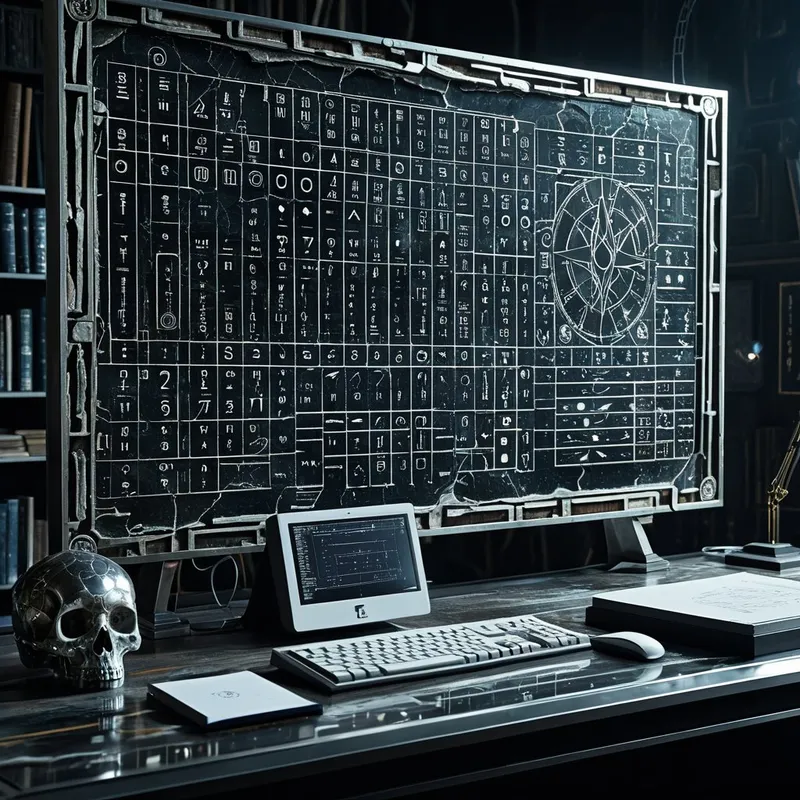
The dreamer stands before a terminal of bone-white stone, its screen a cascade of urgent, overlapping glyphs. Each demands a response, a password, a key. Their hands hover over the interface, fingers twitching, but every attempted command dissolves before it completes. From the periphery, whispers of other rooms, other screens, other unresolved tasks bleed into the space. The only clear thing is a single, perfect drop of mercury suspended in the air before them, holding the entire chaotic reflection of the room in its impossible, unified surface.
Alchemical Interpretation: The psyche presents the crisis of a fragmented will, where the multiplicity of internal demands paralyzes the central executive, leaving only the silent, reflective potential of unified consciousness (the mercury) as the untouched solution.
The False Lead
This is not a dream about mere distraction or poor time management. To interpret it as a simple nudge to "get organized" is to mistake a tectonic shift for a surface tremor. The theme of Focus in dreams is not about optimizing a scattered life, but about confronting the architecture of the scattering itself. It is not a critique of your to-do list, but a profound inquiry into why your consciousness has been partitioned into so many competing lists to begin with. The terror here is not of unfinished tasks, but of a disintegrated self.
Psychological Architecture
Beneath the somatic echo lies a deep structural negotiation within the internal family system. Each fragment of attention, each half-finished thought, each peripheral whisper in the dream is often a distinct part of the self—an exile, a manager, a firefighter—vying for the throne of consciousness. The Shadow work here is to cease seeing these parts as interruptions to your "real" focus, and to begin recognizing them as claimants to your sovereignty. They are not enemies of focus; they are its disinherited constituents.
The individuation process at play is one of painful, deliberate re-collection. It is the alchemical solve et coagula applied to the psyche: first, to fully acknowledge and feel the dissolution (the solve—the scattered, chaotic terminal), and then to undertake the fierce, loving work of re-coagulation. This requires sitting in the unbearable heat of that chaotic chamber and, instead of frantically responding to each glyph, turning your attention inward to ask of each fragment: "What do you need? What are you protecting? What throne do you seek?" The goal is not to silence the committee, but to become its conscious, compassionate, and decisive chair.
Mythic Resonance
We see this universal firmware in the myth of the Gordian Knot. The kingdom is paralyzed, its future bound up in an impossibly tangled, focus-defying puzzle. The conventional approach—to patiently pick apart each strand—is the ego's attempt to manage the fragmentation. Alexander’s solution is the archetypal act of focused will: not untangling the external complexity, but imposing a singular, decisive cut that liberates the sovereign function. The dream is the knot within; the focused will is the sword.
Similarly, the Buddhist parable of the monkey mind—the mind swinging wildly from branch to branch of thought—is not merely a description of distraction. It is a diagnosis of a consciousness that has mistaken the branches for the tree, the fragments for the self. The practice of focus (samadhi) is the arduous training to return, again and again, to the root, to the trunk, until the monkey settles and the true, unified nature of mind is revealed.
Symbolic Nodes
- A Single Point of Light in a vast darkness.
- A Lens (magnifying glass, camera, eye) that clarifies or burns.
- A Still Pool amidst turbulent waters.
- A Key that fits only one, specific lock.
- A Narrow Path or Corridor through a chaotic landscape.
- A Suspended Drop of liquid (mercury, water, oil).
- A Tuning Fork vibrating at a pure frequency.
- A Forgotten, Central Room in a sprawling mansion.
Archetypal Resonance
The energy of this theme resonates most powerfully with The Ruler Archetype—specifically, its latent potential emerging from the chaos of its Shadow. The Shadow Ruler manifests as the fractured terminal: the tyrant of competing demands, the control-freak who cannot control its own domain because it has not integrated its populace. The somatic echo is the feeling of a kingdom in civil war.
The alchemical potential lies in the Ruler's core mandate: to establish order, create structure, and assume responsibility for an entire realm. The focused will is the sovereign's scepter. To move from the shadow to the essence requires the Ruler's most profound task: not to dominate the scattered parts, but to legitimize them, to give each a rightful place in a cohesive hierarchy of the self. The focused mind is not a dictator's mind, but a sovereign's mind—one that can hold the complexity of the entire kingdom and from that awareness, issue a clear, unified decree.
The Alchemical Process
The transmutation here is from Fragmented Attention to Sovereign Will. The prima materia is the chaotic, buzzing field of competing impulses and partial attentions. The heat required is the intense, uncomfortable pressure of sustained inner observation without action—the conscious refusal to engage the glyphs on the screen, while also refusing to look away. This pressure cooks the chaos.
In this heat, grief may arise—for time lost to fragmentation, for projects abandoned, for a life lived reactively. Terror may surface—the fear that if you truly focus, you will have to choose one path and abandon all others, that you will have to become someone specific. This is the critical moment. The alchemical coagula occurs when, from the center of this heat, a conscious choice is made: not a choice of which task to do, but a choice of who you are in this moment. The drop of mercury forms. The scattered light converges. The sovereign will, born of integrated awareness, crystallizes. The fragmented kingdom pledges allegiance to a single crown.
The Integration Protocol
Question 1: In the dream's chaos, what was the one thing that remained still, clear, or singular? What part of you does that object represent?
Question 2: If each flickering glyph on the terminal were a voice from a different part of you, what is the most fearful or desperate thing each one is trying to tell you?
Question 3: What kingdom within you is waiting for a sovereign's decree? What is the first, simplest law you would establish for your inner realm?
Action 1 (The Sovereign's Breath): For three minutes, sit in silence. With each inhalation, imagine gathering all scattered light, sound, and feeling from the periphery of your awareness. With each exhalation, imagine directing this collected energy into a single, still point at your core. Do nothing else.
Action 2 (The Glyph Translation): Engage in unstructured, stream-of-consciousness writing. Let it be chaotic. Then, read it back. Circle every sentence that feels like a demand, a "should," or a fragment of a larger thought. Address each one directly in writing: "I see you. You are part of me. Your concern is noted." This is the act of legitimizing your internal parliament.
Action 3 (The Ritual of the Single Point): Choose one small, simple, and completeable act of creation—drawing a single, deliberate circle on a page; polishing one stone until it shines; writing one perfect sentence. Perform it with absurdly slow, total attention. Upon completion, consciously state: "This is an act of a unified will." This ritualizes the coagula.
Final Validation
To dream of focus is to feel the profound ache of your own dispersal. It is difficult because it asks you to stop managing the chaos and instead, to become the calm eye at its center—a terrifying proposition of stillness. Yet this very call is proof of the latent sovereign within. The chaos is not your failure; it is the raw material of your becoming. The psyche does not mock you with images of focus because you lack it, but because you are ready to forge it. The scattered light awaits your command to converge. The kingdom awaits its ruler.