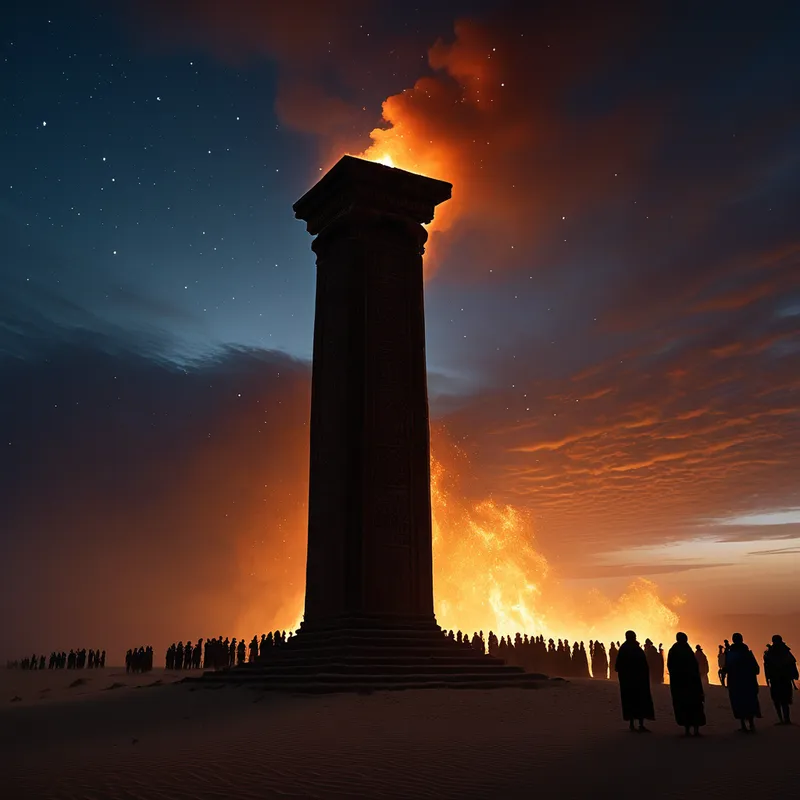
The Exodus: Dreaming the Soul's Non-Negotiable Migration
The Somatic Echo
It begins not as a thought, but as a tectonic ache. A deep, cellular restlessness that feels like a low-frequency hum in the marrow of your bones. It is the body’s pre-linguistic knowledge that the ground beneath you is no longer ground; it has become a husk, a shell you have outgrown from the inside. You may feel it as a tightness in the diaphragm, a held breath waiting for permission to release. Or as a peculiar lightness in the limbs, a phantom sensation of already being unmoored, as if your physical form is rehearsing a weightlessness it has not yet earned. This is the somatic echo of exodus—the visceral, often terrifying intuition that a foundational chapter of your inner world has reached its terminus. The borders are closing. The water is undrinkable. The internal climate can no longer sustain the life you are becoming. The body knows the truth long before the mind can formulate the story: it is time to go.
The Dreamer's Log
The dream is simple and stark. You are standing on a rain-slicked city street at midnight, a single suitcase at your feet. The buildings are familiar, but their windows are dark, their doors sealed shut with rust. A train you did not hear arrive is now pulling away, its red taillights dissolving into the fog. You look down. The suitcase is open, and inside are only three things: a childhood stone, a key that fits no lock you own, and a photograph bleached white by light. You understand, without words, that you must walk.
This is the alchemy of severance: the conscious mind packing a life, while the soul selects only the irreducible, symbolic seeds necessary for the journey into an unknown self.

The False Lead
An exodus dream is not a narrative about circumstantial bad luck, a stressful week, or a simple desire for a vacation. To mistake it for such is to confuse the collapse of an internal continent with a passing storm. This theme is not about running from a problem, but being called by a necessity so profound it reorganizes your psychic geography. It is distinct from dreams of mere escape or flight, which often carry the frantic energy of avoidance. Exodus carries the solemn, heavy gravity of destiny. It is not the ego’s whim, but the soul’s imperative. The pressure you feel is not persecution, but gestation. You are not being chased out; you are being born out.
Psychological Architecture
To dream of exodus is to stand at the raw interface between the persona—the city you have built and called yourself—and the shadow lands beyond its walls. This is the deepest Shadow work: the confrontation with everything you exiled to build that city. The repressed grief, the disowned power, the forsaken creativity, the muted instincts—they are the population of the wilderness. The journey out is, paradoxically, a journey in, to re-collect these orphaned parts of your psyche. Individuation here is not an accumulation, but a distillation. It is the process of letting the false, complex structures of an adapted life crumble so the simple, fierce architecture of the essential self can be revealed. You are not losing a home; you are dissolving a prison you mistook for one. The grief is real, for you are mourning a self that was, but the terror is sacred, for it is the friction of your becoming.
Mythic Resonance
This psychic migration is the oldest human story. It hums in the bones of the Hebrew Exodus—not merely a flight from Pharaoh, but a forty-year unraveling in the desert to forge a people incapable of being slaves, to let the slave-mentality die so a covenant-consciousness could be born. It whispers in the Cherokee legend of the Trail of Tears, a forced march that became, in the soul’s ledger, a brutal alchemy of displacement and unimaginable resilience, where identity had to be carried internally when the external world was stripped away. These are not just historical events; they are universal psychic blueprints. They tell us that the path to promised land, to wholeness, always leads through a necessary wasteland where the old gods—our outdated beliefs and dependencies—are left to bleach in the sun.
Symbolic Nodes
- Abandoned Dwellings: Houses with empty rooms, cities devoid of people, familiar places now foreign.
- Vehicles of Departure: Trains, buses, ships, or cars leaving without you, or waiting with urgent, silent purpose.
- Bridges & Borders: Crossing a threshold, a checkpoint, a river, or a mountain pass from one state of being into another.
- Sparse Packing: A single bag, a handful of meaningless or deeply symbolic items, the conscious leaving behind of possessions.
- Barren Landscapes: Deserts, tundras, vast oceans, or featureless roads representing the fertile void of the unknown.
- Receding Guides: Figures (parents, old teachers, former selves) waving goodbye or fading into the distance.
Archetypal Resonance
The engine of this profound migration is The Explorer Archetype in its purest, most urgent expression. This is not the Explorer as casual tourist, but as compelled pioneer. Its energy is the somatic echo of restlessness made holy. It resonates with the core of the exodus theme because it is the archetype that values the authenticity of the unknown over the comfort of the familiar, even when that comfort is a gilded cage. Its shadow—the Aimless or Alienated wanderer—is the risk: leaving not in response to a soul-call, but in flight from one’s own inner emptiness, turning the wilderness into a prison of perpetual seeking. The alchemical potential of the Explorer here is to transmute the terror of leaving into the discipline of seeking, to find the inner compass that makes the wasteland a sacred path.
The Alchemical Process
The alchemy of exodus is Calcination followed by Dissolution—the twin fires of the desert. Calcination is the intense, dry heat that burns away the non-essential: your attachments to old identities, the crutches of outdated narratives, the deadwood of relationships that sustain only your former self. This is the psychological pressure that feels like crisis, grief, or unbearable friction. It reduces you to your essential ash. Then comes Dissolution, the flood that follows the fire. This is the surrender to the journey itself, the allowing of the old, rigid structures to be washed away in the tears of release and the waters of the unknown. The transmutation occurs in the liminal space between these two states—in the walking itself. Sovereignty is forged not by arriving at a new destination, but by embodying the truth that you are the journey. Your authority comes from having consented to your own unraveling and re-weaving.

The Integration Protocol
Question 1: What is the one room in the house of my current life that feels most like a museum—beautiful, preserved, but utterly lifeless? What is being curated there?
Question 2: If my suitcase could only hold three non-physical things for this inner journey (e.g., a memory, a quality, a truth), what would they be? Why these?
Question 3: Who or what, internally, is the ‘Pharaoh’ I am leaving behind? What voice or rule demands I stay in a land that has become barren for my spirit?
Action 1 (Somatic Anchoring): For five minutes each day, stand barefoot. Feel your weight on the ground. Then, slowly shift your weight from foot to foot, whispering inwardly, “I am here. And I am leaving.” Hold the paradox in your body until it becomes a rhythm, not a conflict.
Action 2 (Unstructured Cartography): Take a large sheet of paper. With your non-dominant hand, draw the landscape of your exodus. No representational art—just lines, shapes, smudges, colors for the “old land,” the “threshold,” and the “wilderness.” Let the map be felt, not thought.
Action 3 (Ritual of Relinquishment): Find a small object that symbolizes a dependency or identity you are being called to leave. Take it to a crossroads—a literal intersection of paths, or a shore where water meets land. Thank it for its service. Then, leave it there. Do not look back.
Final Validation
The path feels lonely because it is yours alone to walk. The grief is real because a version of you is dying. The fear is vast because the future is not a blueprint, but a breath. Honor this. To feel this tremor in the soul is not a sign of breaking, but of awakening to a deeper, more demanding order of being. You are not being punished; you are being prepared. The exodus dream is not a prophecy of loss, but an invitation to a fidelity so fierce it can only be written in the language of departure. The promised land is not a place you will find. It is the self you will become by having the courage to leave everything else behind.