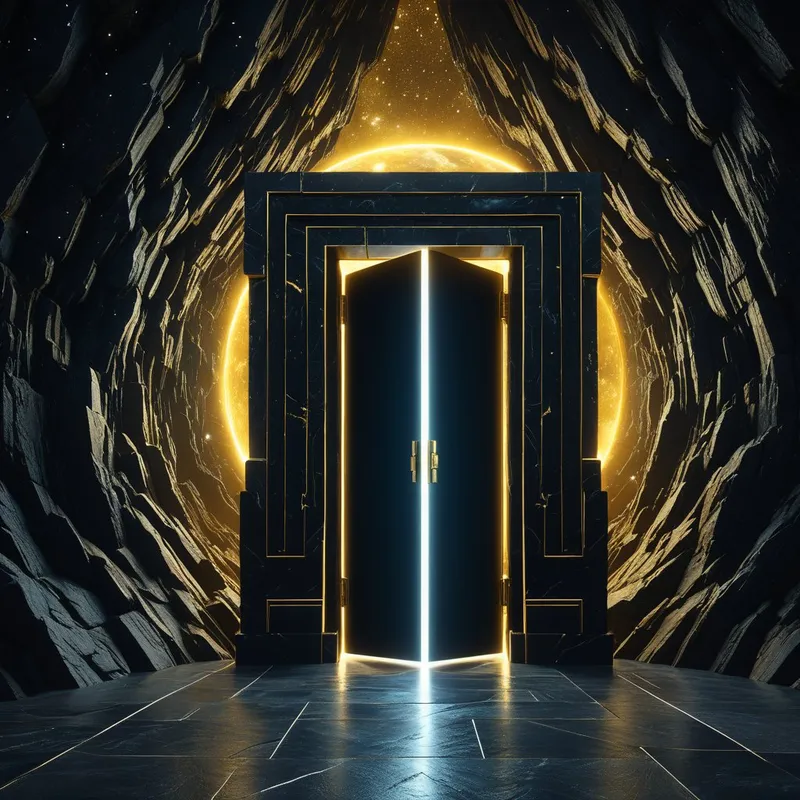
The Somatic Echo of the Gate
Before the mind can articulate the story, the body knows the verdict. It is a cold, hollowing sensation in the solar plexus, as if a vital organ has been quietly removed. The breath becomes shallow, held in a cage of ribs that feel too brittle. The skin prickles with a phantom awareness of eyes turning away, a tide of warmth receding, leaving you stranded on a shore of your own making. This is the somatic echo of exclusion—not a thought, but a visceral truth of separation. Its opposite, the somatic echo of inclusion, is often a missed ghost—a warmth you imagine in others but cannot feel in yourself, a deep, grounding sigh that never comes. The dream does not invent this feeling; it amplifies a frequency already humming in your nervous system, a silent question about where you end and the world begins.
The Dreamer's Log
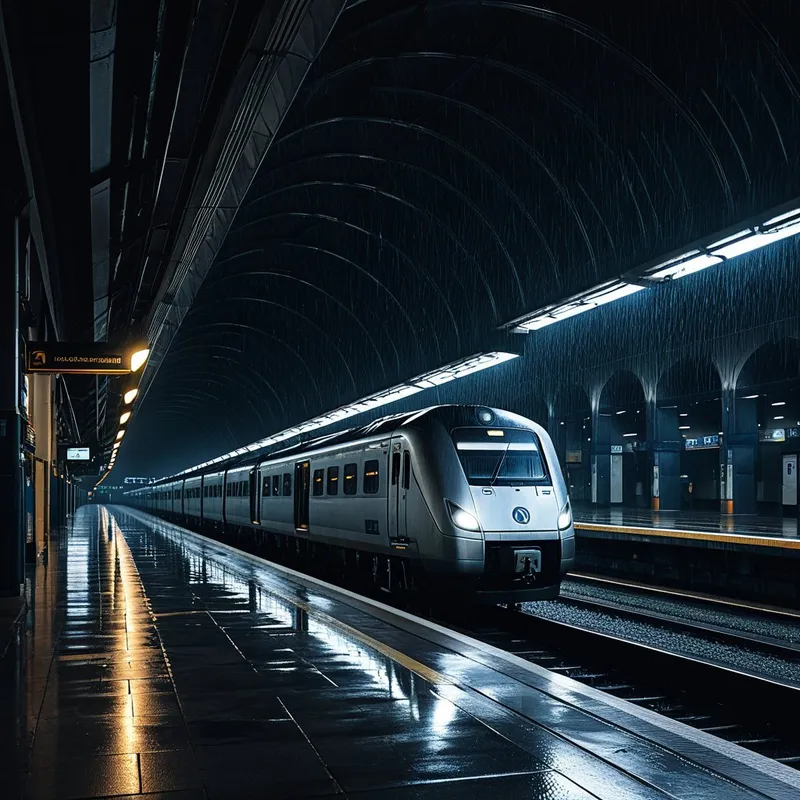
The dream is always the same: standing on a rain-slicked platform in a cavernous, empty station. A sleek, silver train, windows glowing with warm, convivial light, pulls away without you. You are not running late; you were simply not seen. Your ticket, clutched in your hand, dissolves into wet pulp.
This is the alchemy of the overlooked self: the internal system that issued the ticket is the same one that rendered it invalid, forcing a confrontation with the part of you that believes it must wait for permission to board.
The False Lead
This theme is not a simple narrative of social anxiety or a memory of childhood rejection, though it may wear those clothes. It is not about the external group that failed to invite you. That is the decoy, the literal translation that keeps you begging at the door of the world. The true territory is internal. It is the profound, structural shift occurring within your own psychic architecture—a renegotiation of sovereignty. The grief of exclusion in a dream is the grief of exiling parts of yourself. The longing for inclusion is the soul's demand for a full internal council, where every exiled voice is granted a seat.
Psychological Architecture: The Shadow Council
To dream of exclusion is to walk the halls of your own internal parliament and find certain chambers locked, certain seats empty. This is the core Shadow work. We are not unified beings, but ecosystems. The "you" that feels left out is often an internal part—the vulnerable child, the wild artist, the fierce rebel—that has been deemed unacceptable by the internal ruling committee, the "you" that manages survival. This committee, often a blend of the Shadow Ruler and the Shadow Caregiver, enforces exclusion within to maintain a fragile, presentable order without.
The individuation process here is one of reclamation. It is not about forcing your way into an external circle, but about dissolving the internal circle that votes on who belongs. The pressure comes from the exiled one pounding on the door from the inside. The dream makes you feel the chill of that outer platform so you will finally turn around and see who you have left standing in the cold within yourself. Inclusion, then, is not an act of acquisition, but of acknowledgment. It is the moment the inner ruler lays down its scepter of judgment and simply says, "I see you. You may enter. You have always belonged here."
Mythic Resonance
We see this eternal firmware in the myth of Psyche and Eros. Psyche is excluded from the sight of her divine lover, forbidden from seeing who truly shares her bed. Her inclusion—into the realm of the gods, into true partnership—comes only after she breaks the rule, after she lifts the lamp and beholds the terrifying, beautiful truth of her own situation. The exclusion was a condition of a false, managed intimacy. True inclusion required the shattering of that condition, a willing descent into the shadowy tasks of sorting seeds and fetching beauty from the underworld. It is the myth of earning belonging to oneself first.
Similarly, the Arthurian Grail Quest is not about the knights finding a cup; it is about the Wasteland within. The Fisher King’s wound is a state of exclusion—from life, from fertility, from wholeness. The land mirrors his inner state. Healing, inclusion, comes only when the right question is asked—a question of compassion that acknowledges the wound, that includes the pain in the narrative. "Whom does the Grail serve?" The question transforms the seeker from an outsider knocking at a castle door to the one who understands the castle is his own heart, laid waste by his own forgotten grief.
Symbolic Nodes
- Locked Doors/Gates/Windows: The perceived boundary between the self and the desired state.
- Receding Vehicles (Trains, Buses, Boats): The movement of collective life or opportunity, experienced as departure.
- Translucent Walls/One-Way Mirrors: You can see the inclusion but cannot participate; the barrier is of a perplexing, psychic nature.
- Forgotten Objects (a suitcase, a coat): Aspects of the self left behind to gain entry to a group that ultimately departs without you.
- A Banquet Table You Cannot Reach: Nourishment and communion that is visible but inaccessible, highlighting spiritual or emotional hunger.
- A Language You Cannot Understand: The ultimate code of exclusion, where the very medium of connection is alien.
Archetypal Resonance
The energy at the core of this theme is that of The Orphan Archetype. Not merely its shadow expression of victimhood, but its essential, profound core: the realist, the survivor, the one who knows what it is to be cast out and who therefore seeks authentic belonging. The somatic echo—the hollow chill, the watchful wariness—is the Orphan's embodied wisdom, a hyper-vigilance developed to navigate a world that feels inherently separating. This archetype does not naively seek a false home, but carries the grief of exile as a credential for recognizing true sanctuary. Its alchemical potential lies in this very grief. By fully feeling the desolation of the platform, the Orphan is forged into the one who can build a hearth within. Its journey is from seeking inclusion from the world to becoming the sovereign source of inclusion for all the scattered parts of the self.
The Alchemical Process: From Exile to Embassy
The prima materia here is the raw, toxic shame of being "not enough" to cross the threshold. The alchemical vessel is your own aware consciousness, holding the contradiction: the intense longing for union and the deep-seated belief in your own separateness.
The heat is applied by the recurring dream itself—the repeated experience of the door shutting, the train leaving. This is the calcinatio, the burning away of the hope that the old strategy of trimming yourself to fit will ever work. It burns until only a core truth remains: I am the one excluding myself.
The dissolution (solutio) comes with the flood of grief—for the times you abandoned your own instincts, silenced your own voice to belong to a group that was never your true home. This emotional flood dissolves the rigid identity of "the one who is left out."
The coagulation occurs in the quiet aftermath. From the dissolved elements, a new structure forms: an internal embassy. You are no longer a refugee seeking asylum in external groups. You become the sovereign territory that grants sanctuary. The exiled parts are welcomed not as petitioners, but as dignitaries, essential to the realm. The longing for external inclusion transforms into the capacity for profound internal—and then authentic external—communion.

The Integration Protocol
Question 1: In the dream, who or what is doing the excluding? Is it a faceless system, a specific person, or an unspoken rule? Now, translate that: what internal rule, critic, or fear in you plays that same role?
Question 2: What part of yourself did you have to leave behind (like the forgotten suitcase) to even get to the platform? What aspect of your truth, creativity, or vulnerability did you abandon in hopes of being chosen?
Question 3: If the warm, departing vehicle in the dream could speak, what one sentence would it say to you? Not to the dream-ego left behind, but to you, the dreamer witnessing the scene.
Action 1 (Somatic Reclamation): For one minute, place your hands on your solar plexus. Breathe into that space, acknowledging the hollow feeling not as emptiness, but as a chamber waiting to be filled by your own presence. Whisper, "This territory is mine."
Action 2 (Unstructured Writing): Let the exiled part from your dream write a letter. Do not write to it or about it. Write from it. Use its voice. Let it describe the platform, the cold, what it sees from there, and what it needs from you, the sovereign. Do not censor.
Action 3 (Threshold Ritual): Physically demarcate a threshold in your home—a doorway, the edge of a rug. Stand on one side as the exiled one. Feel its state. Then, step across. As you do, speak a simple phrase of welcome to yourself: "I cross this line with all of myself. I am admitted."
Final Validation
The ache of these dreams is real. It echoes with ancient, human fears of being cast out from the tribe, left in the dark to face the wolves alone. It is a profound and difficult terror. Honor that. Do not spiritualize it away. Then, know this: the very precision of the pain is your map. It shows you, with uncanny accuracy, the exact location of your own inner gatehouse and the specific parts of your soul you have posted there as guards. You are not being excluded by the world. You are being shown, with relentless compassion, where you are excluding yourself. The power to open the gate was never outside. It is in the hand that feels the chill, the heart that registers the longing. The dream is not a sentence of exile. It is an invitation to build a kingdom where you are, by right of existence, the first and final citizen.