Evidence & Record: The Psyche's Hidden Archive
The Somatic Echo
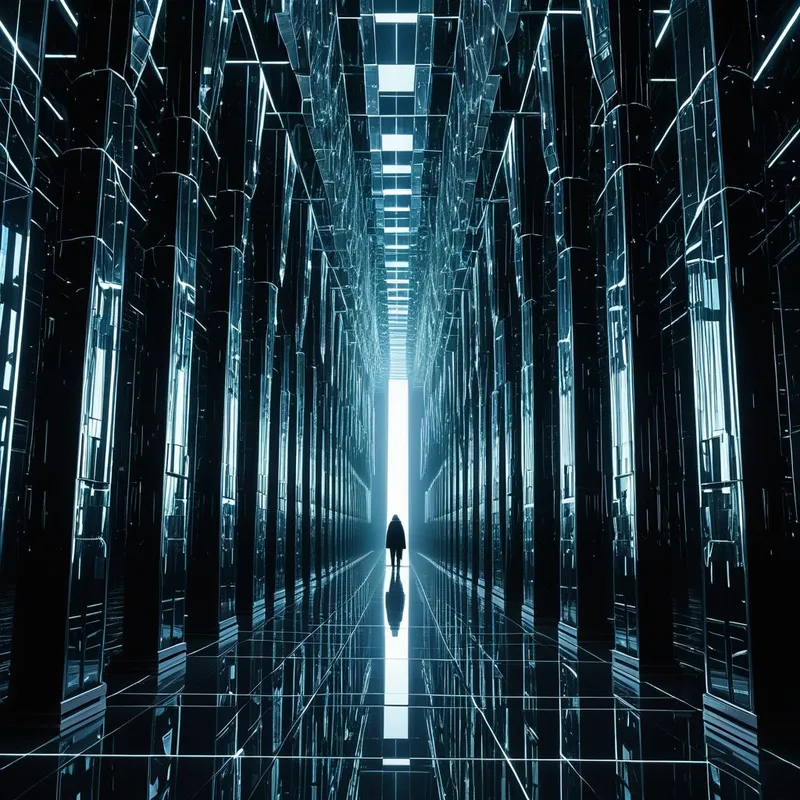
It begins not as a thought, but as a pressure. A weight in the chest, a constriction in the throat, a cold, metallic taste at the back of the tongue. It is the somatic echo of a hidden ledger being audited. The body knows before the mind can articulate: something is being catalogued, something is being judged. There is a sense of being seen by an unseen eye, of your interior world laid bare on a cold, sterile slab. This is the visceral prelude to dreams of evidence and records—the deep, internal systems preparing for a disclosure you have, perhaps, spent a lifetime avoiding. It is the feeling of a door you thought was sealed, groaning open on rusted hinges in the dead of night.
The Dreamer's Log (Case Vignette)
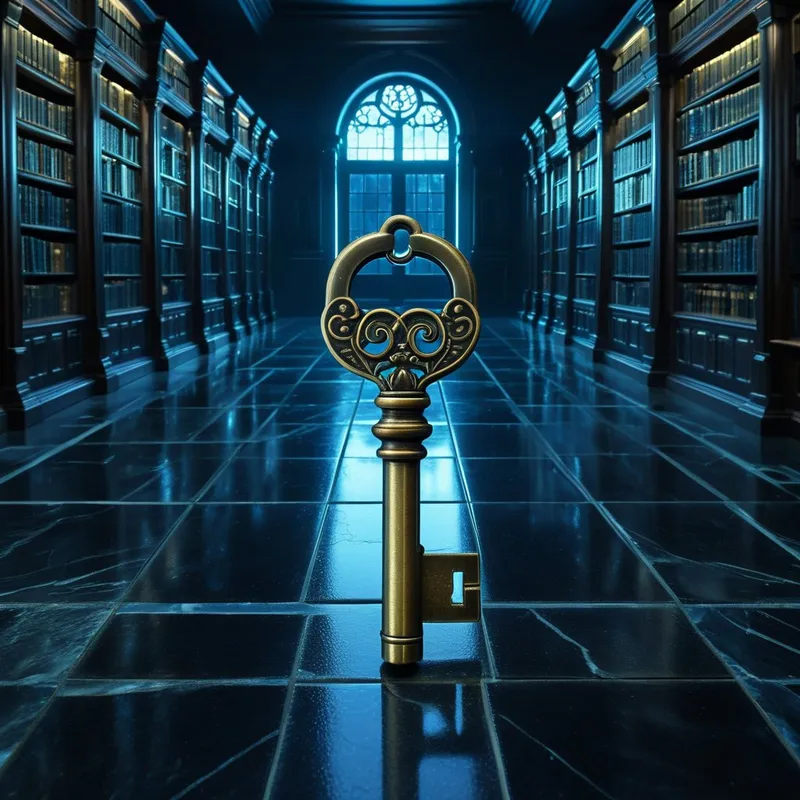
I am in a vast, silent library where the shelves are made of dark, polished glass. Every book is locked shut. I hold a single, cold brass key that hums in my palm. I know, with absolute certainty, that one of these books contains a record of a promise I broke, a word I twisted. The key grows heavier, its teeth beginning to glow with a sickly, insistent light.
This dream is not about a literal secret, but the alchemical pressure of an unintegrated truth—a fragmented part of the self demanding to be acknowledged and brought into the wholeness of consciousness.
The False Lead
This theme is not about paranoia or a simple fear of being caught. To mistake it for such is to remain on the surface of a profound psychic event. The external world is merely the stage; the drama is entirely internal. It is not your reputation that is on trial, but the integrity of your inner narrative. The dream is not a warning of impending bad luck or exposure by others; it is the psyche’s own sovereign court, convened in the night, to examine the discrepancies between who you pretend to be and who you actually are. The evidence is not for a prosecutor, but for the judge you have neglected to become: your own authentic self.
Psychological Architecture
Beneath the dream of the locked file, the corrupted ledger, or the damning photograph, lies the architecture of the Shadow. This is the depth work of Individuation—the lifelong process of becoming a coherent, self-aware individual. The “evidence” is the content of your personal Shadow: the disowned feelings, the unacknowledged motives, the memories coated in shame, the potentials you buried because they were inconvenient or frightening. The “record” is the psyche’s impeccable, non-judgmental memory. It does not forget. It files everything.
To dream of this theme is to be summoned to the most sacred and difficult task: to open the sealed archive of yourself. It is to sit with the exiled parts—the petty jealousies you disavow, the grief you call weakness, the anger you call unspiritual, the creative spark you call frivolous. This is not an act of self-flagellation, but of reclamation. Each piece of “evidence,” when courageously examined, ceases to be a weapon against the self and becomes a lost fragment of your totality, waiting to be integrated. The terror of the dream is the terror of this reunion.
Mythic Resonance
We see this eternal process in the myth of Osiris. The god-king is dismembered, his parts scattered and hidden across the land. His wife, Isis, does not create a new god from nothing; she undertakes the grueling, piecemeal work of finding every fragment—every piece of evidence of his wholeness—and reassembling him. She cannot find the final piece, the phallus, and so fashions a new one from gold, completing him through both recovery and creative transmutation. The psyche, like Isis, must search the dark corners of its own Egypt to gather the dismembered aspects of the self. The “record” is the map of where the pieces lie buried.
Symbolic Nodes
Common images in this dream territory include: locked files or cabinets, corrupted digital data, indelible ink, security cameras that watch from impossible angles, fingerprints on glass, sealed envelopes with your name, ancient scrolls in forgotten tongues, ledgers with entries in red, forensic lights revealing hidden stains, and mirrors that reflect a different face. Each is a node in the network of self-awareness, a symbol of information that exists, whether you consent to its existence or not.
Archetypal Resonance
The Sage Archetype is the primary architect of this dreamscape. Its energy is not initially that of the wise teacher, but of the relentless archivist, the impartial investigator. The somatic echo—the pressure of being seen, known, and catalogued—is the Sage’s gaze turned inward. Its shadow aspect, the Dogmatic Judge, manifests as the terror of this internal audit, the fear that the evidence will condemn you to a fixed, flawed identity. The alchemical potential lies in moving through this shadow: by engaging with the “evidence” not as a final verdict but as raw data, you transmute the Judge into the True Sage. You become the one who can hold the complexity of your entire record—the noble and the shameful—with compassion and curiosity, synthesizing it into genuine wisdom about who you are.
The Alchemical Process
The transmutation here is the conversion of secret into mystery. A secret is a fact hidden in fear; its power is corrosive, isolating. A mystery is a truth integrated into the fabric of the self; its power is generative, connective. The alchemical fire is the unbearable heat of self-confrontation—the pressure of sitting with the “evidence” without fleeing into denial, justification, or self-loathing. The nigredo, the blackening, is the moment you fully feel the weight of the disowned thing. The albedo, the whitening, is the act of washing it in the light of your own conscious attention, seeing it clearly for the first time. The final rubedo, the reddening, is the integration: the once-damning evidence becomes simply a part of your history, a thread in your tapestry, its emotional charge dissolved and its energy reclaimed. Sovereignty is born when you are no longer haunted by your own archives, but have become their curator.

The Integration Protocol
Question 1: What is the one piece of "evidence" about myself that I am most afraid to have confirmed? What would it mean if it were true?
Question 2: If this dream's record-keeper were not a judge, but a librarian whose sole purpose was to preserve the totality of my story, what forgotten volume would they most want me to read?
Question 3: Where in my waking life do I feel the "pressure of the record"—the sense that I am performing to avoid the scrutiny of my own deepest truth?
Action 1 (Somatic Grounding): When you feel the somatic echo of this theme—the chest pressure, the constricted throat—place a hand there. Breathe into that space for three cycles. On the fourth, whisper internally: "I am here to receive the report." Do not analyze, just feel and allow. This grounds the psychic audit in the body, preventing dissociation.
Action 2 (Unstructured Writing): Set a timer for 10 minutes. Write from the perspective of the "evidence" itself—the locked file, the glowing key, the hidden camera. Let it speak. What does it want? What story is it tired of holding alone? Do not censor. Burn or shred the paper afterward as a ritual of release from old secrecy.
Action 3 (Creative Re-filing): Find or create a small, physical box. This is your "Integrated Archive." Place inside it three small objects that symbolically represent aspects of yourself you have historically hidden or felt shame about—not as indictments, but as acknowledged artifacts. Decorate the box. This act externalizes the internal shift from hiding to curating.
Final Validation
This work is not for the faint of heart. To open the sealed archives of the self is to willingly walk into the chamber where your own ghosts are kept. The urge to look away is primal, intelligent, and rooted in a desire for self-preservation. Honor that resistance; it means you are approaching something real. But know this: the terror of the record is finite. The sovereignty that comes from having faced it, page by page, and claimed every line as your own—that is infinite. You are not the crime scene. You are the entire jurisdiction. The evidence was never meant to convict you, but to complete you.