
The Alchemy of Endings: When Dreams Ask What Remains
The Somatic Echo
It begins not as a thought, but as a tremor in the substrate of the self. A hollowing in the solar plexus, a sudden, inexplicable chill that has nothing to do with the temperature of the room. It is the visceral recognition of a sandcastle at the tide line, a feeling of exquisite, fragile beauty poised on the edge of dissolution. Your body knows this theme before your mind can name it: a deep, autonomic sigh for what is passing, coupled with a tense, almost muscular yearning for something to hold. This is the somatic ground of Ephemeral vs. Lasting—a silent war between the diaphragm, which must release, and the spine, which strives to stand forever. It is the ache of a love note written in fog, and the deep, gravitational pull toward carving that same sentiment in stone.
The Dreamer's Log (Case Vignette)
I am in a vast, silent server farm, rows of blinking lights stretching into darkness. My life’s work—all my memories, writings, connections—are stored here as pure light. I watch as, one by one, the servers power down. Not with a crash, but with a soft, final sigh. The lights go out in a wave, leaving only a single, small point of data glowing in the center of the floor: a memory of my grandmother’s hands, kneading dough. It pulses, warm and gold, as the immense darkness swallows everything else.
This dream is an alchemical distillation: the psyche incinerates the non-essential archives of identity to reveal the one irreducible, living ember that survives all system failures.

The False Lead
This theme is not about simple loss or "bad luck." It is not the grief for a singular, departed object, but a confrontation with the very principle of transience itself. To misinterpret it as mere misfortune is to personalise a cosmic weather pattern. The terror here is structural, not situational. It asks not "Why did this leave me?" but "What, in me, can possibly endure when everything, including this 'me,' is subject to change?" The false lead is to scramble for more sand to fortify the castle, rather than to question the nature of the shore upon which you build.
Psychological Architecture
Here, the work of Individuation meets its most profound forge. The Shadow we engage is not a repressed personality trait, but the repressed knowledge of our own finitude. To integrate this is to perform the ultimate act of psychic sovereignty: to look directly into the void of impermanence and, from that encounter, consciously choose what to build anyway. It is the internal family system in its most poignant drama: the Innocent part of us, which believes in forever, is terrified. The Orphan, who expects everything to be taken, feels grimly vindicated. The Ruler tries to command time to stand still. The alchemy occurs when the Sage emerges, not to offer platitudes, but to sit with the terrifying truth that all forms are ephemeral, and from that ground, discern what qualities of being—love, integrity, presence—are paradoxically lasting precisely because they are not things to be possessed, but verbs to be lived.
Mythic Resonance
We see this in the story of the Wheel of Samsara from Eastern traditions—not as a cosmic punishment, but as a depiction of reality's intrinsic, fleeting nature. Liberation (Nirvana) is not an escape to a more durable place, but the profound, lasting peace found in releasing the craving for durability within the wheel itself. Similarly, the Greek myth of Sisyphus is often seen as a parable of futile labor. But from the alchemical view, his eternal task is the very condition of existence. The lasting element is not the boulder staying atop the hill (the ephemeral goal), but the conscious, sovereign choice to find meaning in the push itself—the quality of his engagement with the endless cycle becomes the enduring achievement.
Symbolic Nodes
- Melting Ice, Fading Ink, Evaporating Water: The ephemeral in action.
- Stone Tablets, Engraved Jewellery, Ancient Trees: The aspiration toward the lasting.
- Bridges that Dissolve as You Cross Them, Sand Mandalas, Blooming Flowers that Wither in Time-Lapse: The tension between the two states.
- A Seed, An Embryo, A Blueprint: Potential that contains both—the ephemeral form that must die for the lasting pattern to unfold.
- A Foundation Laid Upon Water, A Skyscraper Made of Mist: The horror or paradox of misplaced permanence.
Archetypal Resonance
The core energy of this theme resonates most powerfully with The Sage Archetype. The Sage’s quest is not for possession, but for essential, enduring truth. Its somatic echo is the deep, calm breath taken in the face of the storm, the steady gaze that observes change without being destroyed by it. The alchemical potential lies in the Sage’s ability to transmute the raw grief of ephemerality into profound wisdom—the understanding that what lasts is not form, but the conscious relationship to the flow of forms. The Shadow Sage, however, manifests here as dogmatism, desperately crystallizing one fleeting truth into a rigid, "lasting" doctrine to ward off the terror of the unknown. The work is to mature the Sage from a collector of facts into a midwife to reality.
The Alchemical Process
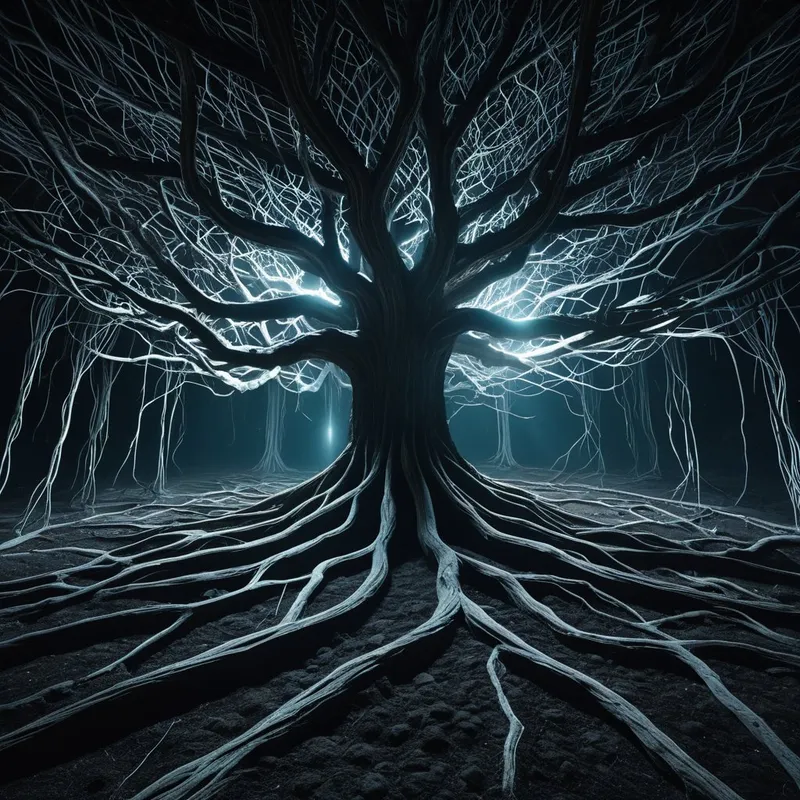
The transmutation of Ephemeral vs. Lasting requires the heat of conscious dissolution. This is the solve stage of the alchemical opus. You must willingly subject your cherished self-concepts, achievements, and even relationships to the inner fire of the question: "Is this me, or is this something I have?" The pressure is the sustained tolerance of groundlessness. It is the feeling of free-fall without the immediate promise of a new landing pad. In this crucible, the dross of identity—the parts of us that cling to titles, outcomes, and static self-images—begins to burn away. What survives the flame is not another, better object, but the very capacity for presence. This presence, this quality of awake, compassionate attention, is the Philosopher's Stone in this work. It is the one thing that can touch the ephemeral without being diminished by its passing, and thus, becomes the only truly lasting foundation.
The Integration Protocol
Question 1: In my life right now, what am I most afraid of losing? Now, look deeper: what is the essential quality or feeling I believe that thing provides (e.g., safety, love, validation)? Can that quality exist independently of that specific form?
Question 2: When I feel the hollow ache of impermanence, what is the first part of me that speaks? Is it a fearful child, a furious protector, or a resigned realist? What does that part need to hear from my adult, conscious self?
Question 3: If I imagined my life as a river, what are the ephemeral leaves and twigs floating on the surface, and what is the lasting current—the deep, directional flow—beneath them? Can I name that current?
Action 1 (The Ephemeral Altar): Create a small, temporary artwork using only found, natural, or disposable materials (leaves, petals, chalk on stone, arrangements in sand). Photograph it, if you wish, but then consciously destroy or disperse it. The ritual is in the non-attachment to the creation itself.
Action 2 (The Lasting Breath): For one week, choose a single, simple daily action (making your morning coffee, washing a dish, walking to your door). Perform it with the full, silent intention that this exact moment, this specific sensory experience, will never occur again. Do not cling to it; simply meet it completely, as a unique and final offering.
Action 3 (The Blueprint of Essence): Engage in unstructured, stream-of-consciousness writing. Title it "What Remains When..." and complete the sentence with your greatest fear of loss. Write without stopping for 10 minutes. Do not seek answers. Let the writing be the process of sifting ash for the few, cold, enduring specks of metal that will not burn.
Final Validation
To feel this tension is not a sign of weakness, but of profound sensitivity to the fundamental rhythm of existence. It is exhausting because you are being asked to hold the universe’s most basic contradiction in the cradle of your own awareness. This work is not about winning the battle against time, but about changing the very ground upon which the battle is fought. When you stop trying to make the sandcastle permanent and instead fall in love with the act of building, with the feel of the sand and the sound of the waves, you have not lost to the ephemeral. You have discovered that your lasting self was never in the castle at all, but in the sovereign, creative, and loving presence that chose to build, knowing the tide would come.