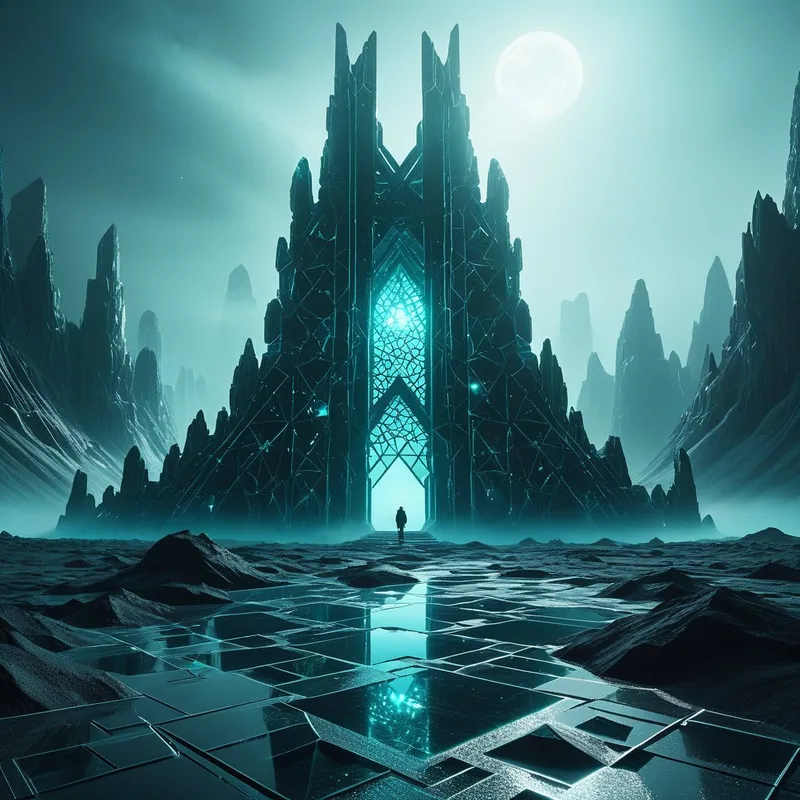
The Somatic Echo: When the World in Your Bones Begins to Crumble
Before the image forms, the body knows. It is a pressure in the sternum, a low-grade hum in the marrow, a feeling of being subtly, pervasively leached. The air in the dream feels thick, resistant to breath, as if the atmosphere itself has turned against you. Gravity becomes a personal grudge. This is the somatic echo of environmental stress—not a single threat, but a systemic decay. The dreamer does not face a monster; they are immersed in a world that is itself the monster, a living, breathing antagonist made of crumbling concrete, toxic air, and rising tides. The terror is not of impact, but of immersion. It is the psyche translating the unbearable pressure of an internal system—a belief, a relationship, a way of life—that has become unsustainable, its foundations groaning under a weight they were never meant to bear.
The Dreamer's Log
The console is alive with frantic, silent light. I am in the heart of a control room for a vast, unnamed system, but the readouts are in a language of collapsing geometries. A thick, mercury-like fluid is seeping from the ceiling panels, pooling around the base of the primary terminal, its slow rise inexorable. I know, with a certainty that bypasses thought, that to touch it is to be assimilated into the silent breakdown. This dream is the alchemical nigredo, the blackening: the moment the old compound of the self is placed in the vessel and begins to dissolve.

The False Lead
This is not a prophecy of literal environmental catastrophe or a simple reflection of daily news anxiety. To interpret it as such is to mistake the map for the territory. The dream is not reporting on the state of the world; it is reporting on the state of the world-as-you-know-it, the internalized structures that organize your reality. It is not about bad luck or external persecution, but about a profound, often necessary, structural failure within the psyche's own governance. The stress is environmental because the problem is systemic; it permeates the very ground of your being.
Psychological Architecture: The Shadow in the Foundation
Environmental stress dreams perform a brutal, essential audit. They are the psyche’s quality assurance test, applying pressure until the fault lines appear. This is shadow work of the most architectural kind. The shadow here is not a hidden monster, but a hidden flaw—a load-bearing belief that is rotten, a relational dynamic that has toxified the emotional atmosphere, a career path that is leaching your vitality like a slow poison. The individuation process at play is one of demolition and re-founding. You are not integrating a repressed part, but evacuating a condemned structure. The grief felt is for the home you built on that foundation; the terror is of the free-fall that comes before new ground is found. The dream forces you to witness the collapse so you can stop propping up the ruin with your own life force.
Mythic Resonance
We see this in the tale of the Tower of Babel. It is not a story about divine punishment, but about the inevitable collapse of a monolithic, rigid structure built on the fragile ground of unified ego. The confusion of tongues is not a curse, but a return to necessary complexity, a shattering of a single, oppressive narrative. Similarly, in the alchemical tradition, the vessel must be sealed and subjected to intense heat for the prima materia to break down into its essential components—a process called solve et coagula, to dissolve and coagulate. The toxic atmosphere in your dream is that sealed heat; the crumbling city is the necessary solve. The myth is not about the fall, but about what becomes possible only after the fall.
Symbolic Nodes
- Collapsing buildings or bridges (failing internal structures)
- Toxic air, water, or radiation (poisoned emotional or mental environments)
- Unnatural weather or seismic events (overwhelming emotional climate)
- Invasive vines, mold, or decay (slow, pervasive psychic erosion)
- Failing life-support or control systems (loss of agency within a system)
- Rising, unstoppable floods or lava (the emergence of repressed material)
Archetypal Resonance
The Shadow Ruler Archetype is the silent architect of this dreamscape. This is not the Sovereign who stewards a healthy kingdom, but the Tyrant in the control room, the Control-Freak who built a system so rigid, so efficient, and so isolating that it has begun to cannibalize itself. The somatic echo of pressure and toxic immersion is the feeling of living under this internal tyranny’s brittle, totalizing order. Its alchemical potential, however, is immense. The collapse it engineers forces the death of the tyrant, creating the vacuum in which the true Sovereign—the one who governs with flexibility, wisdom, and connection to the living earth of the soul—can be born. The stress is the tyranny’s last stand, and its necessary undoing.
The Alchemical Process: Transmuting Ruin into Ground
The alchemy here is one of reclamation. The intense psychological heat is the sustained courage to stay present with the dissolution—to feel the grief of the crumbling edifice without rushing to rebuild on the same fault lines. This is the pressure of the vas bene clausum, the well-sealed vessel. You must allow the old identity-structure to fully break down into its constituent parts: the raw materials of betrayed hopes, outgrown loyalties, and exhausted coping strategies. The transmutation occurs when you stop identifying with the collapsing tower and begin to sift through the rubble, not as a victim of the fall, but as a prospector. You search not for what can be salvaged, but for what is true—the few enduring stones, the un-corrupted ore. Sovereignty is forged when you realize you are not the structure that fell, but the consciousness that can choose a new, more resilient, and more organic blueprint.

The Integration Protocol
Question 1: Where in my waking life do I feel a pervasive, atmospheric "thickness"—a situation or commitment that feels difficult to breathe within, not because of any one event, but because of its very nature?
Question 2: What internal "control system" or rule (about success, loyalty, perfection) has become so rigid that its failure now feels like a personal apocalypse?
Question 3: If the crumbling environment in my dream is a metaphor for a structure I built, what was its original purpose? Did it once protect an old wound that may now be ready to heal?
Action 1 (Somatic Grounding): For one minute, place your hands firmly on a stable, physical structure—a wall, a tree, the solid ground. Feel its unyielding support. Breathe deeply and silently repeat: "I am not the collapse. I am the awareness that stands upon what remains."
Action 2 (Creative Cartography): Without planning, draw the "map" of your stressful dream environment. Use only abstract shapes, lines, and shades. Where is the pressure greatest? Where is there a hint of space or light? Let the drawing be a non-verbal audit of the internal landscape.
Action 3 (Ritual of Release): Write down the single, most oppressive "rule" or expectation that the dream's atmosphere represents (e.g., "I must hold this together"). Seal it in a small clay pot or envelope. Bury it, burn it safely, or set it adrift in moving water, verbally releasing the structure it upheld back to the elements.
Final Validation
To dream of environmental collapse is to touch a profound and terrifying grief—the grief for a world within you that is passing. It is a valid and necessary mourning. Yet, within that very dissolution lies your liberation. The psyche does not waste energy on nightmares of pointless destruction. It orchestrates these cataclysms to break you free from the internal empires that have outlived their purpose. The ground is not disappearing from beneath you; it is being cleared, at great cost, for a foundation that can actually hold the weight of who you are becoming. The sovereignty you seek is born not in the preservation of the old citadel, but in the courageous act of surveying the open, cleared space after the fall.