
Emotional Clutter: The Alchemy of the Overstuffed Psyche
The Somatic Echo
It begins not as a thought, but as a density. A low-grade hum of pressure behind the eyes, a subtle constriction in the throat that feels like a forgotten sentence lodged there. The shoulders carry a weight that has no physical source, a gravitational pull towards the earth that speaks of accumulation. In the belly, a stagnant pool of unnamed feelings—not a sharp grief or a clean anger, but a murky sediment of almost-feelings, half-formed reactions, and swallowed words. This is the somatic signature of emotional clutter: the body as a crowded archive, a living system groaning under the psychic weight of everything you’ve felt but not yet fully met. The air in your own internal space feels thick, recycled, difficult to breathe. It is the visceral prelude to the dreams of attics that won’t close, hallways choked with boxes, and rooms where you can no longer find the floor.
The Dreamer's Log (Case Vignette)
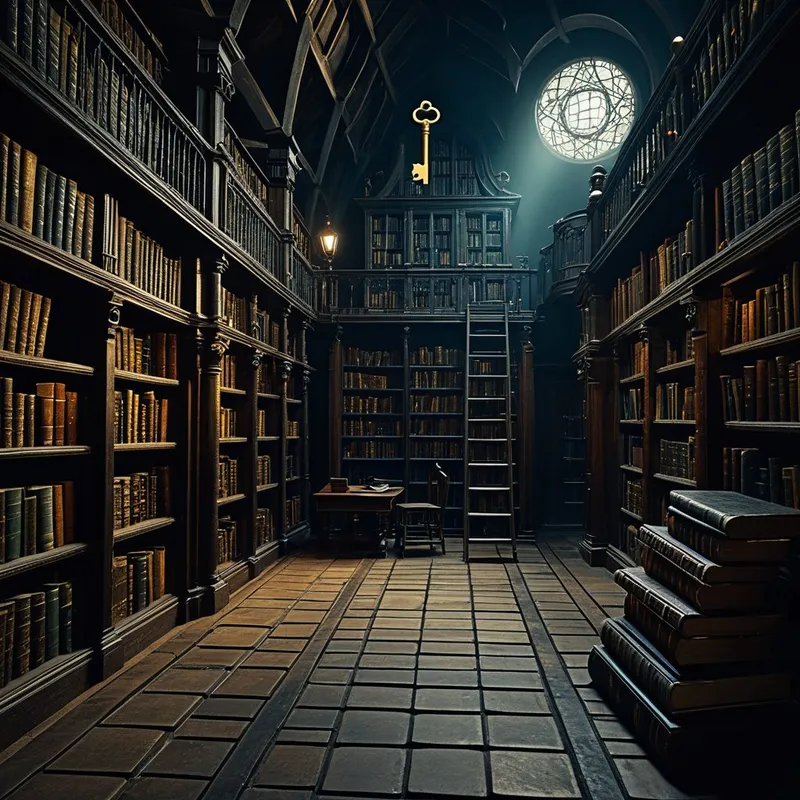
I am in the attic of a house I don’t recognize, though it feels like mine. It is cavernous, dark, and filled to the rafters with an impossible jumble: my childhood rocking horse fused to a cracked computer monitor, stacks of yellowed letters tied with frayed network cables, and heaps of clothing that smell of every season at once. I am searching for a single, small brass key. I know it’s here, but with every step, more objects tumble from teetering piles. The air is thick with dust and the low, anxious hum of dormant machines. I wake with my jaw clenched, the taste of old paper on my tongue.
The alchemy here is clear: the psyche presents a literalized internal landscape where the essential tool for liberation (the key) is buried under the accumulated, unintegrated artifacts of a lifetime’s emotional data.
The False Lead
This is not a dream about mere disorganization or a call to simply tidy your physical desk. To mistake it for such is to commit a profound error of literalism. The clutter is not about your busy schedule or your messy car; it is the symbolic manifestation of your psychic metabolism slowing to a halt. It is not a sign of personal failure or laziness, but a symptom of a system that has been receiving input—grief, joy, frustration, longing—without the necessary processing output. The terror of the dream is not about the objects themselves, but about the loss of navigable inner space, the fear that your own consciousness has become a place where you are no longer free to move, to choose, to be.
Psychological Architecture
Emotional clutter is the shadow work of the curator. It is the Individuation process stalled at the crossroads of retention and release. Each unprocessed feeling, each unresolved interaction, each adaptive persona you wore once and never consciously took off, becomes a psychic object. These objects are not neutral; they are charged with the energy of the moment they were frozen. The child’s unexpressed anger becomes a heavy, cold stone in the mental attic. The professional disappointment becomes a stack of brittle, yellowing papers. The love that was never fully grieved becomes a delicate, tangled mobile, too painful to touch.
The work is not demolition, but a profound, compassionate sorting. It requires entering that crowded inner space not as a frantic cleaner, but as an archaeologist of the self. You must hold each artifact—this shame, that old hope—and ask: Does this belong to me now? Does it serve the life I am consciously building? Or am I holding it out of a forgotten loyalty, a fear of emptiness, or the mistaken belief that to feel it fully would destroy me? This is the architecture of the soul being re-organized from a chaotic storage unit into a lived-in, sacred temple.
Mythic Resonance
We see this in the labors of Hercules, specifically the Augean Stables. The hero’s task was not to battle a monster, but to cleanse stables housing thousands of cattle, uncleaned for thirty years—a literal lifetime’s accumulation of waste. The impossibility was the point. He could not do it by hand; it required the alchemical redirection of two mighty rivers to flush the system clean. The myth whispers that the clutter of a life’s unprocessed experiences cannot be tackled piecemeal with willpower alone. It requires a divine intervention, a redirecting of the powerful, natural flow of your own emotional and spiritual energy to achieve a cleansing that feels supernatural. Similarly, the Buddhist concept of Anatta, or non-self, challenges the very notion that we must own and store every passing emotional weather pattern as a permanent fixture of our identity.
Symbolic Nodes
- Overstuffed Attics, Basements, and Closets: The psyche’s archival spaces, holding past selves and retired emotions.
- Blocked Doorways and Hallways: Inhibited movement, the feeling of being trapped within one’s own mental/emotional patterns.
- Piles of Obsolete Technology: Outdated coping mechanisms, ways of thinking, and relational programs that no longer serve.
- Tangled Cords, Knots, and Vines: The complex intertwining of emotions, where one feeling cannot be accessed without disturbing a network of others.
- Dust, Mold, and Stagnant Air: The neglect of the inner world, the psychic decay that sets in when experiences are stored but not integrated.
- Searching for a Small, Specific Item: The soul’s quest for a core truth, memory, or feeling buried under peripheral noise.
Archetypal Resonance
The Shadow Ruler is the archetype most active in the theme of emotional clutter. Its core energy is control through accumulation and order through sheer force of categorization, gone awry.
The Shadow Ruler does not trust the natural flow of experience. It believes sovereignty is maintained by possessing, cataloging, and controlling every emotional event, every memory, every potentiality. This creates the somatic echo of rigid containment—the clenched jaw, the tight chest—a body acting as a fortress for its own contents. The alchemical potential lies in the Ruler’s genuine desire for a harmonious inner kingdom. The transformation comes when this archetype learns that true sovereignty is not about hoarding authority, but about exercising wise discernment. It moves from being a tyrannical hoarder to a graceful sovereign who knows what to keep, what to bless and release, and how to maintain open, flowing spaces within the realm of the self.
The Alchemical Process
The transmutation of emotional clutter is the alchemy of Vaporization. The base material is the solid, heavy, accumulated mass of calcified feelings. The heat required is the courageous, sustained attention you bring to these neglected spaces. This is not a gentle warmth, but the fierce, focused fire of honest self-confrontation. You must sit in the dusty attic of your dream and feel the discomfort, the overwhelm, the grief for lost time.
The pressure is the conscious choice to stop avoiding this inner chaos. Under this heat and pressure, the solid mass begins to sublimate. The specific grief, the named anger, the acknowledged longing—these do not disappear. They change state. They move from being static, space-consuming objects to becoming active, flowing energies. The tears that come when you finally touch the old sorrow are the first drops of this distilled vapor. The clenched fist that relaxes when you voice the old injustice is the release of steam. The clutter is not thrown away; it is returned to its essential, energetic form, where it can re-enter the atmosphere of your being as potential, as insight, as the very breath of a more spacious life.

The Integration Protocol
Question 1: In the crowded room of your current emotional landscape, what is one feeling you are consciously or unconsciously "stepping around" because addressing it feels like it would disturb the entire precarious pile?
Question 2: If your emotional clutter were a library, what outdated, fictional story about yourself are you most reluctant to take off the shelf and finally read the last page of?
Question 3: What small, clear space in your inner world—a moment of peace, a single certain truth—are you currently sacrificing to maintain the illusion of controlling the chaos?
Action 1 (Somatic Grounding): For one minute, place your hands on your lower abdomen. Breathe into that space, imagining it not as a stagnant pool, but as a deep, clear well. With each exhale, visualize a single, small, dark pebble of an unspoken worry dropping into the well and dissolving without a ripple.
Action 2 (Unstructured Writing): Set a timer for seven minutes. Write without stopping, lifting the pen from the page, or censoring. Begin with the sentence: "What I have been storing because I didn't know what else to do with it is..." Let the clutter spill onto the page. Do not re-read it. Seal it in an envelope or delete the file. The act is the release.
Action 3 (Ritual of Flow): Choose a small, tangible object that represents an old, stuck feeling (a stone for heaviness, a tangled necklace for complexity). Take it to a natural body of moving water—a stream, river, or the sea. Hold it, name the feeling it holds for you, thank it for its service, and then place it into the water. If no water is available, bury it in soil with the intention of composting.
Final Validation
It is profoundly difficult to face the archive of a life half-lived, to feel the weight of all you have carried and not yet transformed. This fatigue is real, and the desire to simply shut the attic door is a sane impulse of a overwhelmed psyche. But you are not your clutter. You are the conscious space that can perceive it. You are the curator who can begin, with one breath, one question, one small act of release, to transform the museum of your past into the living, breathing cathedral of your present. The sovereignty you seek is not found in more control, but in the courageous creation of inner space. Start with a single, clear corner. The rest will follow.