
The Dream of Direction: Finding Your True North in a World of Maps
The Somatic Echo
Before the mind conjures a map, a signpost, or a star to steer by, the body knows. The dream of direction announces itself not as a thought, but as a tension. It is the subtle, persistent torque in the solar plexus—a feeling of being wound like a spring, energy coiled but with no clear vector for release. It hums in the bones of the legs, a phantom ache of paths not walked. Sometimes, it manifests as a peculiar lightness in the skull, a dizzying sense of being unmoored, floating in the vast interior space of possibility without gravity to define your down. This is the somatic prelude: the body’s ancient, wordless intelligence registering that your internal coordinates are no longer aligned with the territory of your life. The old internal map has dissolved, and the new one has not yet been drawn. You are in the liminal sea, feeling the first tremors of a necessary, but terrifying, reorientation.
The Dreamer's Log (Case Vignette)
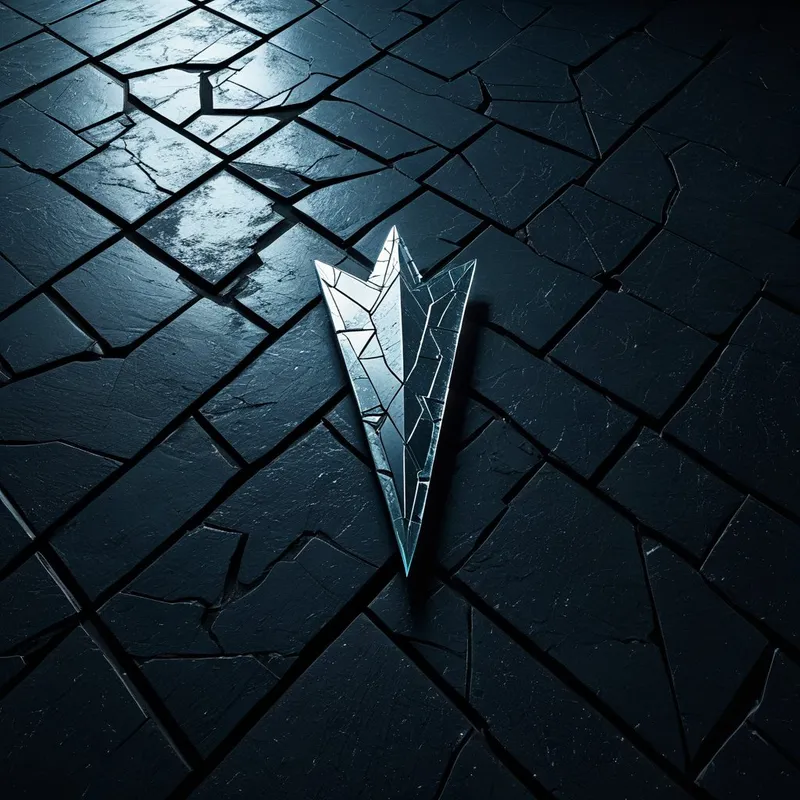
I am standing in the center of an endless, polished obsidian floor. A single, liquid-silver arrowhead lies at my feet, glowing with a cold light. I pick it up, and it grows warm, then hot. I look for a bow, a target, a horizon—anything to give it purpose. There is nothing. Just the floor, the dark, and the burning direction in my hand.
Alchemical Interpretation: The dream presents not a lack of direction, but its pure, unprojected essence—a potent force awaiting the dreamer’s own hand to craft the bow of intention and choose the target of their life.
The False Lead
This theme is not about the superficial anxiety of choosing a job or a partner. It is not mere indecision or "bad luck" with wrong turns. To mistake it for such is to confuse the tectonic shift of a continent with the stumbling of a foot on a pebble. The dream of direction speaks to a foundational reordering of the psyche’s internal landscape. It is the call that comes when you have been faithfully following a map drafted by others—parents, culture, a former self—only to arrive at a destination that feels profoundly alien. The disorientation is not a mistake; it is the system’s success signal. It means the old program has completed its run, and the deeper Self is initiating a core system update. The grief and terror are for the known world that must be left behind, not for a simple error in navigation.
Psychological Architecture
The deep work here is the dismantling of the internal cartographer—that psychic function that so desperately wants a fixed, two-dimensional representation of a four-dimensional journey. This cartographer is often a protector, a part of the internal family that believes safety lies in predictability. Its shadow is the tyrant who would rather you stay lost in a familiar wasteland than risk the wilderness of the unknown. The individuation process demands you thank this cartographer for its service, and then gently, firmly, take the compass from its hands. This is shadow work of the highest order: facing the part of you that is terrified of sovereignty, because sovereignty means full responsibility for the path. It means accepting that true direction is not found on a pre-printed page, but is generated from within, a living magnetism between your core and a horizon you must dare to imagine.
Mythic Resonance
Consider the Norse god Odin, who sacrificed an eye at the Well of Mímir for a drink of its waters—the waters of wisdom and foresight. He traded a part of his immediate, worldly perception (one direction of sight) for an inner, omni-directional knowing. He chose depth of vision over breadth of sight. This is the mythic template: direction is not bought with effort, but purchased with a sacrifice of an old way of seeing. In the Greek tradition, the hero Theseus enters the Labyrinth, a structure designed to annihilate direction. His salvation is not a map of the maze, but Ariadne’s thread—a slender, continuous connection back to his own center, his point of origin and return. The thread does not show him the way out; it allows him to make a way, trusting that the path forged from the center will, by definition, lead back to it, transformed.
Symbolic Nodes
- Compasses & Maps: Especially broken, spinning, or blank ones.
- Crossroads & Forks in the Road: The moment of existential choice.
- Stars, Polaris, Ley Lines: Celestial or earthly guides to true north.
- Rivers, Currents, Winds: Forces that carry you, demanding surrender or navigation.
- Tunnels, Corridors, Arrows: Vector-based imagery of movement through space.
- Being Lost in Familiar Places: The ultimate signal of internal disorientation.
- Vehicles Without Steering: Power without agency.
Archetypal Resonance
The energy at the core of the Direction dream is that of The Explorer Archetype. The Explorer’s somatic echo is that restless tension in the limbs, the ache for the horizon. Its core drive is not to conquer, but to discover—to seek out the authentic self by venturing beyond the borders of the known world. In its shadow form, as the Alienated or Aimless wanderer, this archetype manifests as the terror of commitment, a perpetual fleeing from any path that might become a prison. The alchemical potential lies in the transmutation of this restless energy from a flight from something into a journey toward something: the sacred pilgrimage where the path is forged solely by the act of walking it. The Explorer does not find a pre-existing direction; they become the embodiment of direction itself.
The Alchemical Process
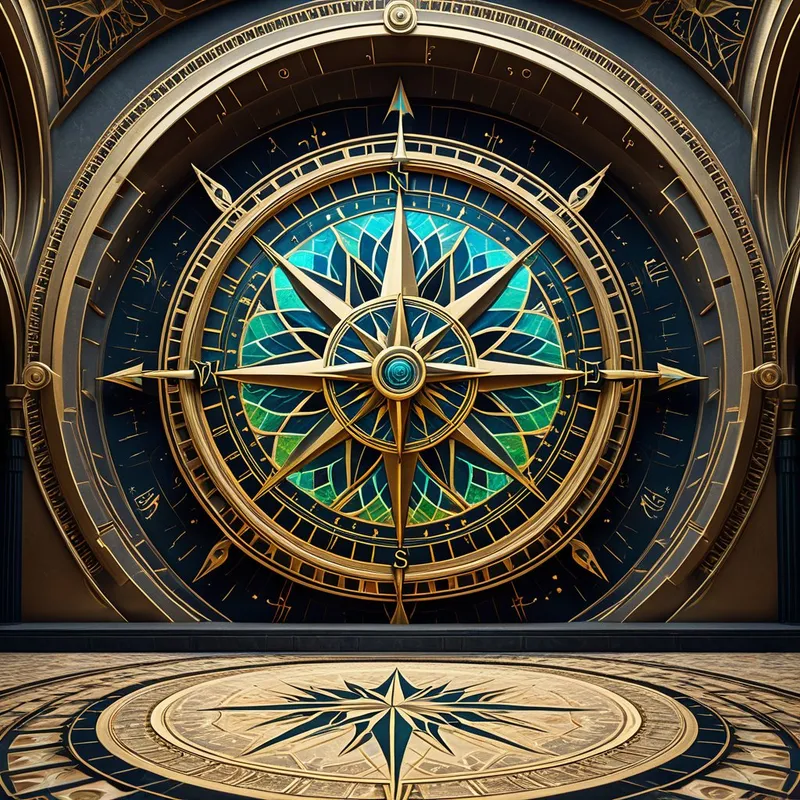
The prima materia here is the raw, chaotic grief of disorientation. The alchemical vessel is your own conscious awareness, holding the tension between the dying old map and the not-yet-born new bearing. The required heat is the intense psychological pressure of staying in the not-knowing. It is the refusal to grasp at the first false north—a rebound relationship, a rash career change, a new dogma—that arises to quell the anxiety. This heat feels like madness. The pressure is the weight of silence when others ask for your five-year plan and you have only a five-minute intention. Within this crucible, the base metal of confusion begins to liquefy. Its impurities—the need for external validation, the fear of error, the loyalty to old paths—rise to the surface to be skimmed away. What remains, after the sustained heat, is a purified core of magnetic inclination. This is your true north: not a destination, but an unwavering inner orientation. It is the crystallization of personal essence, heavy and sure, that will now pull the needle of your choices toward its pole.
The Integration Protocol
Question 1: If your sense of direction right now were not a thought, but a physical sensation in your body, where would you locate it and what shape, temperature, or texture would it have?
Question 2: What cherished "map" (a belief, a plan, an identity) have you been clinging to that your deepest self now knows is obsolete, even if letting it go feels like a betrayal?
Question 3: Imagine you already possess an infallible, internal compass. What is the first, smallest, most negligible thing it is pointing you toward or away from in this current moment?
Action 1 (Somatic Grounding): Stand barefoot, eyes closed. Feel the contact points with the earth. Now, very slowly, let your body lean forward, backward, side to side. Do not "choose" a direction. Instead, listen for the subtle, almost imperceptible pull from within your torso. Which lean feels most "alive," most resonant, even a fraction of a degree more than the others? Practice this daily, not to go anywhere, but to recalibrate your instrument.
Action 2 (Creative Cartography): Take a large sheet of paper. In the center, place a dot or a symbol representing "Here Now." Do not draw a map of the external world. Instead, using colors, shapes, and lines, create an internal landscape. Where are the swamps of doubt? The mountains of aspiration? The blocked passes? The hidden springs? Let your hand move without planning. The goal is not accuracy, but to externalize the psychic terrain so you can behold it.
Action 3 (Ritual of the Thread): Find a small, smooth stone. Sit quietly, holding it, and imbue it with the energy of your current "center"—who you are at this moment, with all your confusion. Then, take a long spool of red thread (or any color). Tie one end firmly around the stone. Over the next week, carry the spool with you. Whenever you make a choice—what to eat, what to say, how to respond—that feels even slightly aligned with a deeper, quieter "yes," gently pull a length of thread from the spool. You are not creating a path to follow, but a visible record of the path you are actually making, moment by moment, from your center.
Final Validation
To feel utterly directionless is not a sign of failure, but a symptom of profound readiness. It is the sacred, terrifying emptiness that must precede the drawing of a new constellation. The old stars by which you steered have served their purpose; their light brought you to this precise threshold of darkness. Honor the grief for their fading glow. Then, slowly, let your eyes adjust. The new guidance will not come from outside as a blazing sign. It will emerge from within as a quiet, magnetic certainty—a knowing in your bones that turns your face toward a horizon only you can see. You are not lost. You are in the necessary wilderness between worlds, and the very ache that unsettles you is the compass needle itself, trembling toward true north.