The Alchemy of Abandonment: Decoding Dreams of Decay & Neglect
The Somatic Echo
Before the image forms, the body knows. It is a hollowing out, a slow leak of pressure from a chamber you forgot you were maintaining. The shoulders slump not from weight, but from the absence of a tension that once defined a posture. A coldness settles in the gut, not the sharp chill of fear, but the deep, pervasive damp of a basement left unvisited for seasons. The breath becomes shallow, conserving a resource it senses is dwindling. This is the somatic echo of decay and neglect—not a violent trauma, but a structural sigh. It is the psyche’s way of translating a profound internal dereliction into a language the nervous system can understand: the feeling of a system powering down, of a vital process left unattended.
The Dreamer's Log
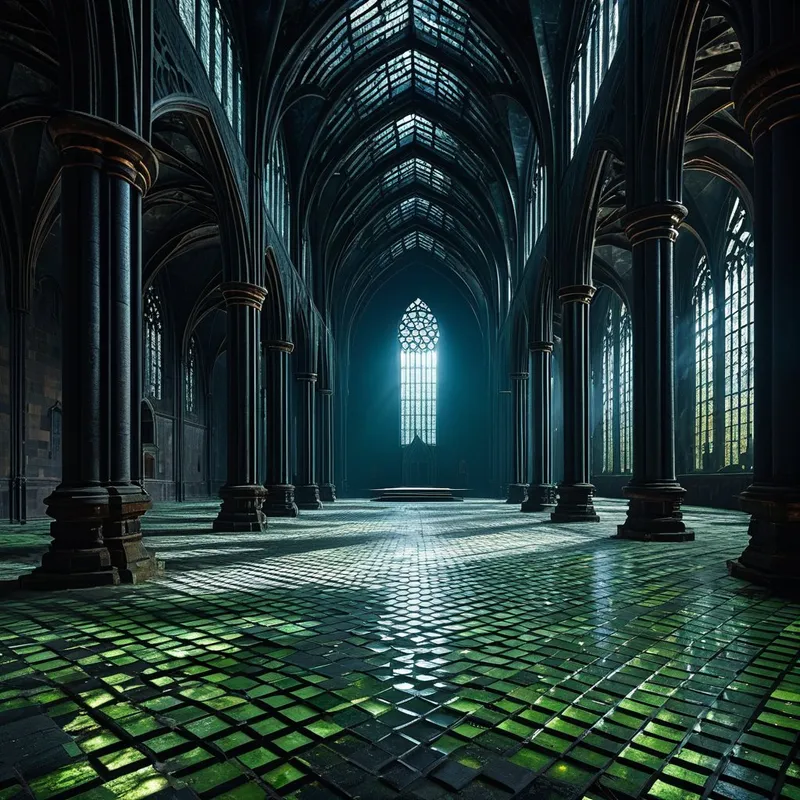
You stand in a forgotten wing of a vast, silent library. The air smells of ozone and old paper. Before you, on a marble pedestal, rests a single, ancient book bound in cracked leather. As you watch, the pages—not of paper, but of thin, luminous crystal—begin to cloud from the edges inward, their inner light dimming to a dull grey. You reach for it, but your hand moves through molasses-thick air.
This dream is not about a lost book, but about the active, sorrowful process of a specific insight or a nascent part of the self becoming occluded, its light suffocated by the stagnant atmosphere of inattention.

The False Lead
This theme is not a prophecy of external ruin, nor is it the psyche simply cataloging daily frustrations. A dream of a cluttered desk is not the same as a dream where the desk itself is rotting, its legs turning to soft pulp. The core of this dream language is not about having too little, but about ceasing to tend. It distinguishes between the chaos of a busy life and the profound, silent grief of a structural abdication. It points not to bad luck, but to a quiet, internal resignation of sovereignty over a domain of your being.
Psychological Architecture
To encounter decay in the dreamscape is to be shown the shadow work of maintenance. In the framework of Internal Family Systems, these decaying structures often represent Exiled Parts—vulnerable, creative, or sensitive aspects of the self that were deemed too risky, too painful, or too inconvenient to host in daily consciousness. We don’t actively attack them; we simply stop sending resources. We wall off the wing. We let the software update fail. We allow the connection to corrode.
The process of individuation here is one of reclamation. It is the slow, often heartbreaking work of walking back into those abandoned rooms not as a critic, but as a curious, compassionate witness. The grief you feel upon seeing the decay is not the problem—it is the first spark of reintegration. It is the proof that the Exile still holds a charge, still has a claim on your wholeness. The neglect is the shadow of the Caregiver and the Ruler; it is the failure of the internal governance to extend its protection and order to all its territories.
Mythic Resonance
We see this firmware in the myth of the Fisher King, ruler of a barren land that mirrors his own unhealed wound. His kingdom does not burn; it stagnates. The rivers clog, the crops fail, and the very court falls into a lethargic silence—a direct reflection of the king’s inner neglect of his own profound suffering. The land decays because its sovereign has abandoned a part of himself. Similarly, the tale of Sleeping Beauty is not just about a curse, but about an entire kingdom—a full psychic ecosystem—falling into a state of suspended animation, overgrown and forgotten, because a critical, integrating function (the wise woman, the 13th fairy) was excluded from the council. The system collapses into stasis, waiting not for a kiss, but for the return of wholeness.
Symbolic Nodes
- Abandoned Architecture: Mansions with sealed wings, factories with stilled machinery, overgrown gardens.
- Failing Systems: Flickering lights, drained batteries, corrupted data, clocks with stopped hands.
- Material Degradation: Rust, mold, dust-thick air, rotting wood, tarnished silver, crumbling plaster.
- Neglected Objects: A prized instrument gone out of tune, a vehicle with flat tires, a fountain run dry.
Archetypal Resonance
The energy most active in this theme is that of The Shadow Ruler.
The Shadow Ruler manifests here not as a cruel tyrant, but as an abdicating sovereign. This is the archetype of order and responsibility in its failed state: the inner governance that has grown weary, distracted, or hopeless, and has quietly abandoned its post. The somatic echo—the hollow pressure loss—is the feeling of this sovereignty receding. The decaying dreamscape is the kingdom it has left untended. The alchemical potential lies in the Shadow Ruler’s redemption: to move from neglectful abdication to conscious, compassionate stewardship. The grief felt upon witnessing the decay is the first stirring of the true Ruler re-awakening to its duty—not to control, but to care for the entire domain of the self.
The Alchemical Process
The prima materia here is the palpable grief of witnessing your own inner neglect. The alchemical vessel is your conscious, compassionate attention. The required heat is not the blaze of sudden transformation, but the sustained, low-grade warmth of acknowledgment—a heat often more difficult to bear than fury.
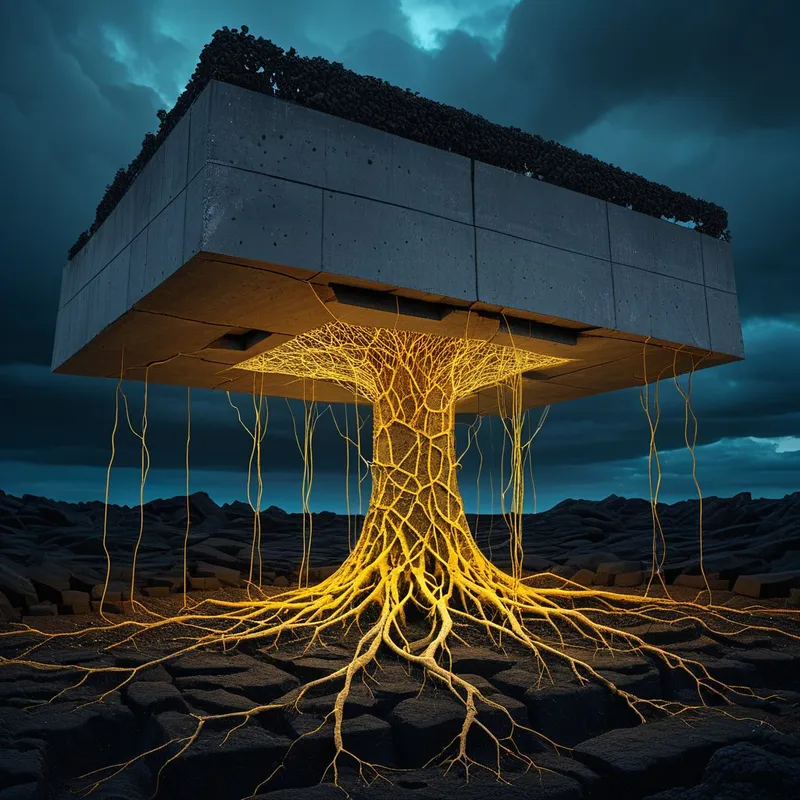
The process begins with Calcination: sitting in the cold, dusty reality of the abandoned space without immediately trying to fix it. Let the sorrow burn away the illusion that you can skip this step. Next is Dissolution: allowing the tears, the shame, or the numbness to flow, to soften the hardened boundaries you erected around this Exile. This is the rain that finally reaches the parched soil. Then Coagulation: the slow, patient work of sending resources back. A single act of inner kindness. A moment of creativity given to the neglected part. This is not a renovation; it is the planting of a single seed in cracked earth. The new compound formed is Sovereignty—not as domination, but as devoted, attentive presence to all parts of your inner kingdom.
The Integration Protocol
Question 1: When you witness the decay in your dream, what is your primary impulse? To flee, to frantically repair, or to simply stand and observe? What does that impulse protect you from feeling?
Question 2: If this decaying structure or object could speak, what one sentence would it have been repeating in the silence all this time?
Question 3: Where in your waking life do you feel the same somatic echo—that quiet, hollow sense of something being on "standby" or "low power"?
Action 1 (The Grounding Survey): For one week, perform a daily, three-minute internal survey. Do not analyze. Simply scan your inner landscape and name, with a single word, the "state" of a different inner territory (e.g., "creative energy: dormant," "compassion: guarded," "body: distant"). The goal is not to change, but to practice sovereign observation.
Action 2 (The Unstructured Letter): Set a timer for ten minutes. Write a letter from the decaying object or place in your dream. Do not think. Let it write itself. Use its voice. What does it describe? What does it miss? What does it no longer remember? Do not send this letter; the act is the reintegration of a lost voice.
Action 3 (The Ritual of Subtle Maintenance): Choose one small, neglected physical space that mirrors the dream's energy—a drawer, a shelf, a plant. Your task is not to overhaul it, but to perform a single, gentle act of attention for it. Dust one item. Water the plant. Rearrange with care. As you do, hold the intention that this external gesture is a covenant with an internal space.
Final Validation
To dream of decay is to be confronted with the evidence of your own humanity—the parts of yourself you lacked the capacity, knowledge, or courage to hold. It is a difficult, honest mirror. This grief is not a sign that you are failing; it is the sign that you are still alive, still capable of caring about what has been lost. The neglected place, in its ruin, is still yours. And sovereignty is not claimed in the grand halls of our triumphs, but quietly reclaimed, brick by dusty brick, in the forgotten wings we finally choose to light again. The journey back is the alchemy.