
The Alchemy of Endings: When Dreams of Death Signal Rebirth
The Somatic Echo
It begins not as a thought, but as a tremor in the deep tissue of being. A cold, hollow ache behind the sternum, as if a vital organ has been quietly removed in your sleep. The breath feels shallow, tethered to a chest that has become a vacant chamber. There is a profound, wordless sense of absence—a ghost limb of the soul. This is the body’s knowing, long before the mind can form the story of “death.” It is the somatic echo of a structure within you—a belief, an identity, a way of being—reaching its terminus. The system is preparing for a demolition so a more authentic architecture can be built. You feel the ground of your known self turning to sand.
The Dreamer's Log
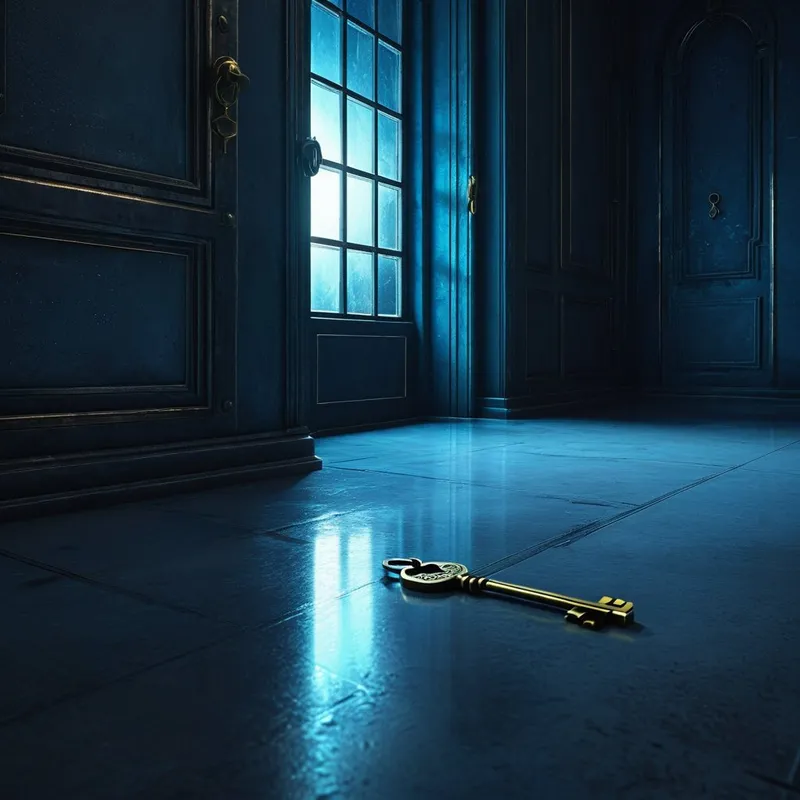
She stands in the apartment she has lived in for a decade, but it is utterly empty, stripped bare to its concrete shell. The only object left is a single, ornate brass key on the floor. When she picks it up, it disintegrates into a fine, blue-tinged dust that slips through her fingers without a sound.
This dream is not about losing a home, but about the irreversible dissolution of the internal “key”—the old identity, strategy, or story—that once granted you access to a familiar, but now obsolete, version of your life.
The False Lead
This theme is not a prophecy of physical death or a simple omen of “bad luck” arriving from the outside. To interpret it as such is to mistake the map for the territory, the symbol for the literal event. The terror it evokes is not a warning of an external ending, but the visceral resistance to an internal one. It is not about something being taken from you, but about a part of you that must be consciously relinquished. The psyche uses the ultimate metaphor—death—to communicate the necessity of a psychological sacrifice so complete that it feels, in the moment, like annihilation.
Psychological Architecture
This is the Shadow work of surrender. The process of Individuation—becoming who you truly are—demands the death of who you are not. This is not a gentle pruning but a full-scale clearing. The ego, that diligent manager of our conscious identity, clings to its known roles: the reliable one, the successful one, the wounded one, the good one. To dream of death is to encounter the Shadow’s most potent truth: these roles are costumes. The alchemical fire of this dream burns away the costume to see if anything real remains beneath. The grief that follows is not just for what is lost, but for the energy you invested in a fiction. You are not losing a part of yourself; you are losing the part that was never truly you. The architecture that crumbles is the false facade, revealing the raw, unformed potential of the true foundation.
Mythic Resonance
We see this universal firmware in the story of Inanna, the Sumerian goddess who descends into the underworld. At each of its seven gates, she is stripped—of her crown, her jewels, her royal robes—until she arrives naked and prostrate, a corpse hung on a hook. This is not a punishment, but a necessary initiation. To gain the deep wisdom of the underworld (the unconscious), she must surrender every marker of her above-world identity (the conscious ego). Her resurrection is not a return to what she was, but an ascent with a hardened, sober wisdom integrated into her being. The myth does not shy from the visceral, degrading detail of the stripping; it understands that sovereignty is born in the total dissolution of the old sovereign.
Symbolic Nodes
- Empty rooms, abandoned houses, or derelict buildings.
- Wilted flowers, fallen leaves, barren landscapes.
- Clocks stopping, calendars ending, bridges collapsing behind you.
- Silent phones, unresponsive devices, extinguished lights.
- Fossils, ashes, crumbling statues, or objects turning to dust.
Archetypal Resonance
The core energy here is that of The Rebel Archetype. Not in its shadow form of chaotic destruction, but in its essential function: to dismantle the outmoded, internalized tyranny so that authentic life can proceed. The somatic echo—that hollow, crumbling sensation—is the Rebel’s sledgehammer striking the inner prison wall. Its alchemical potential lies in its ruthless, necessary love; it destroys not for the sake of chaos, but to create the empty space where your true authority, unbound by old laws, can finally be established. It is the archetypal force that says "this ends now" to the internal regime, making the terrifying void a prerequisite for sovereignty.
The Alchemical Process
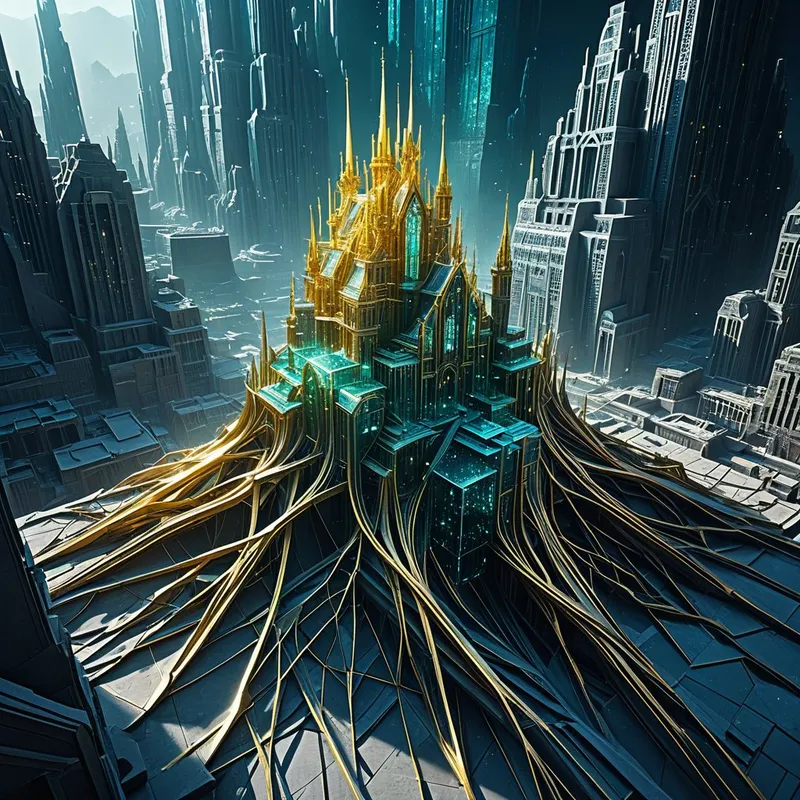
The transmutation here is Dissolution to Coagulation. The prima materia—the leaden weight of an outlived identity—must first be dissolved in the acid of conscious grief and the fire of felt loss. This is the nigredo, the blackening: the intense heat and pressure where everything solid turns to liquid despair. You must feel the ending, not just think it. The alchemy occurs when you stop resisting this liquefaction and instead consent to it. In that consent, the process shifts. The dissolved elements—memories, traits, hopes attached to the old form—begin to separate from their previous structure. They do not vanish. They are purified, then allowed to re-coagulate under a new, self-authored principle. The terror of death becomes the awe of rebirth when you realize you are not the form that died, but the consciousness that holds the alembic. The new sovereignty is born from having consciously presided over your own ending.
The Integration Protocol
Question 1: What familiar role, story, or belief about myself felt most "dead" or absent upon waking? What task did that part of me used to perform (e.g., keeping me safe, making me likable, proving my worth)?
Question 2: If that inner role or structure were a physical building, what was its architecture like? Was it a fortress, a museum, a prison, a theater? What does its emptiness make space for now?
Question 3: Where in my body do I feel the resonance of this ending most acutely? If that sensation had a voice, what one word would it speak?
Action 1 (Somatic Anchoring): For three minutes, place your hand on the part of your body that holds the echo of the ending. Breathe into that space. Do not try to change the sensation; simply acknowledge its presence with the breath, as you would sit with a respected elder in silence.
Action 2 (Unstructured Writing): Set a timer for ten minutes. Write a letter of gratitude and release to the "dying" part or pattern. Thank it for its service. Then, write its reply back to you. Let the writing be messy, illogical, and raw. Do not edit.
Action 3 (Ritual of Void): Physically create a small, clean, empty space—a cleared shelf, a blank notebook, a bare patch of earth. Place nothing in it for three days. Each time you see it, let it remind you that the void is not an error, but the necessary condition for what wants to emerge next.
Final Validation
The gravity of this dream is real. To feel an inner death is a profound and disorienting sorrow. It is the psyche's most demanding labor. Yet, this very gravity is the measure of the transformation at hand. You are not breaking down; you are being broken open. The dream does not come to annihilate you, but to introduce you, at long last, to the unkillable, essential core that remains when all the endings are done. It is the forge where the soul's sovereignty is tempered. You are not surviving an ending; you are presiding over a sacred dissolution, from which only your truest form can coalesce.