
The Alchemy of Belonging: Dreams of Cultural Integration
We do not merely move between cultures. We ingest them. They become a second skeleton, a ghost-limb of custom and expectation that walks beside us, sometimes in step, sometimes pulling us into a stumble. The dream of cultural integration is not about learning a language or a map; it is the psyche’s visceral, often agonizingly beautiful, process of digesting a world and being digested by it in turn. It is the work of becoming a living borderland.
The Somatic Echo
Before the mind forms an image, the body knows the work. It feels like a low-grade hum in the marrow, a persistent dissonance between the rhythm of your heartbeat and the pulse of the street outside your window. It is a tightness in the jaw from holding back an idiom that doesn’t translate, and a hollow ache in the palms from the absence of a familiar handshake. It manifests as a peculiar fatigue—not of muscle, but of meaning—where the constant, subconscious translation of social cues, tones, and spaces drains a psychic reserve you didn’t know you had. This is the somatic ground from which the dream grows: a body sensing it is both a guest and a host, a translator and the text being translated.
The Dreamer's Log
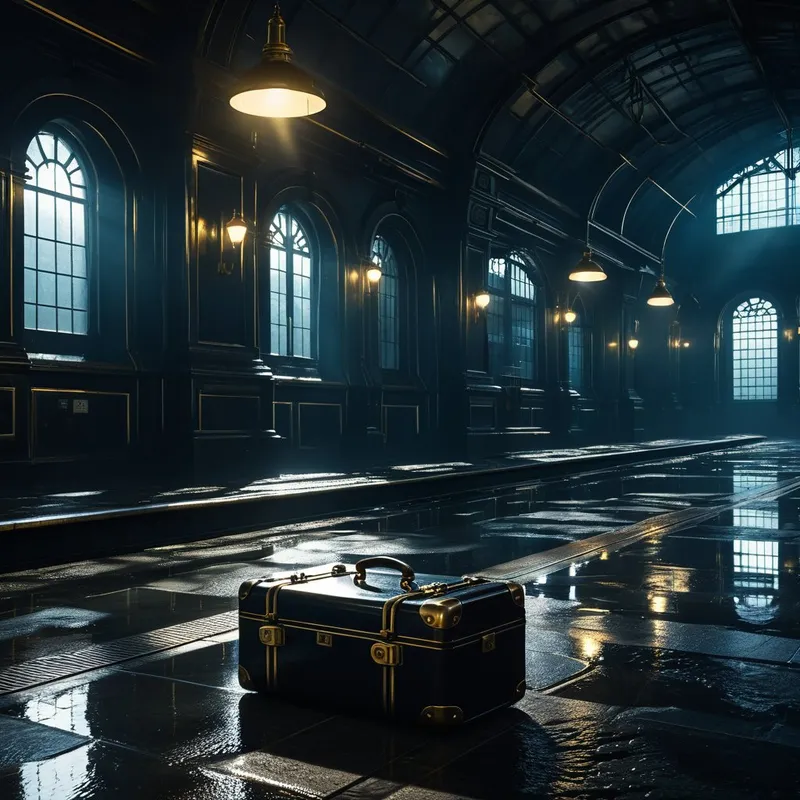
The dreamer stands in a vast, echoing train station of polished obsidian and brass. They hold a heavy, old-fashioned suitcase, but as their train arrives—a silent, sleek vessel of light—they realize they cannot board with it. The latches are fused shut, containing everything from "before." They must choose: abandon the case or miss the train. They place it gently on the wet platform and step aboard, feeling both terrifyingly light and utterly exposed.
This is not a dream of loss, but of necessary surrender. The alchemical vessel (the suitcase) must be left behind so its contents can be vaporized and later reconstituted within the new self. The train is the forward momentum of life; it will not wait for an unpacking.
The False Lead
This theme is not about nostalgia or simple homesickness. It is not the sentimental longing for a lost "golden age" of belonging. That is the territory of the Shadow Innocent, clinging to a sanitized memory. Nor is it merely the frustration of practical adaptation—the "bad luck" of bureaucratic hurdles or social faux pas. To mistake the profound, structural soul-work of integration for its surface-level irritations is to remain a perpetual tourist in your own life, complaining about the weather while ignoring the earthquake reshaping your foundations.
Psychological Architecture
The deep work here is the shadow labor of the orphan who must find a home, and the rebel who must dismantle the internal walls of a home that no longer fits. You are asked to hold two seemingly contradictory truths: that a part of you will always carry the exile’s mark, and that you must nevertheless build a dwelling in the new land. This is the core tension. The psyche’s "internal family" is in upheaval: the protective part that clings to the old ways (the inner traditionalist) wars with the adventurous part that sought the new (the inner pioneer). A third, often silent, part—the diplomat, the bridge-builder—must emerge from the shadows. Its task is not to broker a shallow peace, but to facilitate a transmutation, where the old identity is not discarded but alchemized into a nutrient for the new. You are not replacing one self with another. You are building a psychic federation.
Mythic Resonance
We see this in the story of the Babylonian exile, not as a historical event, but as a psychic blueprint. A people are uprooted, their temple—the literal and symbolic center of their world—destroyed. By the rivers of Babylon, they hang their harps, for how can they sing the song of Zion in a foreign land? The profound integration occurs in the answer that slowly forms: they must learn to sing a new song, one that contains the memory of Zion within the reality of Babylon. The harp is not abandoned; its song evolves. Similarly, in the Greek myth, Odysseus is the great integrator. His twenty-year journey is not just a trip home, but the slow, painful process of integrating the horrors and wonders of the wider world—Cyclops, Circe, the Lotus-Eaters—into the man who will finally reclaim his throne. He returns not as the boy who left, but as a complex sovereign forged in the crucible of otherness.
Symbolic Nodes
- Bridges, Doorways, and Seams: Liminal spaces where two realms meet, often under strain or illuminated with strange light.
- Hybrid or Translucent Objects: A book whose text shifts languages, a garment woven from incompatible fabrics, a radio picking up two stations at once.
- Abandoned Luggage or Lost Passports: The containers of old identity that become impediments to movement.
- Kitchens and Feasts with Inedible or Confusing Food: The most intimate assimilation—ingestion—becoming fraught.
- Unfamiliar Currency or Bartering Systems: The dream grappling with new systems of value, exchange, and personal worth.
- A House with an Impossible Architecture: Rooms that lead to outside landscapes, staircases to nowhere, walls that are transparent or mutable.
Archetypal Resonance
The most active force in this theme is The Explorer Archetype, specifically in its mature, integrative phase, brushing against its shadow. The initial journey is pure Explorer: the seeker, the wanderer lured by the horizon. But cultural integration is what happens after the map ends. The shadow of the Explorer—the Aimless and the Alienated—threatens to take over, creating a perpetual, rootless wandering that mistakes motion for meaning. The alchemical potential lies in the Explorer evolving from a seeker of new lands to a cartographer of inner frontiers. The somatic echo of dissonance becomes the Explorer’s data. The new culture is not just a territory to traverse, but a mirror in which the Explorer must finally meet and map the uncharted territories of their own psyche. The integration is the ultimate exploration: the discovery of a self large enough to contain multitudes.
The Alchemical Process
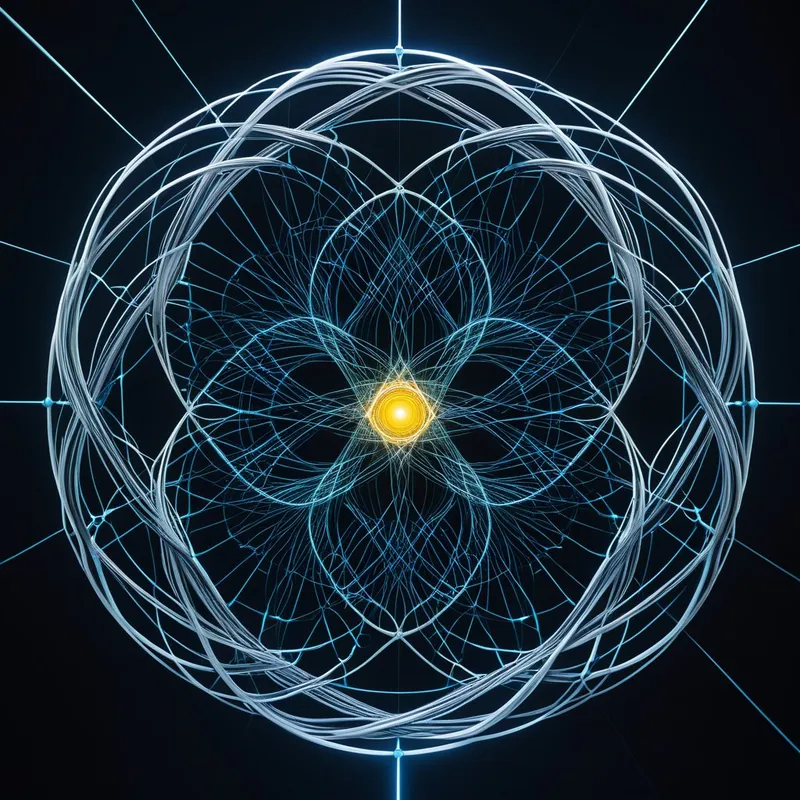
The alchemy here is Solutio followed by Coagulatio—dissolution and recombination. The intense heat and pressure are generated by the constant, low-grade friction of being "other." This friction dissolves the hard, crystalline structures of your former, unquestioned identity. You are melted out of your old form. This is the terror: feeling formless, a ghost between worlds. The grief is for the solid, known self that is passing away. The sovereign self is not forged by resisting this dissolution, but by consciously participating in it. You must hold the liquefied state—the prima materia of your experience—without rushing to solidify into a crude copy of either culture. Sovereignty emerges in the slow, intentional Coagulatio, where you, as the sole alchemist of your soul, choose which elements from each world to combine into a new, unique, and resilient compound: your integrated identity. The pressure is the process.
The Integration Protocol
Question 1: In the friction between your inherited culture and your present one, what is a value or instinct you feel you must hide or suppress from each side? What third, unexpected value wants to be born from that tension?
Question 2: If your sense of self were a house built from this integration, what one room feels most like a sacred, inviolable sanctuary? What room feels like a confusing, locked closet you avoid?
Question 3: What song, taste, or smell from your past has you found a completely new, perhaps even contradictory, resonance for in your current life? How has its meaning been alchemized?
Action 1 (Somatic Grounding): When you feel the hum of dissonance, place one hand on your heart and one on your solar plexus. Breathe into the space between your hands. Acknowledge, without words, the protector who clings to the old and the pioneer who charges into the new. Simply give them both space to exist in your body.
Action 2 (Creative Transcription): Find two pieces of music—one that feels quintessentially of your "old" world, one of your "new." Listen to them simultaneously at a low volume. Without judgment, draw or write whatever shapes, colors, or phrases arise from the chaotic overlap. This is a map of your psychic borderland.
Action 3 (Ritual of Hybrid Nourishment): Prepare a simple meal that intentionally combines one ingredient or technique from your cultural past with one from your present. As you eat, practice holding the complexity of both histories in your body. You are not fusing them into a single taste; you are learning to appreciate the distinct notes of each, and the new flavor their coexistence creates.
Final Validation
This work is a quiet heroism. It is fought not on battlefields but in grocery aisles, in pauses during conversation, in the deep night of the soul. To feel fractured is not a sign of failure, but a testament to the complexity of the worlds you are holding. The ache is the proof of your capacity. You are not between stories; you are the author writing a new myth of belonging, one where the exile and the citizen are recognized as two vital voices in a single, sovereign being. The integrated self is not a finished monument, but a living, breathing embassy—a place where all parts of you, from every shore you’ve touched, finally have diplomatic recognition.