
The Dream of Critical Examination: The Inner Inquisition
The Somatic Echo
Before the mind conjures the courtroom, the examination hall, or the panel of silent judges, the body knows. It is a specific, hollow dread. A cold, metallic taste at the back of the tongue. A constriction in the solar plexus, as if a hand has reached inside to gently, firmly squeeze the breath from its cradle. The shoulders draw in, not in a slump of defeat, but in a precise, defensive hunch—an instinct to make the target smaller. The skin feels transparent, as though every flaw, every unspoken thought, every hidden tremor is suddenly illuminated on an X-ray screen for an unseen audience. This is the visceral prelude to the dream of critical examination: the somatic echo of being seen, measured, and found wanting by the most merciless authority you will ever know—a part of yourself.
The Dreamer's Log (Case Vignette)
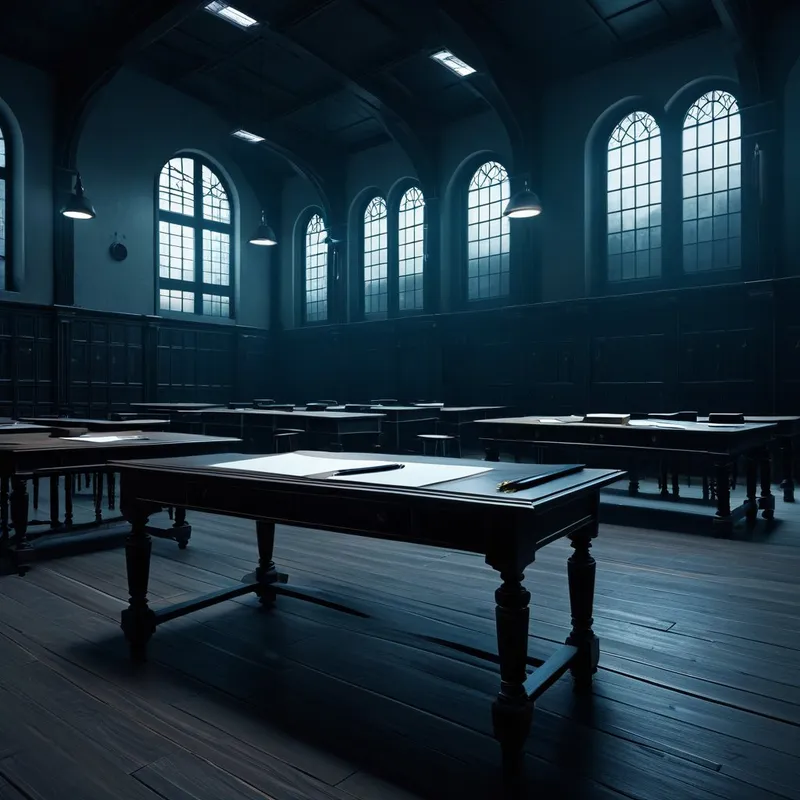
I am standing in a cavernous, silent hall. Rows of empty desks stretch into darkness. At the front, a single sheet of paper glows with a cold light. I know I must write the answer, the one answer that will define everything, but the question is unreadable. The only sound is the frantic scratching of my own pen, writing nothing but frantic loops.
This is the alchemy of paralysis: the internalized critic has become so absolute, its standards so nebulous, that the creative or authentic self is frozen, performing the act of response without being permitted to produce one.
The False Lead
This theme is not a simple portent of a coming job review or a fear of public speaking. Those are its costumes. To mistake the dream for a literal warning about external judgment is to remain in the antechamber of its meaning. The terror is not of failing a test, but of the test itself being a rigged game—a game where the rules are written in a language you’ve forgotten, administered by a version of you that believes perfection is the only passable grade. It is not about bad luck, but about a foundational belief in your own inherent insufficiency being brought up for review.
Psychological Architecture
The dream of critical examination is the psyche’s most severe, and most necessary, audit. It is Shadow work of the highest order, where the internalized voices of parents, culture, and past failures coalesce into a single, faceless tribunal. This is not the chaos of the repressed Orphan or the rage of the Rebel; this is the cold, systematic process of the Judge. The individuation process here demands you do not destroy this court, but step behind the bench and examine the judge. You must depose the tyrant by understanding its origin story. What ancient promise of safety was tied to flawless performance? What love was conditional upon perfect marks? The architecture revealed is one of a self split: one part eternally on trial, the other wielding the gavel. Integration occurs not when the trial ends, but when you realize you are the entire courtroom—the accused, the jury, the judge, and the silent observer in the gallery who knows this whole drama is a defense against a more terrifying freedom: the freedom to be imperfect, and thus, real.
Mythic Resonance
We see this eternal process in the myth of Osiris. Set does not merely kill his brother; he tricks him, measures him precisely, and seals him in a coffin tailored exactly to his form—a perfect, suffocating critique. The dismemberment that follows is the ultimate failure of integrity under scrutiny. Isis’s quest is not to resurrect the whole, perfect Osiris, but to reconstitute a new form that integrates the missing, scattered pieces. The phallus, the creative life-force, is lost, replaced by gold—a transmuted, symbolic potency. The myth tells us that the critical examination, the being measured and found fatally wanting, is a prelude not to death, but to a necessary disassembly. Wholeness, afterward, is something different, something conscious of its own seams.
Symbolic Nodes
- Empty Examination Halls/Lecture Theatres: The isolation of the process; you are alone with your internalized standards.
- Unreadable Test Papers or Blurred Text: The obscurity of the standards you are trying to meet; a sense that the goalposts are inherently unknowable.
- Mirrors that Judge or Distort: The projection of the critical faculty onto the world; everything reflects back a failure.
- Being Watched by Silent Figures/Panels: The feeling of your every action being assessed by an amalgam of internalized authorities.
- Malfunctioning Tools (Pens that break, keys that don’t fit): The sabotage of the ego’s ability to perform or prove itself adequate.
Archetypal Resonance
The energy here is most purely that of The Shadow Ruler. This is not the Sovereign who creates order for the benefit of the kingdom (the whole Self), but the Tyrant who imposes control out of a deep-seated fear of chaos and inadequacy. Its somatic echo is the rigid spine, the clenched jaw of absolute decree. Its core energy is the merciless application of a law—often a forgotten or irrational one—to ensure a brittle, perfect stability. The alchemical potential lies in seizing the scepter from this Shadow; to transform its harsh judgment into discernment, its rigid control into conscious structure, and its fear of flaw into the wisdom that a true kingdom is resilient because it knows and integrates its own weaknesses.
The Alchemical Process
The transmutation of Critical Examination is the Nigredo of consciousness—the blackening, the putrefaction. The heat is the unbearable heat of self-exposure. The pressure is the weight of your own gaze turned against you. The base material is the leaden belief that "I am not enough." The process does not begin by arguing with the critic, but by submitting to the examination with a new question: "What part of me is so terrified of failure that it built this entire courtroom?" This is the descent into the black. You allow the sentences of the inner judge to be spoken in full, to feel their full, withering effect. Only in that total, accepted despair does the first flash of contradictio appear: the witness. The part that feels the pain of the accusation. This spark of felt experience, this recognition of the one who is being judged, is the first whitening, the Albedo. It separates the experience of suffering from the story of worthlessness. The sovereignty born is not of perfection, but of authorship—the power to dissolve the tribunal by understanding its construction.
The Integration Protocol
Question 1: When you feel the somatic echo of scrutiny in waking life—that cold dread, that tightening—what is the very first, unadorned story that flashes in your mind? ("I will be exposed," "I am a fraud," "This will prove I'm broken")?
Question 2: If your inner critic were a character, not a voice, what does it look like? What is its posture? What does it fear would happen if it ever put down its gavel and stopped the trial?
Question 3: What forgotten or disowned part of you is currently sitting in the defendant's chair? Is it your creativity, your need for rest, your anger, your sensuality?
Action 1 (Somatic Reclamation): When the feeling arises, place a hand firmly on your solar plexus. Breathe into that pressure. With each exhale, mentally offer the sentence: "I feel the examination. I am more than its verdict."
Action 2 (Creative Deposition): Draw your internal courtroom. Do not aim for art. Sketch the judge, the jury, the accused, the witness stand. Give them form. Then, on a separate page, draw the moment the courtroom dissolves—what does that look like? Is it a flood of light? The walls turning to sand? Let the image come.
Action 3 (Ritual of Amnesty): Write the most damning verdict your inner judge has ever passed on a slip of paper. Read it aloud once, to hear its absurd, cruel poetry. Then, with conscious ceremony, dissolve it. Burn it safely, bury it in soil, or shred it into a body of moving water. The action is a signal to the psyche: this particular law is hereby repealed.
Final Validation
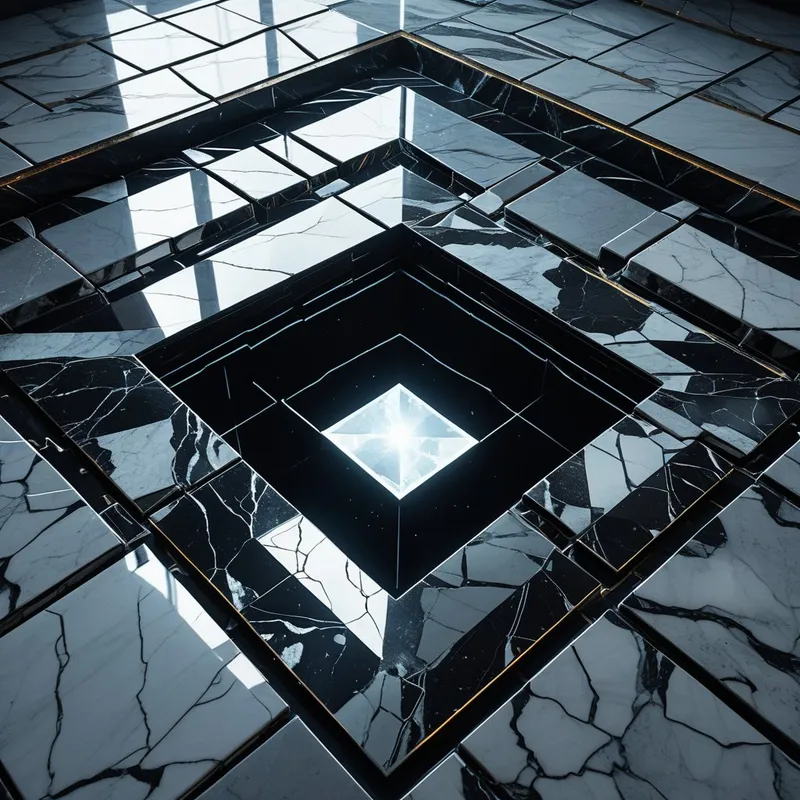
The dream of critical examination is one of the most arduous territories of the soul. To feel the cold gaze of your own perfected ideal is a unique kind of loneliness. It is the ego's winter. Yet, this brutal audit is not your enemy, but a profound, if misguided, guardian. It sought to protect you by holding you to an impossible standard, believing that was the only way to ensure your safety, your worth, your right to exist. Your task is not to slay this guardian, but to relieve it of its duty with the profound gratitude of a sovereign who now chooses a different law: the law of integration, where every examined flaw becomes a facet of your diamond, and the only verdict that matters is the compassionate, unshakable "I am."