The Architecture of the Soul: Dreams of Control & Order
The Somatic Echo
Before the mind can name it, the body knows the theme. It is not anxiety, which flutters. It is a deep, structural hum. A tension in the jaw that believes it is holding the sky in place. A rigidity in the spine that has mistaken itself for a load-bearing column. The breath becomes shallow, held in the upper chest, a careful rationing of air as if each inhale must be approved. There is a coldness in the palms, a sensation of gripping an invisible wheel that cannot be released. This is the somatic signature of a psyche that has over-identified with the architect, believing the entire integrity of the self depends on the maintenance of a single, fragile blueprint. The body becomes the castle keep, and every sensation a potential breach in the walls.
The Dreamer's Log
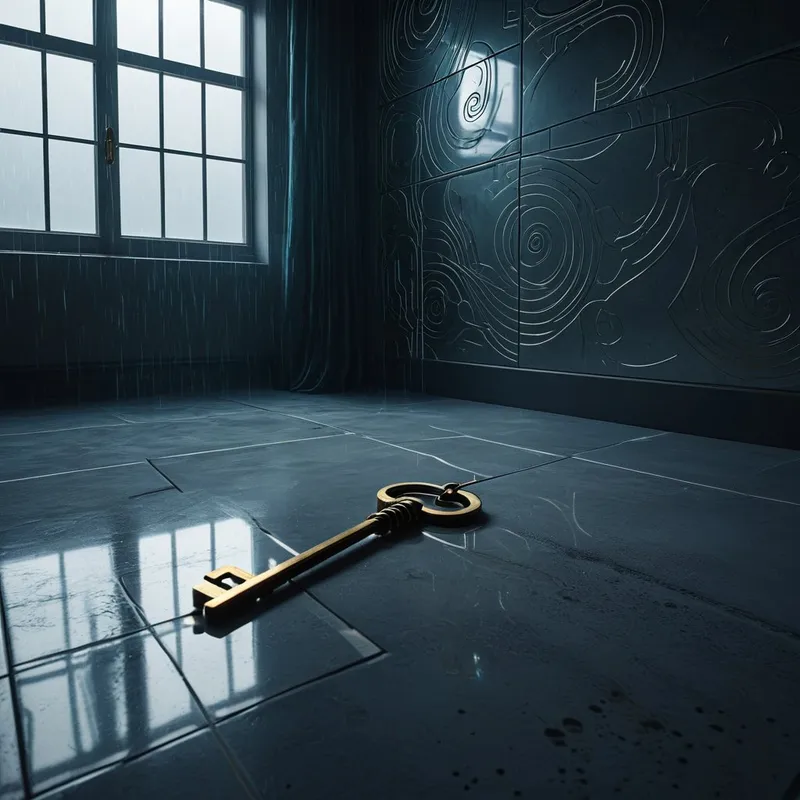
The dream is always the same: I am in my apartment, but it is too clean, too quiet. The surfaces are bare polished stone. I know, with dream-certainty, that I must find the key to lock the final door. But when I find it—an ornate, heavy brass thing—my fingers are numb. I fumble. The key slips, hits the floor with a sound that echoes forever. Outside the wall-sized window, a beautiful and terrifying storm of swirling colors and lights begins to press against the glass.
In the alchemical vessel of the soul, the dropping of the key is not a failure, but the first crack in an eggshell that has become a prison.
The False Lead
This theme is not about mere preference for tidiness or a passing frustration with chaos. To mistake it for simple “perfectionism” or “type-A personality” is to confuse the symptom for the disease. The dream is not commenting on your daily schedule or your filing system. It is addressing a foundational myth you have internalized: that safety, worth, and identity are products of a perfect, self-generated order. It is not about controlling your environment; it is about an environment—an internal psychic architecture—that has begun to control you. The terror in the dream is not of mess, but of meaninglessness. The grief is not for lost plans, but for a self that has been sacrificed on the altar of a structure it built for its own protection.
Psychological Architecture
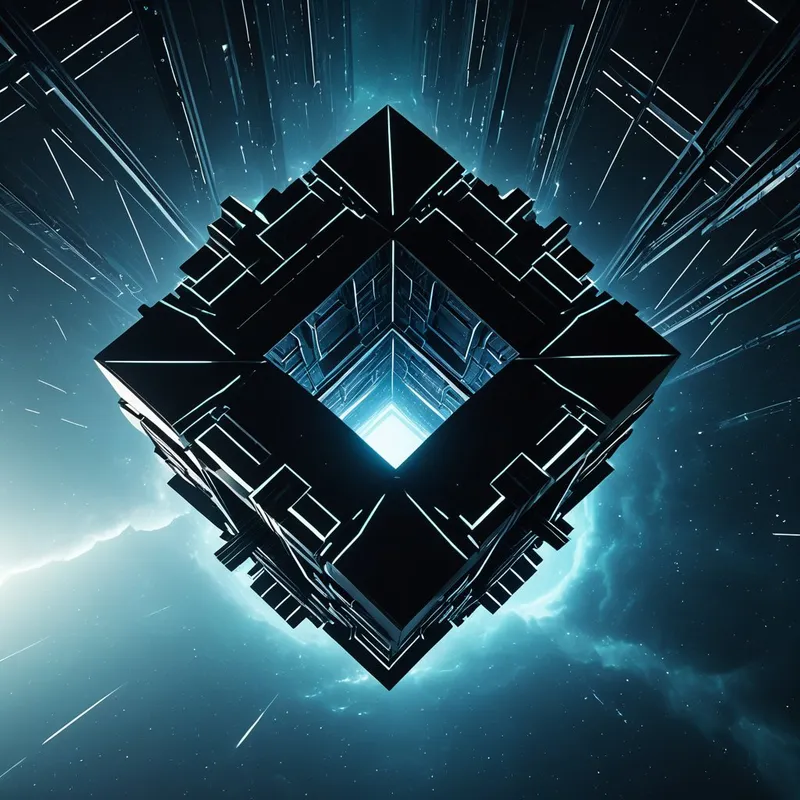
When this theme emerges, the psyche is engaged in profound Shadow work. The conscious ego has deputized itself as the sole ruler, exiling all other internal parts—the spontaneous child, the grieving orphan, the wild lover—to the dungeons of the unconscious. They become the “chaos” outside the glass. The dream reveals the cost of this exile: a life that is sterile, frictionless, and ultimately, fragile. The individuation process here is a violent and beautiful restructuring. It is the dismantling of a personal monarchy to form a internal council. The Shadow is not a monster at the door; it is the vital, suppressed energy within the walls, the bioluminescent pulse you saw in the cracking obsidian. To integrate it is not to lose control, but to shift from a dictatorship of the ego to a sovereignty of the Self—a system that is fluid, responsive, and inclusive of its own contradictions.
Mythic Resonance
We see this in the tale of the Golem, the clay giant brought to life by sacred order (the word Emet, "truth", placed on its forehead). It was created for protection, for perfect service and control. But it grows uncontrollable, its literal-minded obedience becoming a threat to the very community it was meant to guard. The creator must ultimately deactivate it by erasing the first letter, changing Emet to Met ("death"). The myth warns us: the structures we animate with our life force can turn against us if they lack the fluidity of a true soul. Similarly, the Fate Sisters of Greek myth—Clotho who spins the thread, Lachesis who measures it, Atropos who cuts it—represent an order so absolute it becomes a tyranny. To wrestle with dreams of control is to sit at that loom, not as its slave, but to ask: who truly holds the shears?
Symbolic Nodes
- Malfunctioning Locks, Keys, or Tools: The instruments of security betraying you.
- Sterile, Empty, or Overly-Geometric Spaces: The psyche mapped into a lifeless grid.
- Impenetrable Glass or Walls: The barrier between the ordered self and the vibrant, excluded wildness.
- Frozen or Mechanized Bodies: The somatic echo made literal—life reduced to clockwork.
- Collapsing Buildings or Shattering Structures: The necessary, terrifying deconstruction.
- Uncontrollable Technology: The externalized mind turning autonomous and alien.
Archetypal Resonance
The energy at the core of this theme is that of The Shadow Ruler.
The Shadow Ruler is the architect of the sterile apartment, the ego convinced that total dominion is the only path to safety and legitimacy. Its somatic echo is that rigid spine, that grip on the invisible wheel. It mistakes hierarchy for harmony and confuses compliance with loyalty. Yet, within this archetype lies the alchemical potential: the Shadow Ruler’s drive for order is not evil, but a distorted expression of the legitimate Ruler’s need for healthy inner governance. The heat of the dream is the pressure required to melt the tyrant’s crown and recast it into a sovereign’s circlet—a symbol not of domination over one’s internal kingdom, but of responsible, compassionate stewardship of all its diverse inhabitants.
The Alchemical Process
The transmutation here is from Rigidity to Sovereignty. The prima materia is the brittle, fear-based structure. The heat is applied through the sustained tension of the dream itself—the recurring nightmare, the somatic grip, the lived experience of a life that feels frictionless yet joyless. This heat creates the necessary pressure for the nigredo, the blackening: the despair when the key is dropped, the terror as the glass cracks. This is not a breakdown, but the breaking open of the old form. The albedo, the whitening, follows: the realization that the storm outside is not an enemy, but exiled parts of the self. The final rubedo, the reddening, is the integration. The walls do not simply vanish; they become permeable membranes. Order is not abandoned, but redefined as the dynamic, emergent pattern that arises from the respectful dialogue between all internal voices. The controlled environment becomes a responsive ecosystem.

The Integration Protocol
Question 1: Where in my waking life do I feel the cold, gripping sensation of holding something too tightly—a plan, an identity, a outcome—and what ancient fear does that grip believe it is preventing?
Question 2: If the “storm outside the glass” in my dream were not a threat, but a forgotten part of myself trying to return home, what qualities (chaos, passion, grief, wild creativity) might it be carrying?
Question 3: What one small, “imperfect” action could I take that would deliberately soften the edges of my self-imposed order, not to create chaos, but to make space for a more authentic impulse?
Action 1 (Somatic Unlocking): For three minutes, sit and consciously clench every muscle in your body—fists, jaw, abdomen, legs. Hold it until it trembles. Then, release all at once. Do not move toward relaxation; simply observe the physical aftermath. Notice what sensations, images, or emotions arise in the void left by the released grip.
Action 2 (Council of Parts): Engage in unstructured writing. Let your inner “Controller” or “Architect” speak first. Let it complain, justify, and fear. Then, invite one other exiled “part” (the Spontaneous Child, the Weeping Orphan, the Silent Rebel) to write a response. Do not mediate. Let them have a written dialogue on the page.
Action 3 (Ritual of the Permeable Boundary): Find a small stone or piece of wood. On one side, draw or paint a symbol of your old, rigid structure (a grid, a lock, a wall). On the other, a symbol of fluidity (a wave, a root, a river). Place it at a threshold in your home (a windowsill, a doorway). Let it be a tactile reminder that you are no longer just the wall, but also the gateway.
Final Validation
To dream of control is to feel, in your very bones, the exhausting weight of a crown you were never meant to wear alone. It is a profound and lonely labor. Honor the part of you that took up that scepter; it was trying, with all its might, to build a world safe enough for you to live in. Now, the dream comes not to condemn that builder, but to introduce it to the rest of the family waiting in the wings. The integration is not a loss of power, but the end of a siege. It is the moment you step out from behind the fortress walls, not into anarchy, but into your own vast and sovereign territory, finally ready to meet it all—the storm and the stillness—as aspects of your own, complete and breathing kingdom.