The Alchemy of Confrontation: When the Dream Summons You to the Threshold
The Somatic Echo
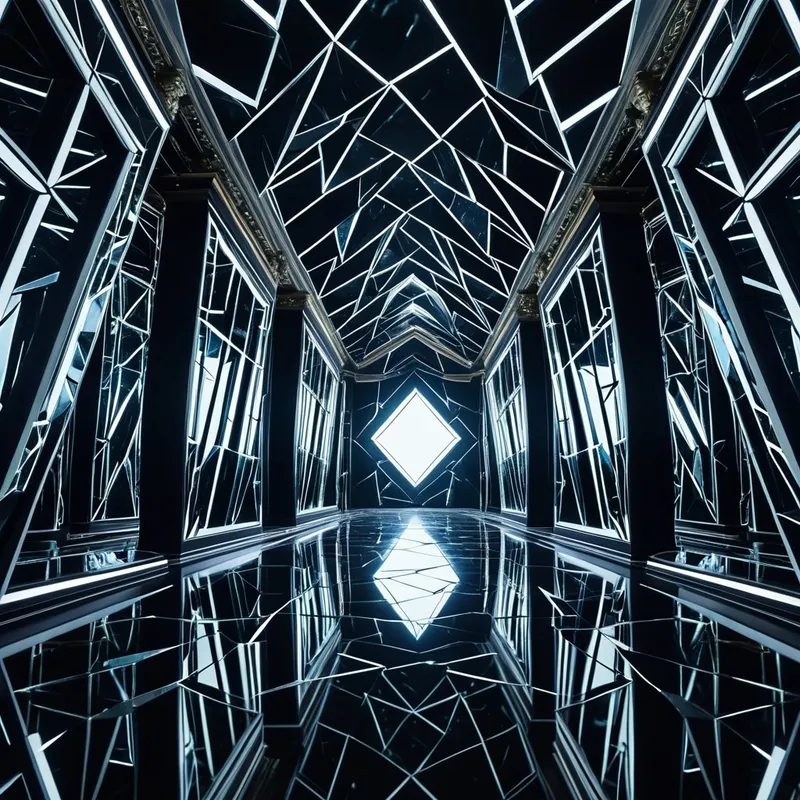
It begins not as a thought, but as a tremor in the foundation. A cold, metallic taste at the back of the throat. A tightening in the solar plexus, as if a fist of forgotten gravity has taken root there. The breath becomes shallow, a cautious reconnaissance mission into a body that suddenly feels like contested territory. This is the somatic echo of confrontation—the body’s ancient, pre-verbal intelligence sounding the alarm long before the mind can name the threat. It is the visceral recognition of a boundary about to be crossed, a truth about to be spoken, a self about to be re-negotiated. The echo is not fear of an external monster, but the profound disquiet of an internal system preparing for a seismic shift. It is the feeling of the ground becoming liquid beneath your feet, not to drown you, but to remind you that you are standing on the precipice of your own becoming.
The Dreamer's Log
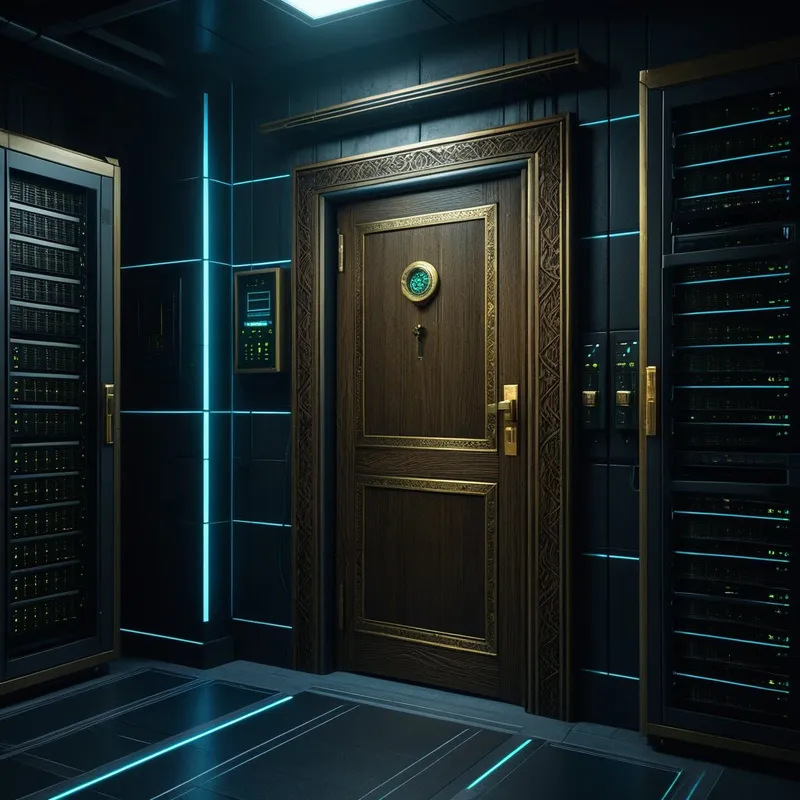
The dreamer stands in a vast, derelict data center, the air thick with the hum of dormant machines. Rows of black server racks stretch into darkness, their status lights blinking like dormant eyes. At the end of the central aisle, a simple, weathered oak door stands ajar, light bleeding from its edges. A figure—faceless, more a silhouette of condensed shadow—waits, leaning against the frame. The dreamer’s feet are lead; every step forward is a battle against a magnetic field of pure dread. They know, with a certainty that bypasses logic, that they must reach that door.
The alchemical interpretation: The psyche presents the neglected, archaic self (the oak door in the digital temple) and demands a meeting to integrate raw, foundational data (shadow) into the modern conscious system.
The False Lead
This is not a dream of mere bad luck or external persecution. To mistake the confronting figure for a simple villain, a boss, or an ex-lover is to miss the sacred contract. The dream is not replaying a past argument you lost; it is staging the argument you have been avoiding with yourself. The terror is not a sign of failure, but of fidelity—your psyche’s stubborn loyalty to your own wholeness. It refuses to let a disowned part of you remain in exile, no matter how politely you have agreed to the separation. The confrontation is not an attack from the unconscious; it is an invitation from it.
Psychological Architecture
To confront in the dreamscape is to engage in the most intimate form of shadow work. The figure across from you—be it monster, stranger, parent, or beast—is a psychic entity, an introject. In the language of internal family systems, it is an exiled part of your own system, frozen in time, carrying a burden of emotion, memory, or identity that your conscious self could not bear. Perhaps it is your rage, deemed too dangerous. Your grief, labeled too vast. Your wild creativity, dismissed as impractical. This exile has taken on a life of its own, a persona that now stands as an internal opposition party.
The process of individuation here is not a battle to defeat this other, but a diplomacy to reclaim it. The dream places you on the threshold because that is the only place where true negotiation can occur—the borderland between the known self and the unknown self. The fear you feel is the friction of two tectonic plates of your own being grinding against one another, preparing for a new continent of consciousness to be born. You are not being haunted; you are being reconfigured.
Mythic Resonance
We see this eternal drama in the myth of Theseus descending into the Labyrinth. The maze is not the world, but the bewildering complexity of the unconscious self. The Minotaur at its center is not a random monster, but the born-of-a-bull, half-bestial truth of his own lineage and primal nature—a confrontation he must face to end the sacrificial cycle. His victory is not merely heroic, but integrative; he emerges using the thread of Ariadne (conscious connection) to navigate back, having made the darkness part of his map.
Similarly, in the Navajo tradition of the Night Chant, healing comes from directly encountering the Chindi—the ghostly aspect left by imbalance or trauma. The ceremony does not banish it to oblivion, but through precise, courageous ritual, transforms its chaotic energy into a source of strength and order. The confrontation is the medicine.
Symbolic Nodes
- Standing at a Threshold: A door, a gate, a bridge, the edge of a forest or cliff.
- The Confronting Other: A shadowy figure, a known person acting strangely, an animal (especially predators or ones that hold your gaze), a doppelgänger, a silent judge.
- Weapons/Implements: Often not for attack, but held: a key, a mirror, a torch, a sealed letter, an unidentifiable tool.
- The Arena: Empty streets at night, a courtroom, a barren plain, a narrow hallway, the foot of a staircase.
- Atmospheric Pressure: Oppressive silence, slow-motion movement, distorted sound, a feeling of magnetic pull or resistance.
Archetypal Resonance
The energy of the confrontation dream is most potently embodied by The Rebel Archetype. Not its shadow aspect of chaotic destruction, but its core function: to dismantle obsolete internal structures. The Rebel does not fight others; it fights for the authentic self against the tyranny of false agreements, outworn identities, and self-imposed limitations. The somatic echo—the tightening, the resistance—is the Rebel sensing the prison walls of a persona that has outlived its purpose. The confrontation is its sacred act of insurrection, its refusal to let the soul remain governed by a defunct regime. The alchemical potential here is revolutionary: to tear down the internal monarchy of the ego so that the true sovereignty of the Self can be established.
The Alchemical Process
The transmutation occurs in the heat of the held gaze. The prima materia—the raw, leaden terror of the encounter—is placed in the crucible of conscious attention. The pressure is your refusal to wake up, to look away, or to blindly fight. It is the immense psychological labor of staying present in the dreamscape with the very thing you have spent a lifetime avoiding.
This is the nigredo, the blackening: the dissolution of the old identity that could not accommodate this exiled part. The grief and terror are not byproducts; they are the solvent. As you stand in that dream-space, feeling the full weight of the confrontation, the old boundary between "me" and "not-me" begins to liquefy. The alchemy is in the realization, often wordless, that the figure confronting you is made of the same substance as you. It is your own energy, your own story, in another form. The moment of integration—the albedo, or whitening—is not a triumphant defeat, but a silent recognition, a merging. The shadow is not destroyed; its mass is converted into psychic gravity, into depth, into a newfound authority that comes from having met yourself at the deepest level and survived.

The Integration Protocol
Question 1: If the confronting figure in your dream could speak one sentence of truth—not accusation, but pure, unadorned fact—what would it say?
Question 2: What agreement have I made with myself (about my worth, my capabilities, my right to exist fully) that this dream confrontation is trying to nullify?
Question 3: Where in my waking life do I feel the same somatic echo—that tightening, that resistance—when a certain topic arises, a boundary is needed, or a truth presses to be spoken?
Action 1 (The Unsent Letter): Write a letter from the perspective of the dream figure confronting you. Do not censor. Let it speak its grievances, its loneliness, its purpose. Then, write a reply from your waking self, not to argue, but to acknowledge and to state the terms of its return home.
Action 2 (Threshold Anchoring): Identify a physical threshold in your home—a doorway, a window sill. For one week, each time you pass it, pause for one full breath. Feel your feet on the ground. In that pause, silently ask: "What truth wants to cross this threshold into my awareness today?"
Action 3 (The Clay Treaty): Using clay or malleable dough, sculpt two abstract forms: one representing the energy of your conscious self in the dream, the other representing the confronting figure. Place them facing each other. Over several days, slowly, intentionally, merge the two forms into a single, new sculpture. This is not a battle, but a deliberate, tactile integration.
Final Validation
It is hard, sacred work. To be summoned to that inner courtroom, to feel the weight of that silent, judging gaze—it shakes the foundations of who you believe yourself to be. It is meant to. Do not mistake this trembling for weakness; it is the structural resonance of growth. Your psyche, in its infinite wisdom, would not issue this summons if you were not ready to answer it. The confrontation is not proof of your fragmentation, but evidence of your psyche’s relentless drive toward wholeness. It is the forge. You are both the metal and the blacksmith. And what emerges from that heat is not a scar, but a sovereign.