
The Dream of Confidence: An Architecture of the Self
Confidence is not a feeling you have. It is a structure you inhabit. In dreams, it announces itself not as a triumphant shout, but as a subtle, seismic shift in the bedrock of your being—a quiet recalibration of your inner geometry. To dream of confidence is to witness the psyche in the act of forging its own spine.
The Somatic Echo
Before the mind understands, the body knows. The somatic echo of confidence is not the pounding heart of adrenaline, but its opposite: a deep, resonant stillness. It is the sensation of your own weight, perfectly distributed. It is the feeling of your breath filling the very back of your lungs, as if your ribs have expanded to create a cathedral of space within. There is a warmth at the solar plexus, not of fire, but of dense, settled gold. The shoulders do not tense upward in preparation for a blow, but rest wide, creating a field of calm authority around you. The jaw unclenches. The ground, in the dream-logic of the body, feels solid not because it is, but because you have become a congruent enough weight to meet it. This is the pre-verbal truth: confidence is the somatic experience of structural integrity.
The Dreamer's Log
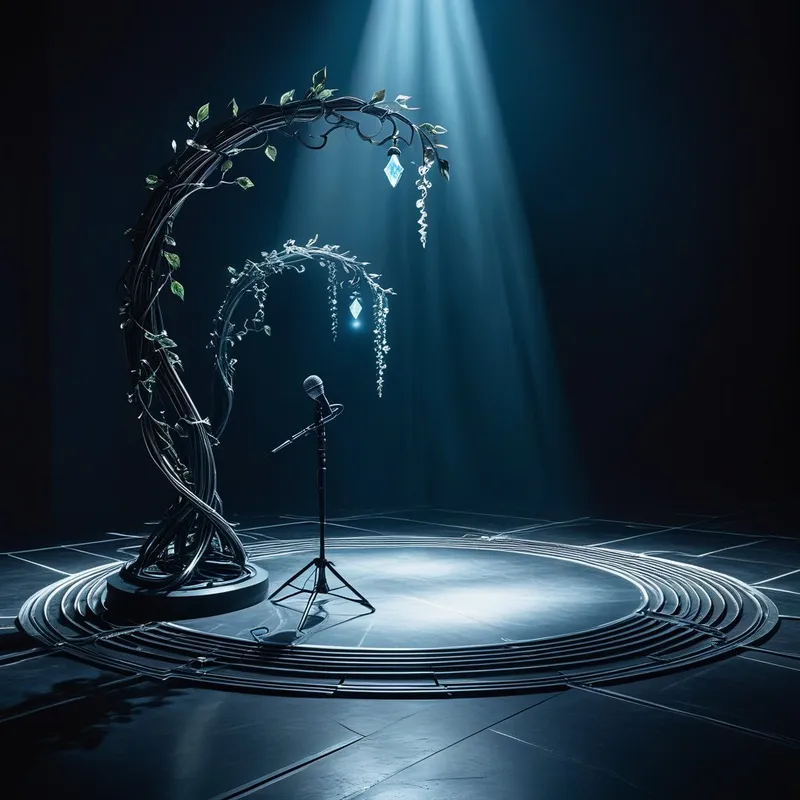
She stands on a vast, empty stage of polished obsidian. A microphone waits, a silent, silver sentinel. The audience is a formless, expectant darkness. Her voice, when she finally wills it forward, does not emerge as sound, but as a visible, shimmering filament of light that weaves itself into a complex, supporting lattice in the air before her. With each word-light strand, the stage feels more solid beneath her feet.
This dream is an alchemical demonstration: the voice is not for external validation, but for the internal construction of a structure that can hold the speaker’s own presence. The audience is irrelevant; the architecture is everything.
The False Lead
This theme is not about arrogance, bluster, or the absence of fear. That is its cheap imitation, a performance for an external jury. Nor is it about "good luck" or a sudden windfall of external approval that props you up. A dream of finding a crown does not speak of confidence, but of a borrowed sovereignty. True confidence, as the dreamworld insists, is an endogenous process. It is not the applause that follows the speech, but the discovery that you can stand on the stage, in the terrifying silence before you begin, and not dissolve. The false lead is believing the dream is about winning. It is, in fact, about the ability to occupy the arena at all.
Psychological Architecture
The shadow work here is the reclamation of disowned authority. We exile parts of ourselves we deem "too much"—too loud, too quiet, too bold, too needy—and in doing so, we fragment our own foundation. Confidence emerges from the reintegration of these exiled "parts," these internal orphans and rebels. It is the slow, often painful process of turning toward the inner voice that whispers "you can't" and asking it what it is protecting you from. Usually, it is protecting a younger, more vulnerable self from the shame of failure or the terror of exposure. Individuation in this realm is the act of becoming the benevolent ruler of your own internal kingdom—not through tyranny, but through compassionate diplomacy with every exiled citizen within. You stop seeking a throne outside and begin to build a stable center within.
Mythic Resonance
This is the journey of Theseus into the Labyrinth, not merely to slay the Minotaur, but to find his way back out. The external monster is the shadow of confusion and inherited terror (the product of a broken lineage), but the true test is the internal thread—the steady, self-generated connection to his own center (Ariadne’s gift) that allows him to navigate the maze of his own psyche and return, sovereign, to the light. Similarly, in the West African tales of Anansi, the spider, confidence is never brute force. It is ase—the divine authority to speak and make things so—embodied as cunning, adaptability, and the weaving of one’s own web from the substance of one’s own being. The myth is not about being the biggest creature in the forest, but about understanding the tensile strength of your own thread.
Symbolic Nodes
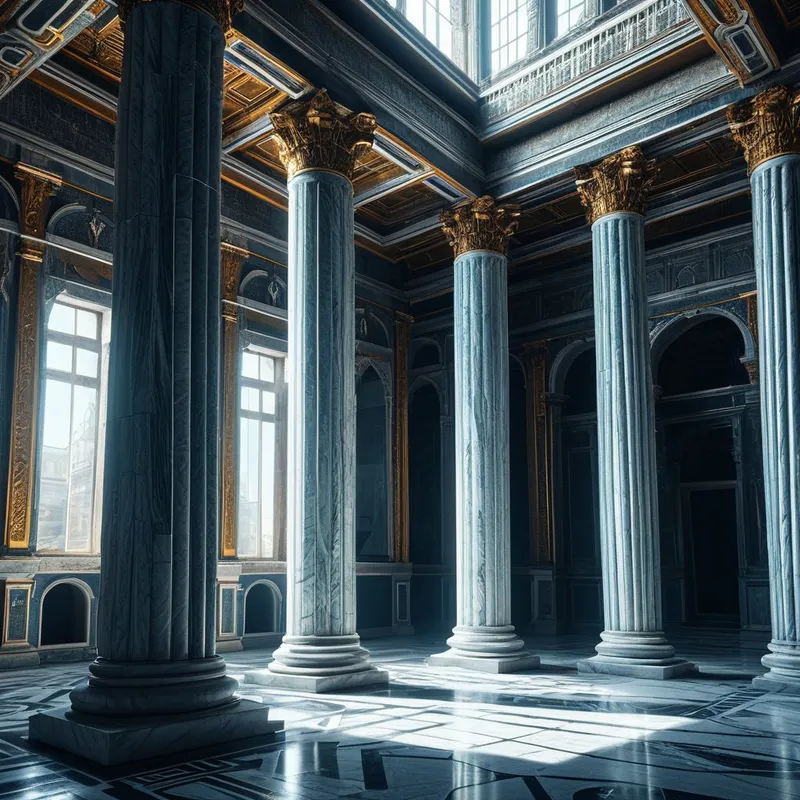
- Unshakable Structures: Pillars, ancient trees, mountains, deep foundations, load-bearing walls.
- Calm Centers: The eye of a storm, a still point in a spinning room, a weighted object.
- Forged Tools: A key that fits perfectly, a well-balanced sword, a craftsman’s trusted instrument.
- Quiet Amplification: A microphone that works, a crystal that focuses light, a lens that clarifies.
- Successful Navigation: Walking a narrow ledge with ease, piloting a vessel through a storm, solving a complex puzzle.
Archetypal Resonance
The core energy at play here is that of The Ruler Archetype. Not its shadow manifestation of the Tyrant who controls from fear, but the mature Sovereign who creates order, stability, and legacy from a place of earned authority. The somatic echo of settled weight and calm centrality is the Ruler’s embodied presence. This archetype resonates because confidence is ultimately about benevolent governance—of your impulses, your resources, your attention, and your domain (which begins with your own psyche). The alchemical potential lies in transmuting the chaos of self-doubt into the cohesive, functional order of self-trust. The Ruler does not ask for permission to exist; they establish the realm in which their existence is the foundational law.
The Alchemical Process
The prima materia here is the raw, shuddering vulnerability of exposure—the feeling of being an impostor on your own stage. The alchemical fire is sustained containment. It is the heat generated by staying present in the situation where you feel fraudulent, without fleeing into performance or collapse. This is the pressure of the crucible: to feel the fear, the racing heart, the shallow breath, and to consciously, gently, expand into it. Breathe into the tightness. Feel the weight of your feet. This conscious, somatic grounding is the alchemical process of coagulation—the scattered, mercurial parts of you slowly solidifying around a new center. You are not burning away the fear; you are integrating its energy as mass, as density, as structural material. The terror of being seen becomes the substance of your presence. The grief of past collapses becomes the mortar for your new foundation. The sovereign is born when the pressure to disappear is met with a deeper commitment to appear, atom by integrated atom.
The Integration Protocol
Question 1: In the dream, where did you feel the most solid, calm, or present in your body? Where did you feel absent, shaky, or insubstantial?
Question 2: If the part of you that feels like an impostor or a fraud had a positive intention, what is it trying to protect? What ancient collapse is it remembering?
Question 3: What one, small, non-negotiable boundary or personal protocol could you establish today that would feel like an act of governing your own kingdom with respect?
Action 1 (Somatic Anchoring): For one minute, several times a day, practice "weighting." Stand or sit. Feel the full weight of your body being held by the chair or the floor. Do not try to be light or poised. Intend to be heavy, dense, and present. Breathe as if your breath is adding mass to your center.
Action 2 (Creative Rebuilding): Draw, paint, or build a simple structure (from clay, blocks, even pillows) that represents your "center." Do not make it pretty. Make it stable. What does it need to be unshakable? More connection to a base? Interlocking parts? A core of different material? Let the act of building be the inquiry.
Action 3 (Ritual Declaration): Write a single sentence that is a declaration of a small, personal authority. Example: "I have the authority to rest." or "I have the authority to change my mind." Speak it aloud to yourself in a mirror, not with force, but with the calm tone of stating a natural law. Then, burn the paper, releasing the words from performance and letting the law integrate into your architecture.
Final Validation
It is profoundly difficult to build a center in a world that constantly pulls you toward its edges, that rewards performance over presence. The feeling of being a ghost in your own life is a real and haunting grief. But the dream is showing you the blueprint. It is revealing that the substance you need is already within you—in the very tremors you wish to hide, in the quiet voice you've been taught to ignore. You are not assembling yourself from foreign parts. You are remembering, realigning, and fortifying an architecture that has always been there, waiting for you to take up residence. The confidence to stand alone on your own stage is born from the courageous, daily act of listening for the hum of your own foundational frequency, and choosing to build your world in resonance with it.