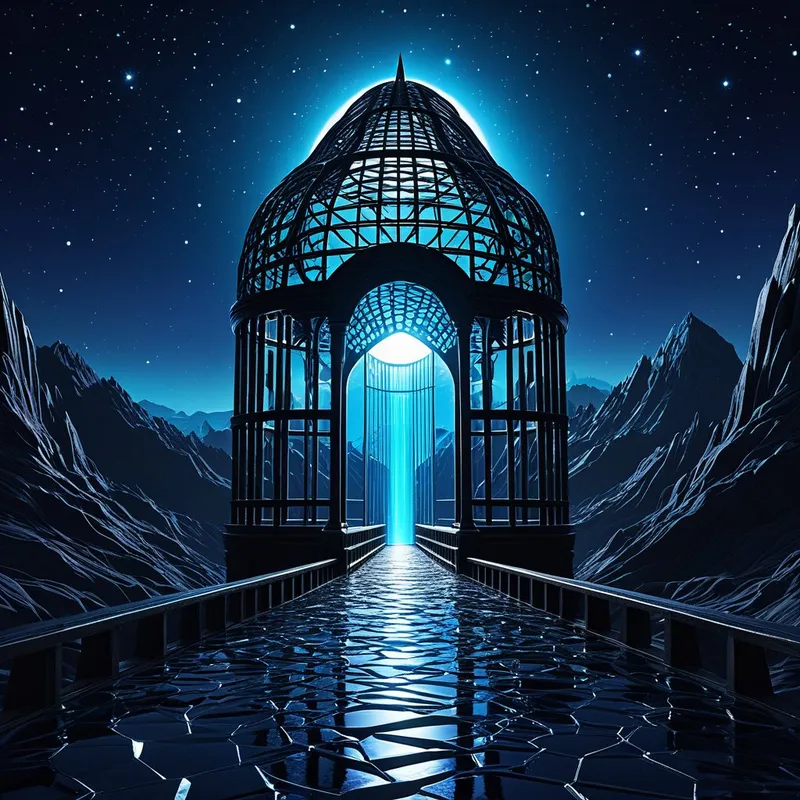
The Forge of the Soul: Commitment as Alchemical Vow
The Somatic Echo
Before the mind conjures a ring, a contract, or a promise, the body knows commitment as a tectonic pressure. It is a deep, resonant hum in the marrow, a slow crystallization in the joints. It feels like the moment before a leap—not the adrenaline of the fall, but the profound, gravitational pull of the ground you are about to leave, forever. The breath catches, not in fear, but in the recognition of a threshold. The stomach knots, not with nausea, but with the density of a choice becoming substance. This is the somatic signature of the psyche preparing to weld a fragment of possibility into the architecture of the real. It is the weight of the future settling into your bones.
The Dreamer's Log
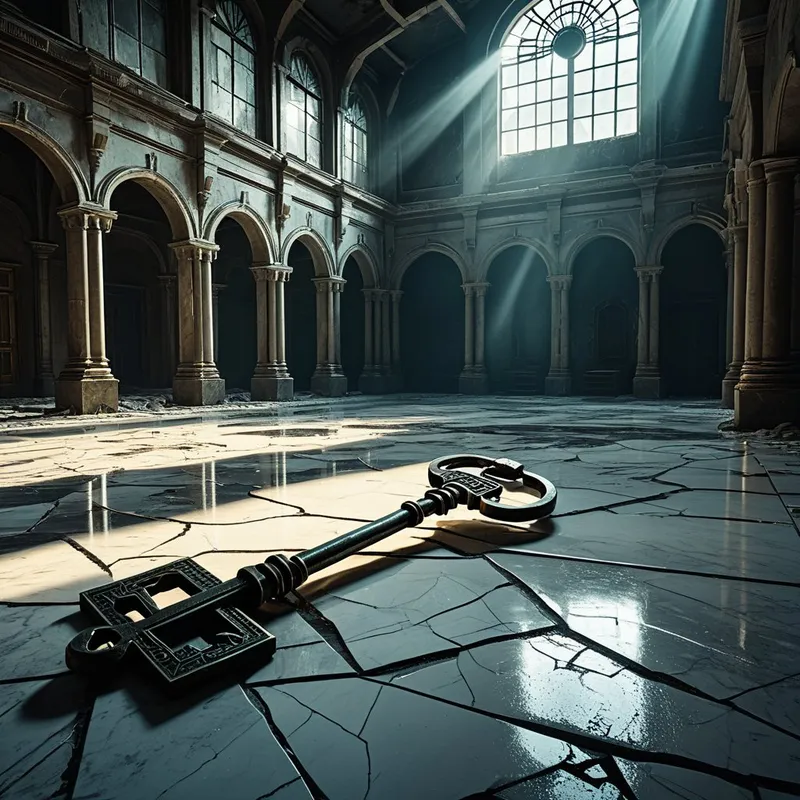
I am standing in the grand, empty hall of a derelict palace. The floor is cracked marble. A custodian hands me a single, ancient iron key, heavy and cold. He says, “It opens every door, but you must choose only one. The others will seal forever.” I take it, and feel the key begin to grow warm, then hot, its teeth twisting like roots into the palm of my hand.
Alchemical Interpretation: The dream presents the terrifying gift of absolute choice, where the act of claiming one path necessitates the conscious, ritual death of all others.
The False Lead
Commitment in dreams is not a warning about a specific person or job. It is not the psyche’s way of saying “you chose wrong.” That is the voice of the anxious ego, the orphaned part scanning for exits. The true theme of commitment is structural, not situational. It is about the internal act of becoming the kind of person who can make and hold a vow—to a path, a value, a version of yourself. The terror is not of the thing you choose, but of the closing of the self that was fluid, multiple, and unbound. The grief is for the potential selves you must consciously orphan to birth the one that is actual.
Psychological Architecture
This is the shadow work of becoming sovereign. To commit is to draw a circle in the sand of your own consciousness and declare, “Here, I stand.” This act inevitably exiles the internal factions that lived in the fertile chaos of maybe. The eternal explorer feels caged. The playful jester fears the death of spontaneity. The orphan anticipates betrayal and prepares its exit strategy. The work is not to silence these voices, but to bring them to the council table of the self. You must feel the explorer’s grief for the uncharted path, honor it, and yet still choose the mapped road. You must let the orphan weep for its lost safety of non-choice, and hold it as you step forward. This is individuation in its most visceral form: the integration of your multiplicity into a directed, singular will. The foundation you build is not on solid ground, but on the settled ashes of your own discarded possibilities.
Mythic Resonance
We see this alchemy in the story of Theseus at the heart of the Labyrinth. His commitment was not merely to slay the Minotaur, but to hold the thread—the clew—that connected his future self back to his point of origin. The thread was his vow to return, to not lose himself in the monstrous dark. He entered a maze designed to dissolve purpose, and his act of tying off his line was an act of psychic integrity. Similarly, in the Arthurian Grail quest, the knights’ commitment is tested not by dragons, but by the Chapel Perilous—a place where all sensory reality dissolves, and only the unwavering, internalized vow to the Grail can orient them. The myth is always the same: the crucible does not test your strength, but your fidelity to your own chosen meaning.
Symbolic Nodes
- Keys, especially singular or heavy ones: The burden and power of final choice.
- Bridges, particularly with a missing middle section: The point of no return, the leap of faith required.
- Signing a contract in unreadable script or with your own blood: The unconscious or somatic ratification of a vow.
- A plant taking root through concrete: The slow, inevitable, and sometimes destructive growth of a choice into identity.
- A door closing silently and locking itself: The autonomous, irrevocable nature of deep psychic commitments.
Archetypal Resonance
The energy of commitment, in its highest form, is the domain of The Ruler Archetype. This is not about controlling others, but about the ultimate internal governance: establishing order, integrity, and lasting structure within the kingdom of the self. The somatic echo—the weight and density—is the Ruler taking the throne, feeling the gravity of sovereignty settle upon them. Its shadow, the Tyrant, is the fear of this commitment, manifesting as rigid control over external circumstances or people to avoid the terrifying responsibility of inner law. The alchemical potential lies in moving from the Tyrant’s fear of chaos to the Ruler’s capacity to create a conscious, benevolent inner governance, where choices are made not from fear, but from a deep, enduring commitment to one’s own sovereign truth and the stewardship of one’s potential.
The Alchemical Process
The transmutation of commitment is the Opus Contra Naturam—the work against nature, if by nature we mean the psyche’s default state of fluid potential. The prima materia is the terror of permanence and the grief for lost paths. The heat is applied through sustained, conscious choice in the face of profound internal opposition. It is the pressure of daily returning to your vow when the orphan whimpers, the explorer rebels, and the jester mocks. This is the Calcination: the burning away of the fantasy that you can have it all, that you can remain unbound and yet be whole. The grief must be fully felt, not bypassed. Then, in the ashes, through the Coagulation, a new substance forms: not a prison of your choice, but the very skeleton of your identity. The terror is transmuted into the profound relief of no longer being at war with yourself. The grief becomes the rich soil from which the chosen path draws its meaning. You are no longer a crowd of possibilities, but a coherent, directed force.
The Integration Protocol
Question 1: In my life right now, what is the one choice I am most actively trying to not make by keeping all options open? What potential self am I refusing to orphan?
Question 2: If the commitment I fear is an internal vow (to a value, a practice, a way of being), not an external one, what would that vow sound like? What would its first law be?
Question 3: Which exiled part of me screams loudest at the thought of permanence? Can I name its fear and thank it for its service, without letting it steer the ship?
Action 1 (Somatic Anchoring): For one week, practice this upon waking: Place a hand over your heart and a hand on your lower abdomen. Breathe deeply, and feel the solidity of your body—the commitment your bones make to hold you up, the vow your breath makes to return. For one minute, simply inhabit this existing, non-negotiable commitment of your form.
Action 2 (Creative Cartography): Draw, paint, or collage two landscapes. The first is "The Territory of Maybe": fluid, full of many paths, glowing with potential. The second is "The Chosen Path": a single, detailed road through a specific terrain. Do not judge which is better. Simply witness the difference in somatic feeling as you gaze at each completed map.
Action 3 (Ritual of Closure): Choose one small, concrete "maybe" in your life—an unused gym membership, a half-finished project you know you'll never complete, a vague plan to reconnect with someone. Perform a conscious, gentle ritual of closure for it. Write it a brief thank-you note for its potential, then cancel, donate, or delete it with full awareness. Feel the subtle, internal space that opens up.
Final Validation
It is right to tremble before this forge. To feel the gravity of a true choice is to be fully human, to touch the raw edge of your own freedom. The chaos of maybe is a familiar, if anxious, home. To leave it is an act of profound courage. Do not mistake the pain of crystallization for a mistake. It is the signal of growth, of the soul moving from potential to actuality. You are not building a cage. You are architecting a sanctuary for the self you have dared, against all inner protest, to choose into being. The key grows hot in your hand because it is being remade in your image. The door it opens leads not to a limitation, but to the boundless territory of your own, sovereign reality.