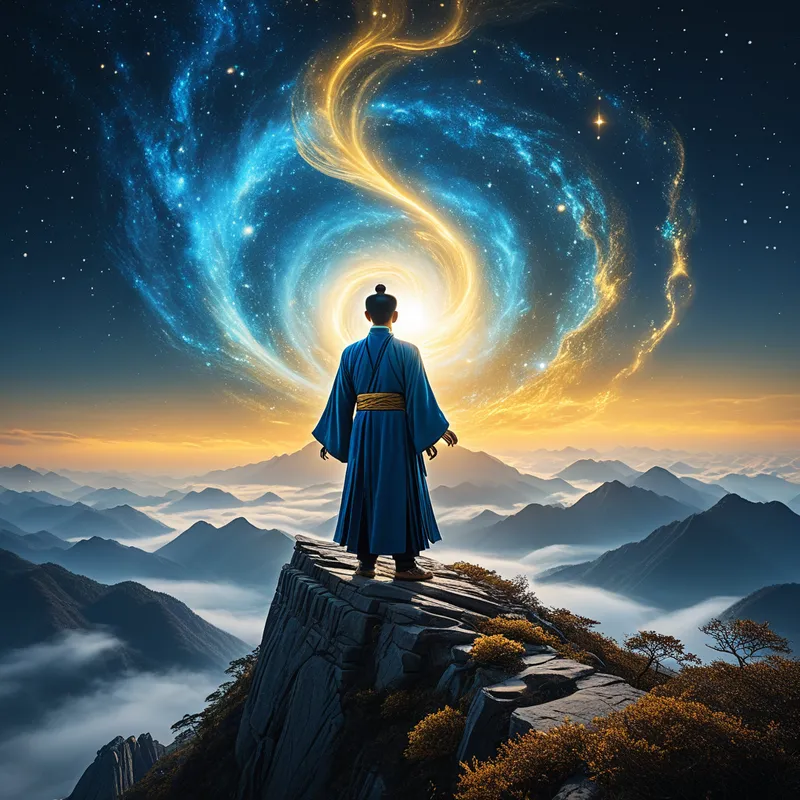
The Somatic Echo: Breath as Primal Rhythm
Before it is a symbol, breath is a sensation. It is the first and final fact of our animal existence, the tide that pulls at the shores of consciousness long before thought arrives to name it. In dreams, this tide becomes a landscape. You do not think about breath; you are immersed in its echo. It might feel like a pressure in the chest, a silent vacuum in a sealed room, or a wind that moves through you rather than around you. It is the body’s most intimate conversation with the atmosphere of the psyche—a somatic whisper of what is held, what is released, and what has been forgotten how to flow. This is the ground tone of being, the baseline rhythm against which every emotional and mental event is scored. To dream of breath is to be taken to the control room of your own aliveness, where the automatic is made conscious, and the invisible is felt with terrifying clarity.
The Dreamer's Log
In the dream, I am fitted with a sleek, obsidian breathing apparatus in a sterile chamber. A holographic display charts my breath, but the line is flat, silent. I feel no panic, only a profound, weary stillness. I reach up, not to tear the mask off, but to trace its seam, and where my finger passes, the solid shell dissolves into a fine, gold dust that I inhale.
Here, the alchemical process begins not with a struggle for air, but with the conscious dissolution of the very mechanism meant to regulate it, transforming constraint into nourishing essence.

The False Lead
A dream of breath is not a simple medical anxiety, a mere replay of a day’s shortness from a stair climb or a moment of stress. While it can wear that costume, its true address is deeper. It is not about the physical lung’s capacity, but the psyche’s permission to receive and to expend. The terror of suffocation is not a prophecy of bodily failure, but a somatic map of a soul-level constriction—where a vital part of the self has been held in a pause so long it has forgotten the reflex to resume. Conversely, dreams of powerful, effortless breath are not just affirmations of health; they are blueprints of an inner sovereignty recently claimed, an architecture of self that has cleared its own airways.
Psychological Architecture: The Shadow of the Held Pause
To work with the breath in dreams is to engage in the most foundational shadow work: the reconciliation of the voluntary and the involuntary. Our waking lives are often a chronicle of controlled exhalation—shaping our words, modulating our reactions, holding back cries or shouts. The unconscious, in its wisdom, sends the bill. The shadow here is the Held Pause, that frozen moment between impulse and expression that has become a permanent residence for some exiled part of the self. It is the grief swallowed, the truth unsaid, the creative spark dampened. Individuation in this realm is the slow, deliberate thawing of that pause. It is the internal family systems work of listening to the part of you that learned to stop breathing to stay safe, and gently, patiently, teaching it that the environment has changed. The sovereignty gained is not over the breath, but through it—a governance based on rhythmic exchange with the world, not rigid control against it.
Mythic Resonance
We see this in the Hebrew ruach and the Greek pneuma—words that mean wind, breath, and spirit, indivisibly one. The divine does not have spirit; it is the act of breathing life into clay. In the alchemical Aurora Consurgens, the process begins with a putrefaction, a suffocation in the prima materia, which is the necessary death of the old rhythm so a new, more conscious one can be born. These myths are not stories about breath; they are the firmware of a human understanding that consciousness itself is a kind of atmospheric pressure, and our individual lives are the local weather patterns within it.
Symbolic Nodes
- Suffocation/Masked Breath: A constructed identity or belief system that has become airless, cutting off authentic exchange.
- Effortless, Powerful Breath (e.g., wind in empty lungs): The flow of inspiration (literal in-spirit-ation) and unblocked life force.
- Breathing Underwater: Access to the emotional realm (the unconscious) without drowning; a newfound psychic permeability.
- Holding Breath: A state of suspended animation, waiting for a threat to pass or for permission to exist fully.
- Witnessing Another's Breath: Projection of one's own vital rhythm onto another, or the dawning awareness of profound interconnection.
Archetypal Resonance
The most active archetype in the theme of breath is The Magician Archetype.
The Magician’s domain is the transformation of reality through the alignment of inner will with unseen forces. Breath is the Magician’s primary tool—the literal and metaphorical link between the visible and invisible worlds. The somatic echo of breathlessness is the Shadow Magician’s illusion of separation, the manipulative belief that one must control all inflow and outflow. The alchemical potential lies in the Magician’s true power: not to command the air, but to become a conscious conduit for it. By attending to the dream-breath, one practices the fundamental magic of transmuting the automatic into the sacred, turning the biological fact of respiration into a rhythmic dialogue with the soul’s atmosphere. The sovereignty found is that of the true visionary, who knows that to change one’s world, one must first change one’s breath.
The Alchemical Process: From Constriction to Current
The alchemy of breath is the work of the bellows. The base material is the leaden weight of the held pause, the frozen grief. The heat and pressure are applied directly to the somatic echo—the felt sense of constriction in the dream. This is not an intellectual analysis, but a deliberate, waking engagement with that very sensation. The solve (dissolution) occurs when one consciously enters the memory of the dream’s tension without fleeing into panic or analysis, allowing the fear to be fully felt in the body. The coagula (coagulation) is the slow, patient cultivation of a new rhythm. It is the psychological work of exhaling the old story of constraint and inhaling a new possibility of flow. The transmutation is complete when the breath, once a symbol of anxiety, becomes the felt rhythm of one’s own authentic presence—a golden current that nourishes every cell of the psyche.

The Integration Protocol
Question 1: In your waking life, where do you feel the most resonant echo of that dream sensation of breath? Is it in your throat when you wish to speak, your chest when you feel passion, or your diaphragm when you face a challenge?
Question 2: What ‘airless room’ have you been patiently enduring in your life, and what is the first, smallest seam in that wall that you could trace to begin its dissolution?
Question 3: If your current breath were the rhythm of a piece of music, what would it be? A stalled drone, a staccato alarm, a hesitant waltz? What rhythm would you choose to compose instead?
Action 1 (Somatic Re-patterning): For one minute, three times a day, stop everything. Do not try to breathe deeply. Simply observe the raw, untreated sensation of breath entering and leaving your body. Feel it as a neutral tide. This de-couples breath from performance and returns it to its state of pure phenomenon.
Action 2 (Creative Exhalation): Take a single sheet of paper and a pen. Set a timer for five minutes. With your non-dominant hand, let the line on the paper follow the rhythm of your breath. Do not draw a thing. Let the line be jagged, smooth, broken, or flowing. This externalizes the internal rhythm without the censorship of language or skill.
Action 3 (Ritual of Exchange): Go to a natural threshold—a shoreline, a forest edge, a windy hill. Stand still. With each inhalation, consciously receive the atmosphere of that place. With each exhalation, offer back into it something you are ready to release—a worry, an old identity, a grief. Do this for seven breath cycles. You are practicing the Magician’s art of reciprocal exchange with the world.
Final Validation
The terror of breathlessness in a dream is one of the most primal fears a conscious being can encounter. To feel it is to touch the raw edge of your own existence. Do not minimize its profound difficulty. This very terror, however, is the precise indicator of a profound opportunity. It marks the exact location where your automatic survival has reached its limit, and the call for conscious sovereignty begins. The breath that was threatened becomes, through your attention, the very instrument of your liberation. You are not learning to breathe. You are remembering that you are the breath, and in that remembrance, you become the author of your own atmosphere.