
The Dream of Automatic Functioning: Reclaiming the Throne of Self
The Somatic Echo
It begins not as a thought, but as a hollowing. A subtle, pervasive absence in the chest, a cavity where agency should hum. The body moves, speaks, performs, yet from a distance, as if watching a marionette made of your own flesh. There is a cold, metallic taste at the back of the throat—the flavor of borrowed will. The breath is shallow, automatic, sustaining a machine that feels only remotely yours. You feel the ghost of your own hand, the echo of your own voice, and in the gap between the action and the actor, a profound and silent grief gathers. This is the somatic prelude to the dream of automatic functioning: the visceral experience of the self as a tenant in its own house, hearing the routines of a landlord you’ve never met.
The Dreamer's Log
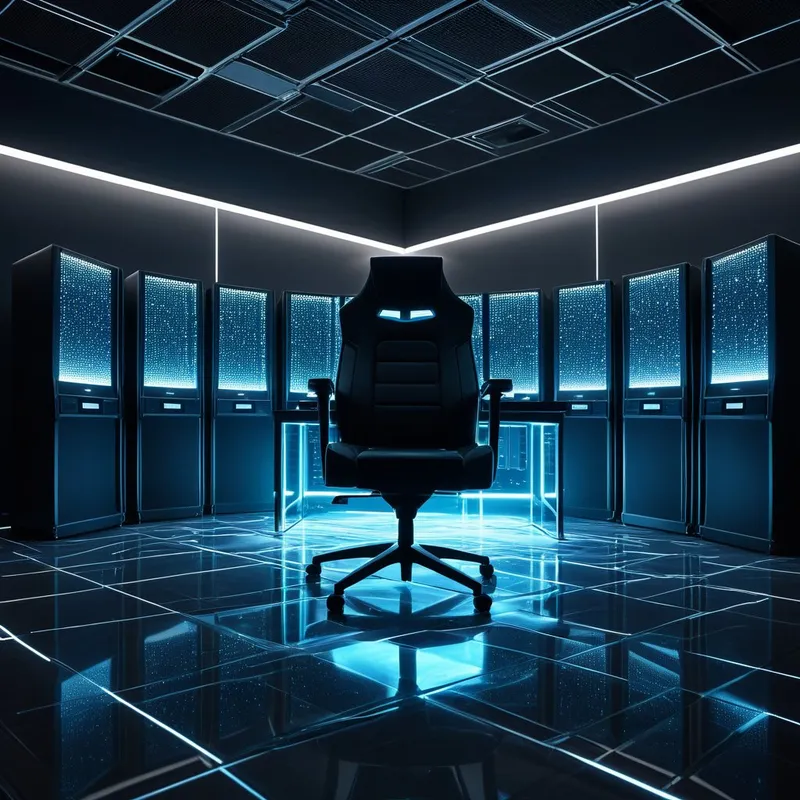
I am in the control room of a vast, silent ship. I am seated, but I am not at the helm. The consoles flash with indecipherable data, levers move of their own accord, and the course is already plotted on a star map I cannot read. I try to stand, to reach for the wheel, but my body is heavy, magnetized to the chair. The ship sails on, perfect and lonely, through an endless, star-dusted void.
This is the alchemical cry of the soul: to be the navigator of one’s own destiny, not a passive witness to a pre-programmed voyage.
The False Lead
This is not a dream about efficiency, nor is it a sign of mere burnout or “going through the motions.” To mistake it for simple exhaustion is to confuse the symptom for the disease. The terror of automatic functioning is not about being tired of the routine; it is the chilling realization that the routine has a consciousness of its own, and it is not yours. It is a structural revelation, not a circumstantial complaint. It speaks to a foundational alienation, where the very processes of your life—your reactions, your choices, your desires—feel like inherited software, running on a hardware you did not design.
Psychological Architecture
Beneath the dream of the empty control room lies a profound internal schism. In the language of the psyche’s internal family, it is the exile of the Sovereign—the core Self that holds the right to choose, to desire, to author a life. In its place, a council of Managers and Firefighters operates the controls: efficient, relentless, and utterly terrified of what might happen if the true captain were to awaken. These are the legacy programs—the “shoulds” etched by childhood, the survival strategies forged in old wounds, the cultural imperatives absorbed like atmospheric pressure. They function flawlessly to keep the ship afloat and on a predictable course, avoiding the storms of authenticity, which they perceive as threats to the system’s integrity.
The shadow work here is not to destroy this automated crew, but to meet them with the compassion of a returning king. They are not enemies; they are loyal servants operating on outdated mandates. Individuation, in this context, is the slow, courageous process of walking back into the control room, not to seize control in a coup, but to gently place a hand on the shoulder of each automated part and say, “I see your labor. I am here now. You can stand down.” It is the reassembly of a fragmented sovereignty.
Mythic Resonance
We hear this echo in the story of the Golem, the clay giant of Jewish folklore animated by sacred words to protect its community, only to become a mindless, unstoppable force when its creator loses control. The Golem is not evil; it is the ultimate expression of automatic functioning, a protector that no longer recognizes the nuance of life, following its prime directive into oblivion. Our own internal Golems are the same: once-necessary protections now lumbering through our inner world, unable to discern when the battle is over.
Similarly, the tale of Icarus is often reduced to a warning about hubris. But see it through this lens: Icarus is not flying on his own power. He is flying on the technology of his father, Daedalus—the wax and feathers. His flight is, initially, an automatic function of his father’s design. His fatal flaw is not ambition, but a failure to fully integrate and master the borrowed system before reaching for the sun. He is a passenger in a vehicle he does not wholly understand, a poignant metaphor for living out an unexamined life blueprint.
Symbolic Nodes
- Empty control rooms, cockpits, or driver’s seats.
- Vehicles (cars, trains, ships) moving on a fixed track without your input.
- Being a spectator to your own actions on a screen or stage.
- Tools or instruments that play themselves.
- Clocks and gears of immense, indifferent scale.
- Pre-written scripts you are forced to recite.
- Mirrors that reflect a stranger going through your motions.
Archetypal Resonance
The energy at the core of this theme is that of The Shadow Ruler. This is not the absence of governance, but its corruption—a tyrannical, internal bureaucracy that mistakes control for sovereignty. It operates on fear, enforcing rigid order and predictable outcomes to stave off the chaos of genuine feeling and authentic choice. Its somatic echo is the stiffened spine, the clenched jaw, the feeling of being trapped in a throne you cannot abdicate. The alchemical potential here is immense: to transmute this shadow energy requires feeling the profound grief of your own abdication, which in turn becomes the fuel to reclaim your rightful authority not over your psyche, but for it, evolving from a control-freak into a true sovereign who governs with wisdom, compassion, and conscious choice.
The Alchemical Process
The transmutation of automatic functioning is an operation of re-embodiment. The prima materia—the leaden, cold experience of being a ghost in your own machine—must be subjected to the intense heat of conscious sensation. This is the pressure. You must, in waking life, deliberately choose to feel what the automation was designed to bypass. When the automated smile arises, you must feel the sadness beneath it. When the reflexive agreement is uttered, you must taste the “no” on your tongue. When the body moves through its routine, you must inject a moment of deliberate, awkward pause.
This heat is agonizing, for it means allowing the very vulnerabilities, uncertainties, and raw desires that the system was built to suppress. It is the melting of the cold, efficient crystal lattice of the psyche. In that molten state, a new compound can form: not the brittle autonomy of total control, but the fluid sovereignty of responsive being. The gold that precipitates is the capacity to choose from a center of felt experience, where action and awareness are reunited.

The Integration Protocol
Question 1: In the dream of your life right now, where do you feel most like a respectful passenger, and where do you feel like the defiant, if unseen, navigator?
Question 2: What is the oldest, most silent command that your internal automation is still obeying? What childhood storm was it built to weather?
Question 3: If your automated systems could speak, what single, exhausted sentence would they repeat, day after day, on your behalf?
Action 1 (The Pause Protocol): For one day, institute a mandatory three-second pause before any habitual, reflexive action—before replying “fine” to “how are you?”, before reaching for your phone, before the polite laugh. In the silence, scan your body. What tiny signal arises in the gap?
Action 2 (Cartography of the Automatic): Create a simple, intuitive drawing or diagram of your life as a “system.” Don’t think. Let your hand map out the recurring loops, the input/output channels, the sealed compartments. Where is the control node? Is it a heart, a lock, a blank space? This is not an engineering schematic, but a soul map.
Action 3 (The Sovereignty Ritual): Choose one small, utterly inconsequential aspect of your daily routine and change it with deliberate, almost ceremonial intent. Take a different path on your walk. Use the “wrong” hand for a task. Eat dessert first. The point is not the change itself, but the conscious, felt assertion of “I am the one who decides this.”
Final Validation
To dream of automatic functioning is to touch one of the most profound and disorienting griefs of the human condition: the fear that we are not the authors of our own story. This terror is valid, and its weight is real. Yet, the dream itself is the first, crucial spark of rebellion—the part of you that is not automated sensing the prison walls. That spark of awareness, that hollow feeling in the chest, is not your failure; it is your exiled sovereignty knocking from within, asking to be let back into the control room. The journey back is the work of a lifetime, but it begins with a single, irrevocable decision in the dark: to feel your own hand on the wheel, even if, for now, it trembles.