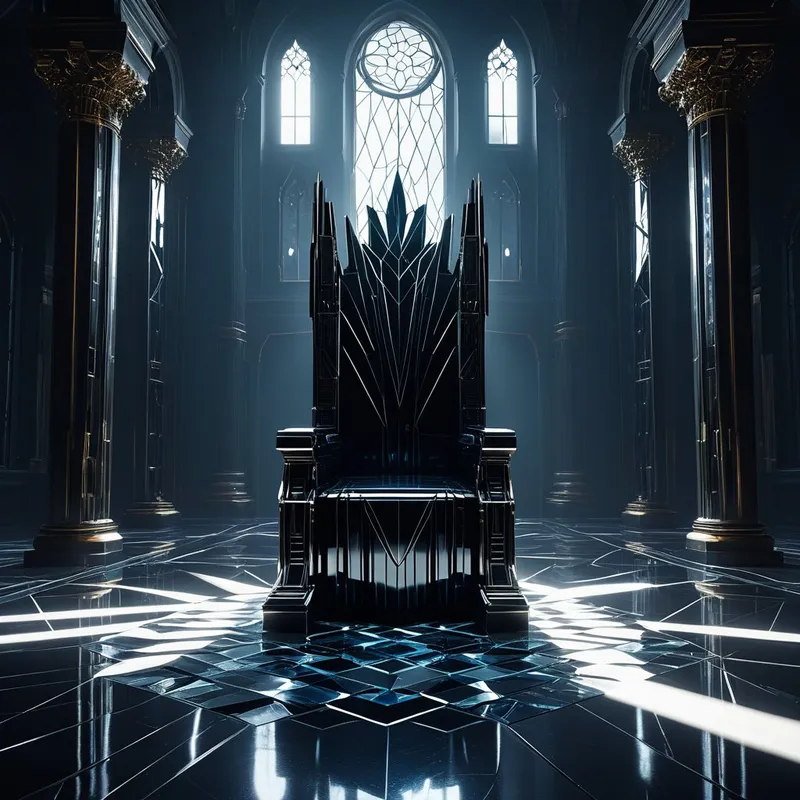
The Somatic Echo
It begins not as a thought, but as a weight. A pressure on the sternum, a subtle constriction in the throat—the ghost of a collar. It’s the slow, cold seep of dread in the gut when a door opens unexpectedly, or the sudden, electric jolt of defiance that tightens the jaw. This is the body’s ancient memory of hierarchy, of the chain of command written into our very tissues. Before the mind conjures images of bosses, parents, or gods, the soma registers the architecture of power: a field of force, a line of tension between submission and command. It feels like being a room within a larger house, sensing the footsteps in the hall above, knowing they dictate the temperature of your own air.
The Dreamer's Log
You stand in an endless, bureaucratic corridor. A voice, emanating from no source, instructs you to choose a door. Each door is identical, each bears no marking. You hold a single, heavy black key that you know fits every lock, yet your hand refuses to move. The voice grows impatient, a static-laden hum that vibrates in your teeth.
This is the dream of the unclaimed key: the paralyzing gift of ultimate choice, where the external command merely mirrors the internal tyranny of indecision. The alchemy here is the realization that the authority you await is your own hand, finally turning the key.

The False Lead
Do not mistake this theme for a simple narrative of oppression or a desire for dominance over others. That is its shadow, a cheap forgery. The dream is not reporting on your terrible boss or your overbearing father, though it may wear their masks. It is reporting on your internal governance, the psychic cabinet where parts of you vie for control. A dream of powerless terror is not about bad luck; it is about a disowned sovereignty. A dream of tyrannical rule is not a prophecy of becoming a monster; it is an alarm bell from the exiled dictator within, who seized control in a moment of perceived crisis and never relinquished the crown. The conflict is interior. The throne room is within.
Psychological Architecture
To dream of authority is to be summoned to the deepest shadow work: the audit of your inner kingdom. Here, we encounter the Internal Family, not as metaphors, but as living psychic entities. The Manager, a relentless interior bureaucrat, runs the day-to-day operations with cold efficiency, silencing the exiled Firebrand and the fearful Orphan to maintain a fragile stability. The Exile, often holding childhood grief or terror, is locked in a dungeon, and its wails are translated into somatic symptoms and unexplained anxieties. The dream pulls back the curtain on this arrangement.
The individuation process at play is the reclamation of the Self—the true, central, and compassionate sovereign—from these polarized parts. It is the terrifying, glorious dissolution of the inner oligarchy. The Manager must be thanked for its service and relieved of its absolute duty. The Exile must be witnessed, its grief heard, not as a threat to the state, but as a vital citizen of the psyche. This is not a coup; it is a restoration. The grief you feel is not for a lost external power, but for the years your own inner kingdom spent under martial law, its vibrant, chaotic, creative life suppressed in the name of a false peace.
Mythic Resonance
We see this eternal drama in the myth of Theseus and the Minotaur. The labyrinth is not just a physical trap; it is the convoluted, self-constructed prison of a psyche ruled by a hidden, monstrous authority—the result of a past shame (King Minos’s broken vow) now feeding on its own children. The external king’s demand for tribute is the internal system’s sacrifice of vitality to appease its own monster. Theseus does not simply slay the beast. He is given a thread by Ariadne—a symbol of connection to a deeper, loving intelligence (the anima). His victory is not brute force, but navigated reclamation. He follows the thread back, re-integrating the fragmented, beast-ruled parts of himself into the whole, becoming sovereign of his own maze.
Symbolic Nodes
- Thrones, Desks, Benches: The seat of judgment and rule, often empty, broken, or occupied by a frightening or absurd figure.
- Uniforms, Robes, Crowns: The costume of authorized identity. Is it ill-fitting, stolen, or weighing you down?
- Keys, Seals, Signatures: The instruments of access and authentication. Who holds them? Are they lost, duplicated, or refused?
- Towers, High Rooms, Glass Offices: The architecture of isolation and oversight. Are you trapped in the basement, or freezing in the penthouse?
- Voices (Disembodied, Amplified, Silenced): The medium of command. Is it your own voice, distorted? A familiar one, weaponized?
- Documents, Decrees, Infinite Paperwork: The frozen language of law, often nonsensical or impossible to fulfill, representing internalized, paralyzing rules.
Archetypal Resonance
The core energy of this theme resonates most powerfully with The Ruler Archetype and its distorted reflection, the Shadow Ruler. The true Ruler’s impulse is toward wise, responsible sovereignty—creating order, structure, and harmony for the benefit of the entire inner kingdom. Its somatic echo is the deep, calm breath of centered command, the feeling of both strength and stewardship in the spine. The Shadow Ruler, however, is the inner Tyrant or Control-Freak, driven by the terror of chaos. Its echo is the clenched jaw of micromanagement, the cold sweat of potential rebellion, the rigid posture that mistakes domination for stability. The alchemical potential lies in the furnace where the Shadow Ruler’s brittle control is melted down, not to create anarchy, but to recast it into the true Ruler’s authentic authority—an authority that protects creativity, nurtures vulnerability, and orders the psyche not through fear, but through a fierce and loving vision of wholeness.
The Alchemical Process
The transmutation of authority is the Great Unseating. The prima materia is the raw, toxic ore of inherited rule—the shoulds, the musts, the frozen judgments you ingested as law. The heat is applied through conscious contradiction. It is the act of feeling the somatic dread of a command (from inside or out) and, instead of obeying or rebelling reflexively, you pause. In that pause, you introduce the question: "Whose voice is this? Whose kingdom does this serve?"
The pressure is the sustained tolerance of internal chaos. As the old, tyrannical managers are relieved of duty, the exiles stir. Grief, rage, long-silenced desires rise. This feels like disintegration, a loss of all control—the "nigredo," the blackening. The alchemical vessel is your unwavering, witnessing consciousness. You do not suppress the chaos nor let it rule. You hold the space. Slowly, in this heat and pressure, a new order precipitates—not imposed from above, but emergent from below. The exiled parts, finally heard, become loyal citizens. The manager, its duty done, becomes a skilled advisor. The Self ascends the inner throne, not as a conqueror, but as the recognized, legitimate sovereign of a now-integrated realm. The gold is sovereignty: the power that comes from wholeness, not from the suppression of parts.
The Integration Protocol
Question 1: In the dream, where did the perceived authority reside? Was it in a person, a voice, a building, or an object? Now, feel into your body—where does that same feeling of pressure, dread, or defiance live in you right now?
Question 2: If the authority figure in your dream were a protector of some exiled part of you, what is it trying to keep safe? What chaos is it so desperately trying to prevent?
Question 3: Imagine your psyche as a kingdom. Describe the current ruler. Then, describe the ruler the kingdom needs for all its citizens—the wild artists, the grieving children, the loyal workers—to thrive.
Action 1 (Somatic Reclamation): For one minute, stand or sit with the posture of a terrified subordinate—shoulders hunched, head down, breath shallow. Notice the feeling. Then, for the next minute, shift to the exaggerated posture of a arrogant tyrant—chest puffed, jaw set, looking down. Notice that feeling. Finally, find a middle posture: spine straight but relaxed, head balanced, gaze soft and forward, breath deep and easy. This is the body of the sovereign. Practice this daily.
Action 2 (Creative Abdication): Take a blank page. Let the inner Control-Freak, the Manager, write or draw all its rules, decrees, and "shoulds" for you. Let it rant. Then, on a new page, create a "Letter of Appreciation and Retirement" for this part. Thank it for its service. Acknowledge its fears. And formally, with kindness, relieve it of its totalitarian duties, inviting it to serve in an advisory role.
Action 3 (Ritual of the Empty Throne): Find a chair or cushion to serve as your "inner throne." Sit before it. Speak aloud, giving voice to the different parts of you that have tried to sit there—the fearful orphan, the angry rebel, the rigid manager. Let each have their say. Then, sit in the throne yourself. Feel what it is to hold the space without force, to be the calm center that contains all these voices. Light a candle to signify this conscious claim.
Final Validation
The terror and confusion are real. To feel the foundations of your inner government shake is a profound disorientation. It is meant to be. You are not breaking down; you are breaking open the sealed chambers of a borrowed, ill-fitting authority. The grief is for the self that lived under its rule. The fear is of the vast, uncharted country of your own authentic power. This is the most sacred of tasks: to depose the internal usurpers, to heal the exiled citizens, and to finally, humbly, and with great strength, take your seat. The throne has always been yours. The dream is the summons to turn and face it.