The Somatic Echo
It begins not as a thought, but as a vibration in the marrow. A dream of aesthetics arrives as a visceral pull in the solar plexus, a tightening of the throat before a sublime vista, or a cold, clean shiver down the spine in the presence of something perfectly, terrifyingly ordered. It is the gut-deep yes or the bone-deep no that bypasses all reason. This is the body’s ancient barometer, measuring not beauty in the cultural sense, but value in the soul’s currency. It is the somatic recognition of harmony or dissonance within the internal family of your psyche—a part of you weeping with recognition at a form that mirrors its hidden longing, while another part recoils from a symmetry that feels like a cage. Before the mind names it ‘ugly’ or ‘beautiful,’ the nervous system has already cast its vote on the arrangement of the world, reporting on the state of your inner kingdom.
The Dreamer's Log (Case Vignette)
In the dream, I am in a cavernous, abandoned studio. Before me stands a colossal, half-sculpted human figure. One side is polished Carrara marble, serene and perfect. The other is a ragged, weeping amalgam of wet clay, shattered porcelain, and rusted gears. My task is not to choose a side, but to make them speak the same silent language.
Alchemical Interpretation: The psyche presents the tension between the idealized self (marble) and the chaotic, authentic, unfinished material of being (clay and debris), demanding not a correction, but a new, coherent grammar that can hold both.
The False Lead
This theme is not about refining your taste, curating your external image, or achieving some culturally-approved standard of ‘good design’ in your life. To mistake the dream’s profound inquiry for a call to redecorate your apartment or criticize an artwork is to confuse the map for the territory. The aesthetic judgment in the dream is not a critique of the outer world, but a diagnostic tool for the inner one. A feeling of revulsion towards a ‘beautiful’ object in a dream isn’t a failure of appreciation; it’s a rebellion of a psychic part that finds that particular beauty lifeless, coercive, or false. The dream does not care about trends; it cares about truth—the terrifying, asymmetrical, often messy truth of your becoming.
Psychological Architecture
The shadow work here is the excavation of your unconscious value system. We all have an internal pantheon—parts of self that we have enshrined as ‘beautiful’ (the successful one, the spiritual one, the kind one) and parts we have condemned to the aesthetic dungeon as ‘ugly’ (the angry one, the needy one, the lazy one). Dreams of aesthetics force a confrontation with this internal curation. That grotesque figure in the dream? It may be the exiled part of you holding a vital, wild energy. That breathtaking, sterile cityscape? It may be the glittering prison of your persona. Individuation in this realm is the agonizing, glorious process of expanding your psyche’s aesthetic to include the broken, the shadowed, the asymmetrical—not to celebrate chaos, but to discover the deeper, more complex pattern that only emerges when all the parts are allowed to be present. It is the shift from being a critic of your inner experience to becoming its architect, using all materials at hand.
Mythic Resonance
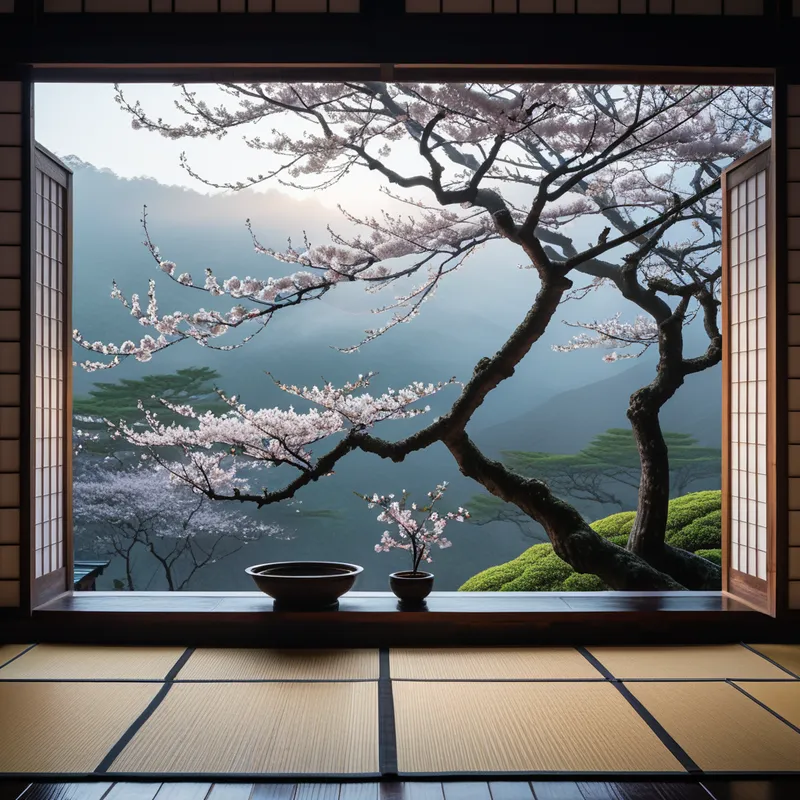
Consider the myth of Hephaestus, the lame god, cast out from Olympus for his ugliness. He is the divine architect, the creator of breathtaking beauty and ingenious mechanisms from his sunken forge. His story is the ultimate aesthetic alchemy: the ‘ugly’ outcast holds the sole capacity to craft the gods’ most sublime objects. His lameness is not a flaw in the tale, but the very source of his creative stance. He embodies the dream’s message: the rejected part, the ‘aesthetic failure,’ often contains the blueprint for your most authentic creation. In a different vein, the Japanese philosophy of Wabi-sabi finds profound beauty in imperfection, impermanence, and incompleteness—seeing the crack in the bowl not as damage, but as the unique record of its life, highlighted with gold. This is the mythic firmware of aesthetic integration: beauty is not a state of flawless being, but a process of truthful becoming.
Symbolic Nodes
- Broken/Mended Objects: A cracked vase, a patched garment, a kintsugi bowl.
- Extreme Environments: Surreally ordered gardens, chaotically overgrown ruins, architectures of impossible geometry.
- Contrasting Materials: The collision of organic flesh and cold metal, flowing water over rigid crystal, soft moss on hard granite.
- Unfinished Art: Blank canvases, half-carved stone, a musical score with missing notes.
- Distorted Reflections: In warped mirrors, pools of oil, or fractured glass.
Archetypal Resonance
The Creator Archetype is the sovereign of this domain. Its energy is not merely about making, but about imposing a meaningful, value-laden order upon the raw material of existence—whether that material is clay, sound, thought, or the stuff of one’s own life. The somatic echo of aesthetic dreams—that pull, that revulsion, that awe—is the Creator’s compass, sensing where the inner material wants to go. Its alchemical potential lies in its capacity to transmute the ‘ugly’ (the shadow, the pain, the chaos) into a necessary and integral part of a new, more sovereign whole. The shadow Creator, however, appears as the perfectionist or the mad scientist, forcing the material into a pre-conceived, lifeless form, rejecting any element that doesn’t fit its narrow, dogmatic vision of beauty, thus starving the soul of its authentic expression.
The Alchemical Process
The alchemical fire here is the tension of holding opposites without premature resolution. It is the heat generated by sustaining the gaze upon the marble and the mud on the dream sculpture. The pressure is the discomfort of allowing your inner critic—which has long served as the curator of a small, ‘acceptable’ self—to be dismantled. The transmutation occurs not when you ‘fix’ the ugly part, but when your perception shifts. The grief you feel for your own ‘flaws’ and the terror of your own chaos are the very prima materia. Under the sustained heat of non-judgmental attention, a new pattern emerges. The flaw becomes a feature. The scar tells the story. The chaos reveals its hidden order. The ‘ugly’ part is seen not as a mistake, but as a vital, textured thread in the tapestry. Sovereignty is born when you realize you are not the broken artifact, but the artist who can now comprehend and love the entire, complex work.
The Integration Protocol
Question 1: When have I felt a deep, wordless sense of resonance or revulsion in waking life—towards a place, an object, or an arrangement of things? What internal part of me was that sensation reporting on?
Question 2: What ‘ugly’ or ‘unacceptable’ part of myself have I tried to hide, fix, or disown? If that part were a raw material (clay, rust, a tangled vine, a discordant sound), what might its intrinsic value or potential be?
Question 3: If my life right now were a work in progress in my dream studio, what is the most glaring contrast or dissonance in its composition? What would it mean to not eliminate it, but to find a way to make it meaningful within the whole?
Action 1 (Somatic Catalog): For one day, pay attention only to the somatic echo. Note what your body leans toward or away from—a texture, a color combination in a shop, the layout of a room. Do not analyze why. Simply collect the data of yes and no in your flesh.
Action 2 (Unfinished Dialogue): Take two sheets of paper. On one, using your non-dominant hand, let the ‘exiled’ or ‘ugly’ part of you draw or write freely—messy, chaotic, raw. On the other, with your dominant hand, create something that represents ‘ideal order’ or ‘beauty.’ Place them side by side and spend five minutes in silence, not trying to merge them, but simply allowing both to exist in your field of vision.
Action 3 (Ritual of Coherent Assembly): Gather a few small, disparate objects—one you find beautiful, one you find neutral, one you find slightly unpleasant. Arrange them on a surface not to make a ‘pretty’ display, but to create a small tableau that feels coherent and true to you in this moment. Photograph it. This is a snapshot of your current inner aesthetic.
Final Validation
To dream of aesthetics is to be tasked with the most delicate and demanding labor of the soul: to redefine beauty on terms so personal they can feel alien, and to find harmony in notes that have long been dismissed as discord. It is difficult because it asks you to love the unlovable within—not with sentimentality, but with the fierce, discerning love of a creator for their essential material. This is not a call to prettify your life, but to deepen it into a pattern so authentic that every part, especially the broken ones, finds its place and purpose. You are not being judged by the dream; you are being invited to become the judge, the artist, and the masterpiece, all at once.