
The Somatic Echo of Adventure
Before the mind conjures a precipice, a labyrinth, or a storm-tossed sea, the body knows. Adventure announces itself not as a thought, but as a somatic echo—a low-frequency tremor in the solar plexus, a subtle tightening of the diaphragm as if preparing for a leap or a blow. It is the visceral hum of potential energy, a cocktail of adrenaline and dread that tastes of ozone and cold iron. This is the body’s ancient firmware booting up, recognizing a threshold long before the conscious self names it. The breath becomes shallow, held in the chest, waiting for permission. The hands may feel either numb or hyper-alert, ready to grasp or let go. This is the pre-linguistic ground of risk: not an idea of danger, but the organism’s raw, poetic response to the unknown territory of its own becoming. It is the feeling of the psyche’s tectonic plates preparing to shift.
The Dreamer's Log
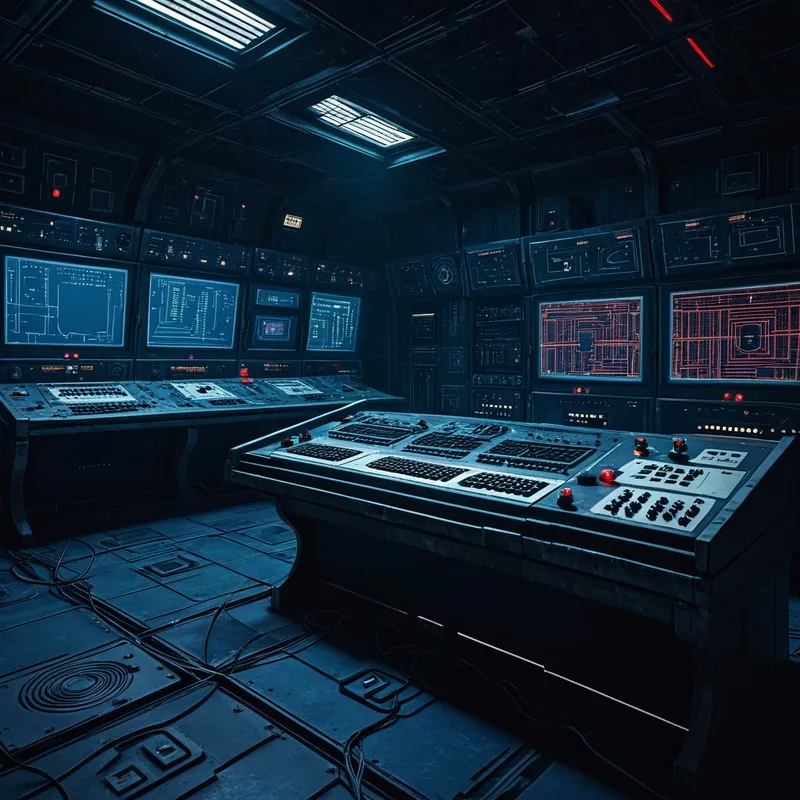
The dreamer stands at the edge of a colossal, derelict orbital platform, its girders twisted like old bones against the nebula-strewn void. A narrow, unsupported gangway, glowing with faint circuit patterns, extends into absolute darkness. There is no railing, no destination in sight. The only instruction is a silent, compelling pull in the center of their chest. They step onto the path. It holds.
Alchemical Interpretation: The derelict structure is the known but outgrown self; the void is the unformed potential; the step onto the unseen path is the irrevocable commitment to a new internal architecture, trusting the intelligence of the body’s pull over the mind’s demand for a map.
The False Lead
This theme is not a warning from a paranoid psyche, nor is it a mere rehearsal for literal, physical recklessness. To mistake the Adventure/Risk dream for a prophecy of external catastrophe is to commit a profound error of literalism. It is not about skydiving or quitting your job without a plan. The risk is always, always interior. The terror is not of falling, but of flying into a version of yourself for which you have no reference point. The false lead is to project the inner call onto the outer world, seeking a cheap, adrenaline-fueled simulacrum of the transformation required. The true adventure begins when you stop looking for the monster in the labyrinth and realize you are both the Minotaur and the thread.
Psychological Architecture: The Shadow’s Frontier
The architecture of this dream is one of frontiers and fault lines. When Adventure/Risk emerges, it signals that the conscious personality has reached the limit of its mapped territory. Beyond lies the Shadow—not as a repository of evil, but as the vast, uncharted continent of disowned potential, repressed vitality, and unlived life. This is deep Shadow work in its most active form: not merely observing the darkness, but embarking on an expedition into it.
The psyche, in its wisdom, constructs a scenario where the ego—the central governing system—is rendered obsolete. The maps burn. The compass spins. You are forced to navigate by older, more somatic instruments: intuition, gut feeling, and the subtle pull of what Jung called the psychoid layer, where psyche and body are one. This is the individuation process in motion: the conscious self must risk disintegration to make room for a more complex, more authentic totality. You are not running from something, but toward a synthesis so new it can only be perceived as a void. The risk is the death of the person you thought you were, which is the only way the person you are meant to be can be born.
Mythic Resonance
We see this eternal firmware update in the story of Inanna, the Sumerian goddess who descends into the underworld, Kur. She does not go to conquer, but to witness the funeral of her sister-shadow, Ereshkigal. At each of the seven gates, she is stripped of every emblem of her known power—her crown, her lapis beads, her royal robe—until she stands naked and bowed. This is not defeat, but the essential precondition for the adventure of depth. The risk is total vulnerability; the reward is not a trophy, but a transformed consciousness that can hold both the heights and the depths.
Similarly, the Grail Quest is never about finding a cup. It is about the knight, like Percival, entering the Wasteland—a psychic state of sterility and repetition—and having the courage to ask the healing question, “Whom does the Grail serve?” The risk is social humiliation, breaking the silent rules of the sterile court; the adventure is the restoration of the fertile, flowing inner kingdom.
Symbolic Nodes
- Unstable Ground: Quicksand, crumbling bridges, cracking ice, earthquake.
- Uncharted Vessels: Rudderless boats, unfamiliar spacecraft, untested vehicles.
- The Unseen Path: Fog-shrouded trails, doors to nowhere, corridors that shift.
- The Essential Leap: Cliff edges, trapeze swings, jumping between moving trains.
- The Unknown Companion: A guide who is silent, an animal with unfamiliar eyes, a reflection that moves independently.
Archetypal Resonance
The core energy of the Adventure/Risk dream is the pure, unadulterated call of The Explorer Archetype. This archetype is the somatic echo made mythic—the part of the psyche that values freedom, discovery, and authenticity over safety and conformity. Its fuel is the restless yearning for what lies beyond the horizon of the current self. In the dreamscape, the Explorer is not the one who conquers the mountain, but the one who feels the mountain’s call in their bones and must answer, even in terror. Its shadow—the Aimless or Alienated wanderer—appears when the adventure is externalized into mere escapism or rebellion without a deeper purpose. The alchemical potential of the Explorer is to turn the outward journey inward, transforming the craving for new landscapes into the courage to map the vast, unknown continents of the soul.
The Alchemical Process: Transmuting Vertigo into Foundation
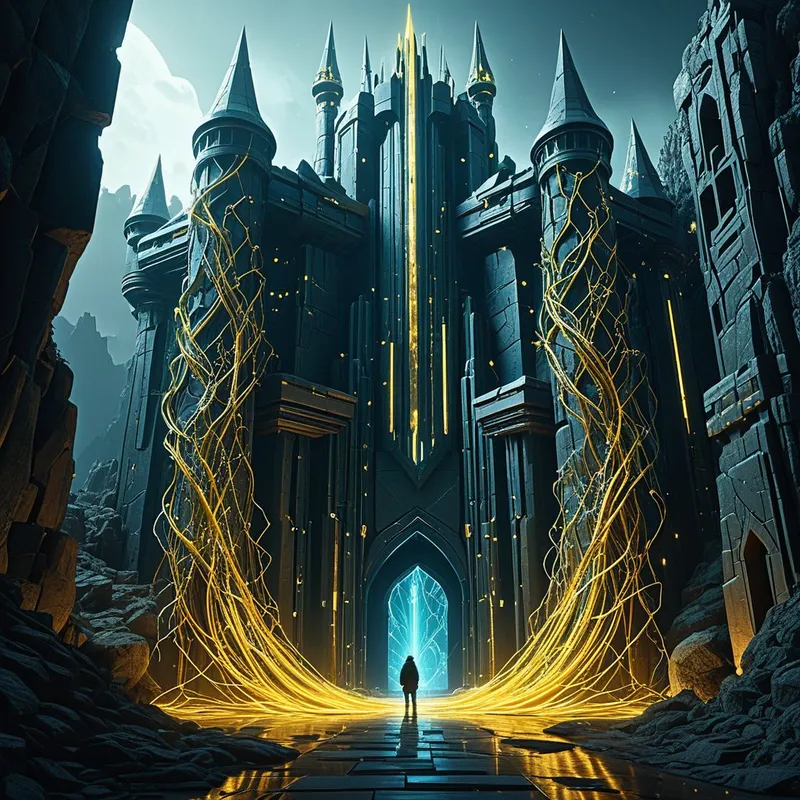
The alchemy here is one of grounding the leap. The prima materia is that free-fall sensation, the vertigo of the unanchored self. The heat and pressure are applied by sustaining the tension of the threshold—dwelling in the discomfort of not-knowing, refusing the reflexive grab for old identities or safe ground. This is the nigredo, the blackening, where all former certainties dissolve.
The transmutation occurs when you stop trying to stop the fall and instead begin to study the sensation of descent. What textures does the void have? What rhythms does your terror beat? In this intense observation, a paradoxical shift happens: the falling becomes the ground. The risk itself is revealed as the only solid thing—the commitment to the process. The unknown ceases to be a hostile emptiness and becomes a fertile dark matter, the humus from which a new, more resilient foundation can grow. You don’t find stability; you realize that your true stability is your capacity to navigate instability. The leaden fear of the abyss is turned into the gold of existential trust.
The Integration Protocol
Question 1: Where in my waking life do I feel the same somatic echo—that specific clutch in the diaphragm or hum in the chest—that I felt on the dream’s threshold? What situation or choice elicits it?
Question 2: If the risk in the dream is not about physical safety, what familiar part of my identity or worldview would have to ‘die’ or be left behind if I fully answered this inner call?
Question 3: What one, small, almost imperceptible step could I take today that honors the Explorer’s yearning, that moves me an inch into my own personal unknown, even if it’s internally?
Action 1 (Somatic Cartography): For one week, keep a log not of your thoughts, but of the physical sensations that accompany moments of hesitation or yearning. Note the location, texture, and temperature of the feeling. This builds your internal navigation system.
Action 2 (Unstructured Mythmaking): Take the central image from your Adventure/Risk dream (the bridge, the void, the vehicle) and draw or paint it without intention. Let the lines, colors, and shapes move as they will. Then, write a brief, third-person myth about the object in the image. What is its origin? What does it protect? What does it desire?
Action 3 (Threshold Ritual): Physically demarcate a threshold in your home—a doorway, a space between two objects. Stand before it and consciously name something you are leaving behind (a belief, a fear, an old story). Step across. On the other side, speak aloud one quality you are inviting in (curiosity, trust, courage). Perform this with solemn simplicity.
Final Validation
This is not easy work. The call to adventure is often a brutal gift, a severing of anchors in a storm. To feel this risk in your dreams is to feel the immense, often terrifying, creative power of your own psyche as it labors to give you a larger life. It validates the profound difficulty of being human—of being tasked with your own becoming. Do not mistake the tremors for weakness; they are the reverberations of a foundation expanding. The courage is not in the absence of fear, but in the willingness to let that fear become the very wind that fills your sails, carrying you into the vast and holy mystery of yourself. You are not being led to the edge to fall. You are being led to the edge to learn you can build a bridge from the materials of your own attention.