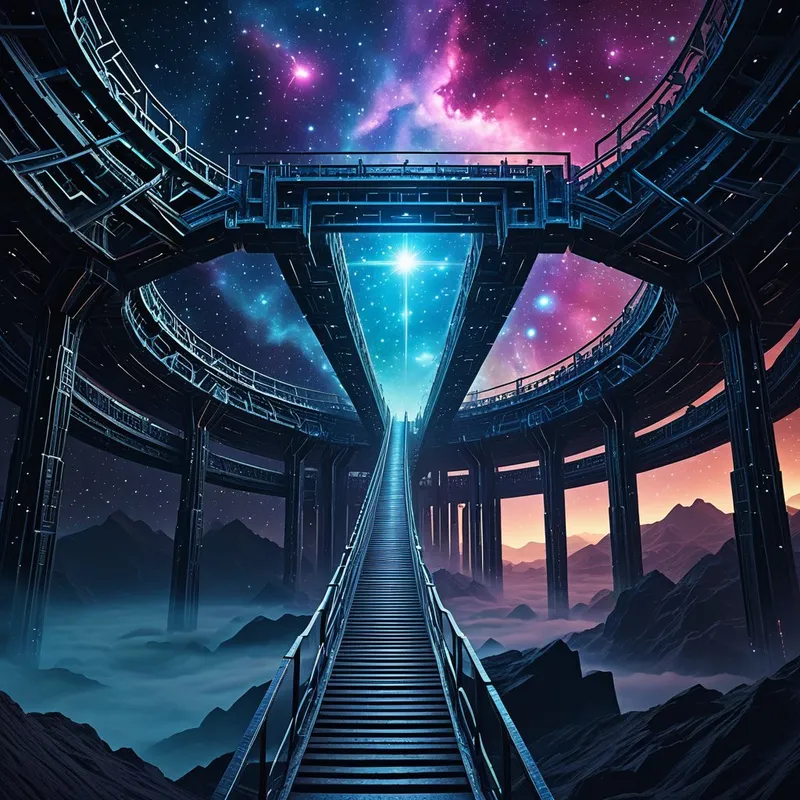
The Dream of Accessibility: On Reaching the Unreachable Self
The Somatic Echo
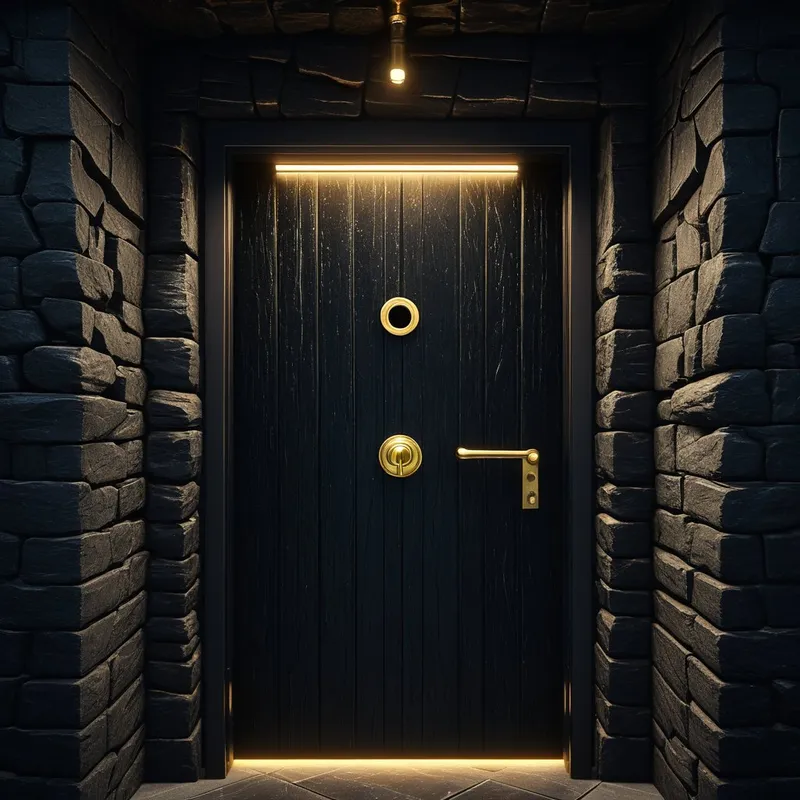
Before the image forms, the body knows. It is a specific, hollow ache—not of emptiness, but of potential emptiness. It is the feeling of standing before a door you know you should be able to open, your hand on a familiar knob that has suddenly become frictionless, offering no purchase. It is a tension in the shoulders, a leaning forward against an invisible barrier that yields like mist. The breath becomes shallow, not from fear, but from the quiet panic of a system checking its own permissions and finding a blank space where a pathway should be. This is the somatic prelude to the dream of accessibility: the visceral recognition of an internal firewall, a protocol of the soul that has silently denied connection. It is the grief of a memory you can feel but not recall, the love you know exists but cannot touch. The body registers the exile of a part of yourself before the mind can even name what is missing.
The Dreamer's Log
She is in a building she knows is her own mind—a vast, modernist library of polished chrome and glass. She needs a specific book, one she wrote herself in a forgotten season. She can see it on a high shelf, its spine glowing with a soft, familiar gold. But the rolling ladder is locked in place, its rungs slick and unclimbable. The more she stares, the more the air between her and the book thickens into a viscous, soundproof gel.
The alchemy here is clear: the conscious self perceives its own wisdom and history as a curated archive, but the internal mechanisms for retrieval—the ladders of emotion, the keys of memory—have been deactivated by an unseen custodian of pain.
The False Lead
This theme is not about external obstacles or simple "bad luck" in waking life. It is not a dream about a traffic jam or a missed train, though it may wear those costumes. The core terror of the inaccessibility dream is not that the world is barred to you, but that you are barred to yourself. It is a profound structural shift in the internal family system, where a manager part has successfully quarantined an exiled part—not out of malice, but of a desperate, outdated protection protocol. To misinterpret this as mere frustration with outer circumstances is to mistake the collapse of a bridge within for a "No Entry" sign posted by the world. The dream is reporting a failure of internal diplomacy, a severed line in the psyche's own communication network.
Psychological Architecture
The work here is shadow work of the most intimate kind: it is the work of repatriation. When a part of us becomes inaccessible—a capacity for joy, a well of anger, a channel of creativity—it is because it was deemed too dangerous, too painful, or too disruptive to the fragile ego-structure we present to the world. That part is not destroyed. It is placed in a locked room within the internal mansion, and the key is thrown into the lake of the unconscious. The individuation process demands we dive for that key. This is not a gentle retrieval. It involves sitting outside that locked door in the dream-space and listening, not for answers, but for the quality of the silence. Is it a numb silence? A furious silence? A grieving one? The architecture of the soul is revealed in these resonances. To make the inaccessible accessible is to consent to a restructuring. You must become the architect who is willing to dissolve a load-bearing wall of persona to discover the older, truer foundation beneath. It is the terrifying and glorious process of granting asylum to your own exiles.
Mythic Resonance
We see this eternal drama in the myth of Persephone. Her annual descent into the Underworld is not just a story of seasons, but of the psyche’s necessary rhythm between the accessible and the inaccessible. The surface world (the conscious ego) flourishes in her presence—all is reachable, fertile, known. But her time with Hades represents those parts of the self that must become deliberately inaccessible to the bright light of day, sequestered in the rich, dark soil of the unconscious where a different kind of work—the work of composting and transformation—can occur. The myth tells us that total, constant accessibility is a fantasy of the immature psyche. Sovereignty comes from owning the cycle, from being both the maiden in the meadow and the queen in the dark, recognizing that some truths only germinate in the inaccessible realms.
Symbolic Nodes
- Locked Doors & Gates: The most direct symbol of a conscious barrier to an unconscious content.
- Forgotten Passwords & Keys: Lost or misfiring protocols of the self; the frustration of knowing the "you" that has access, but being unable to perform the authentication.
- Broken Ladders, Blocked Stairways: The disruption of vertical integration—the connection between base instincts (lower floors), the heart (middle floors), and higher consciousness (attic/rooftop).
- Viscous Air or Water: The dreamspace itself becoming a resistant medium, indicating a systemic issue with the environment of the psyche, not just a single object.
- Transparent Barriers (Glass Walls): The agony of seeing what you need—clarity, connection, a memory—with perfect vision, while being utterly prevented from crossing the final, minimal distance to touch it.
Archetypal Resonance
The Shadow Ruler is the archetypal energy most active in the theme of inaccessibility. This is not the benevolent sovereign, but the internal tyrant, the control-freak administrator of the psyche who has decreed that certain domains are off-limits "for your own good."
The Shadow Ruler’s resonance is felt in the somatic echo of stiff, protocol-bound movement and the cold, sterile atmosphere of the dream spaces it creates—endless bureaucratic corridors, sealed vaults, systems that prioritize security over wholeness. Its core energy is one of fearful containment, mistaking sovereignty for total control, and thus walling off the wild, unpredictable, but vital provinces of the self. The alchemical potential lies in dethroning this inner autocrat not through rebellion, but through a compassionate coup: by demonstrating that true power comes not from a fortified citadel, but from a kingdom in dialogue with all its territories, even the dark and unruly ones. The transformation begins when the Ruler’s desire for order is redirected from suppression to integration.
The Alchemical Process
The alchemical transmutation here is Solutio—the dissolving stage. The intense psychological heat required is the heat of sustained, non-judgmental attention. The grief and terror of inaccessibility are like a psychic permafrost, locking vital energies in rigid, frozen patterns. The pressure is the courage to apply the warm, liquid gaze of awareness directly onto that frozen barrier, not to smash it, but to thaw it. You must hold the image of the locked door, the forgotten key, the viscous air in your mind's eye and feel the longing and frustration in your body without rushing to solve it. This process dissolves the brittle defenses of the Shadow Ruler. The "lead" of isolated, fragmented selfhood is transformed into the "gold" of inner sovereignty when the barriers themselves melt, revealing that they were never walls of stone, but sculptures of ice you yourself had breathed into being. Sovereignty is claimed not by possessing all the keys, but by realizing you are the space that contains both the locks and the treasures.

The Integration Protocol
Question 1: In the dream, what was the precise nature of the barrier? Was it a missing tool (key), a broken mechanism (ladder), or did the very atmosphere resist you? The quality of the obstacle reveals the quality of the internal defense.
Question 2: If you could have spoken to the "keeper" of the inaccessible thing—the one who locked the door or took the key—what single emotion would be in that keeper's eyes? Fear? Exhaustion? A cold sense of duty?
Question 3: What one memory, talent, or emotion in your waking life feels most like that glowing book on the high shelf—seen, known by you to be yours, yet somehow out of reach?
Action 1 (The Somatic Survey): For one day, track the subtle, micro-moments of "lean-in" and "pull-back" in your body. Notice when you instinctively lean toward a thought or feeling, and when you subtly contract or turn away. Do not judge or analyze; simply map the accessible and inaccessible territories as your nervous system defines them in real-time.
Action 2 (Unsent Protocol Draft): Write a short, formal document—a "Protocol" or "Treaty"—from your conscious self to the inaccessible part of you. Use bureaucratic or technical language if it feels right. State the terms for re-establishing communication. Be absurdly precise. The act of formalizing the request in a "foreign" language can bypass the usual ego defenses.
Action 3 (The Key Sculpture): Find or create a small object to serve as a "key." It could be a twisted piece of wire, a carved stick, a unique stone. Place it somewhere you will see it daily. Its only function is to be a physical anchor for the idea that you are in the process of crafting the means of your own access. When you see it, let it remind you that the work is underway.
Final Validation
The feeling of being a stranger to yourself, of sensing vast chambers within that echo with your own footsteps but never open to your touch, is one of the most disorienting griefs a human can know. It is the vertigo of the internal exile. Honor that disorientation. It is the proof that your wholeness is not a theory, but a memory pressing against the confines of its amnesia. The very ache of inaccessibility is the compass point. It is the homing signal of the exiled part, not to torment you, but to guide you back—not to a simpler self, but to a more complex and sovereign one, where you hold the master blueprint to your own labyrinth, and every door, in time, acknowledges its maker.