
The Inner Economy: Alchemy of Abundance & Scarcity
The Somatic Echo
It begins not as a thought, but as a climate in the body. Abundance hums. It is a low, warm frequency in the solar plexus, a sense of internal spaciousness that makes the breath deep and unhurried. The shoulders drop, the jaw unclenches. You feel rooted, a tree with deep, unseen taproots drinking from an eternal aquifer. It is the somatic signature of enoughness.
Scarcity contracts. It is a cold, metallic knot just below the sternum, a fist of anxiety that tightens with each inhale. The breath becomes shallow, a bird trapped in a ribcage. The world feels thin, brittle; every opportunity seems like the last train pulling away from the station. This is the echo of a primal firmware, a survival algorithm screaming that resources are finite and you are perpetually on the deficit side of the ledger. The dream does not invent this feeling; it amplifies the one already singing, or shrieking, in your bones.
The Dreamer's Log
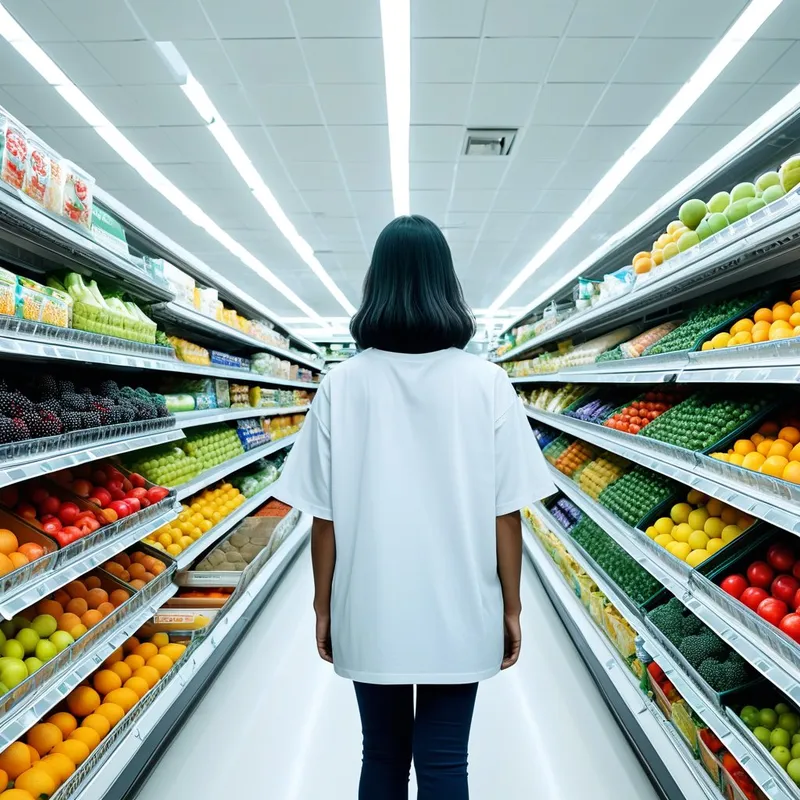
I am in a cavernous, obsidian warehouse. Endless shelves stretch into darkness, all utterly empty. The air is cold and smells of dust and static. On the polished floor, at the very center, rests a single, perfect pomegranate, glowing with a soft, internal light. I am frozen, terrified to touch it, convinced that if I do, the light will go out and I will be left in total blackness.
Alchemical Interpretation: The dream presents not a reality of lack, but a psyche paralyzed by the terror that claiming its one, luminous gift will annihilate all future possibility.
The False Lead
This theme is not about your bank account, your job security, or a streak of misfortune. To interpret it as such is to mistake the symbol for the substance, the map for the territory. The dream of the empty warehouse is not a prophecy of bankruptcy; it is an x-ray of an internal landscape. The terror of scarcity in dreams is rarely about the literal absence of external things. It is about the perceived absence of internal resources: time, love, creativity, worth, permission to exist fully. It is the shadow of a belief system, not a report on reality. The dream asks you to audit your inner ledgers, not your outer ones.
Psychological Architecture
Beneath the dream imagery lies a profound civil war within the psyche's internal family. One faction, the Manager, operates from the scarcity algorithm. Its voice is pragmatic, weary: "Conserve. Hoard. Don't risk the pomegranate. Better to have the hope of light than to risk the certainty of dark." It built the obsidian warehouse—orderly, controlled, and safe in its barrenness. Its shadow is the Martyr, who believes suffering and lack are prerequisites for love or worth.
The exiled part, often the Creative or the Innocent, holds the pomegranate. It knows abundance as a state of being, not having. It is the part that glows without an external power source. The conflict—the frozen terror in the dream—is the Manager's panic at the exile's return. To touch the fruit is to allow that exiled, abundant self back into the system, to disrupt the controlled economy of lack upon which the Manager's entire identity is built. The individuation process here is the agonizing, glorious collapse of that internal tyranny. It is the moment you choose the terrifying aliveness of the glow over the familiar safety of the dark.
Mythic Resonance
We see this architecture in the Greek tale of Persephone. Her abduction into the underworld is not just a story of seasonal change, but of the psyche's forced descent into a realm of apparent scarcity—Hades, a land of shades and pomegranate seeds. The scarcity is an illusion of permanence. The myth's resolution is not her total escape, but her cyclical reign. She becomes queen of both the abundant surface and the deep, rich depths, integrating both realms into her sovereignty. The pomegranate seed, the very token of her binding, becomes the source of her dual authority. Our dreams of empty warehouses and lone fruits are our own psyche's version of the pomegranate seed—the terrifying, binding, yet ultimately empowering contract with the depths.
Symbolic Nodes
- Feasts & Famines: Overflowing tables you cannot eat from, or barren landscapes suddenly yielding fruit.
- Vessels: Cracked cups, bottomless wells, purses with holes, or conversely, cornucopias and overflowing fountains.
- Keys & Locks: A single key that opens nothing, or a door that leads to a treasure room you're afraid to enter.
- Gardens & Wastelands: Lush gardens behind fences, or a single flower blooming in a concrete slab.
- Currency: Multiplying or vanishing money, often made of strange materials (leaves, light, ash).
Archetypal Resonance
The core energy of this theme resonates most powerfully with The Shadow Ruler Archetype. The Shadow Ruler is the internal tyrant who mistakes control for sovereignty. It is the architect of the obsidian warehouse, governing with an iron fist from a place of profound insecurity, convinced that any relaxation of control will lead to chaos and ruin. Its scarcity is a political strategy, a manufactured crisis to justify its own rigid authority over your inner kingdom. The alchemical potential lies in deposing this shadow and reclaiming the true Ruler's sovereignty—the innate, unshakeable authority that knows true abundance flows from wise, compassionate governance of the self, not from frantic hoarding or domination of internal resources.
The Alchemical Process
The transmutation here is the conversion of fear-based economy into love-based ecology. The prima materia is the frozen terror in the warehouse—the grief for all you believe you lack, the terror of the glowing gift. The alchemical fire is the conscious, unbearable tension of holding both realities at once: the empty shelves and the glowing pomegranate. You must apply the heat of unwavering attention to that contradiction.
The pressure is sustained by refusing the old escapes—the frantic search for external validation to fill the shelves, or the nihilistic surrender to the darkness. You must stand in the warehouse, feeling the cold and the dread, while keeping your eyes fixed on the fruit's gentle light. This pressure cooks the psyche. Slowly, the realization dawns: the light of the pomegranate does not depend on the shelves being full. Its glow is its own nature. The abundance was never out there to be collected and stored; it is a quality of the source in here. The shelves—the mind's structures for measuring worth—begin to dissolve. What remains is not a stocked inventory, but a radiant, sovereign center that generates value from its own core. The warehouse becomes a temple.

The Integration Protocol
Question 1: Where in my waking life do I feel the "cold warehouse" sensation—the contraction, the holding of breath, the assumption of lack? Is it in conversation, at work, in my creative practice?
Question 2: What is my "glowing pomegranate"? What is the one gift, skill, or truth I possess that I am most afraid to fully claim, for fear it will be used up, taken, or leave me exposed?
Question 3: What internal "Manager" or "Shadow Ruler" voice warns me to play small, to conserve, to not risk the fruit? What is its stated, logical reason for this? What deeper fear might be beneath that logic?
Action 1 (Somatic Re-mapping): For one minute, place your hand on the "knot" of scarcity in your body. Breathe into that space. Do not try to change it. Simply acknowledge its presence with the neutrality of a cartographer noting a landmark. Then, shift your hand to where you feel even a whisper of spaciousness or warmth (perhaps the heart, the palms). Breathe there for one minute. Hold both maps in your awareness.
Action 2 (Creative Inventory): Take a large piece of paper. On one side, using symbols, colors, or words, depict your "warehouse"—the structures of perceived lack. On the other side, depict your "pomegranate"—your core gift, in any abstract form. Then, in the center, draw or write the moment of connection. Let it be messy, symbolic, non-linear.
Action 3 (Ritual of Exchange): Choose a small, ordinary object (a stone, a coin). For one week, let it represent a scarce internal resource (e.g., time, creative confidence). Carry it, consciously "hoarding" it. At the week's end, perform a simple ritual: place it in a stream, bury it in earth, or give it away. Symbolically release the hoarding contract. Replace it with a brief, daily declaration spoken aloud: "My source is within."
Final Validation
The terror is real. The grief for the empty shelves is valid. This is not a journey for the faint of heart; it requires you to stand in the chilling draft of your own deepest fears of insufficiency. But hear this: the very fact you can perceive the glow of the pomegranate in the dark means the light is already within you. The dream is not a sentence to eternal lack; it is an invitation to the most profound promotion of your existence—from anxious tenant in a warehouse of your own making, to sovereign monarch of an inner kingdom whose currency is self-generated light. The scarcity was the illusion. The abundance is your native state, waiting for you to remember the throne.