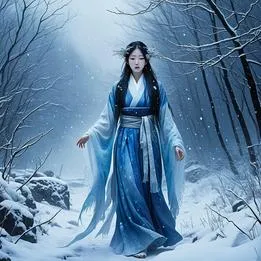
Yuki-onna Dream Meaning
A Japanese snow spirit or ghost, often depicted as a beautiful woman who appears in snowstorms, representing both danger and ethereal beauty.
Common Appearances & Contexts
| Context | Emotion | Interpretation |
|---|---|---|
| Snowstorm encounter | Fear | Facing natural danger. |
| Beautiful woman appears | Fascination | Drawn to mystery. |
| Winter isolation | Loneliness | Feeling abandoned. |
| Cold embrace | Awe | Supernatural experience. |
| Melting snow figure | Sadness | Loss of beauty. |
| Warning in storm | Anxiety | Impending danger. |
| Following light | Curiosity | Seeking truth. |
| Frozen landscape | Awe | Nature's power. |
| Ghostly visitation | Fear | Supernatural threat. |
| Seasonal change | Nostalgia | Passing of time. |
| Mythical transformation | Wonder | Reality shifting. |
| Survival struggle | Determination | Overcoming elements. |
Interpretive Themes
Cultural Lenses
Jungian Perspective
View Context →Anima figure representing the unconscious feminine aspect, coldness in relationships, or frozen emotional states needing integration for wholeness.
Freudian Perspective
View Context →Represents sexual desire mixed with fear of castration (coldness), or mother figure with ambivalent feelings of attraction and danger.
Gestalt Perspective
View Context →Projection of inner coldness or emotional distance, asking 'What part of me feels frozen or isolated in relationships?'
Cognitive Perspective
View Context →Mental schema for danger in beauty, pattern recognition of threats in appealing situations, or memory consolidation of winter experiences.
Evolutionary Perspective
View Context →Adaptive warning system for winter survival dangers, hyperactive agency detection for threats in harsh environments, or mate selection caution.
East Asian Perspective
View Context →Japanese yōkai spirit from folklore, often a ghost of woman who died in snow, representing winter's danger and beauty in traditional tales and modern media.
European Perspective
View Context →Similar to snow queens or winter witches in Germanic/Slavic folklore, representing nature's harsh feminine power and seasonal death/rebirth cycles.
Modern Western Perspective
View Context →Appears in fantasy media as tragic romantic figure or environmental symbol, representing climate anxiety or feminine power reimagined.
Global/Universal Perspective
View Context →Archetype of dangerous beauty in nature, found cross-culturally in snow/winter spirits representing human vulnerability to natural forces.
North American Perspective
View Context →Similar to Wendigo or winter spirits in Indigenous traditions, representing survival challenges in harsh climates and respect for nature's power.
Interpret Your Full Dream
Beyond this symbol, every dream carries a unique story. Share your dream for a personalized AI-powered interpretation.