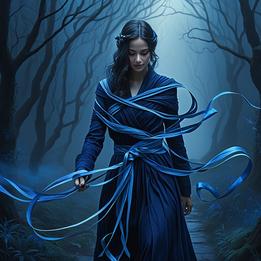
Twisted Ribbon
The Twisted Ribbon symbolizes complexity and intertwining relationships, reflecting the intricacies of life and emotional connections.
Twisted Ribbon Dream Meaning
The Twisted Ribbon symbolizes complexity and intertwining relationships, reflecting the intricacies of life and emotional connections.
Interpretive Themes
Interconnection
highThe twisted nature may reflect the intricate dynamics in personal or professional relationships.
Transformation
mediumThe ribbon's twist can symbolize the unexpected turns in a personal journey.
Deception
mediumThe twisting may imply hidden aspects in interactions with others.
Flexibility
highThe ribbon suggests a need for flexibility in various situations.
Creative Expression
mediumThe twists and turns may be reflective of the creative process.
Mythological Resonance
The Labyrinth
GreekDaedalus' intricate maze that contained the Minotaur, representing the complexities of the human psyche.
Valknut
NorseThe interlocking triangle symbol representing the interconnectedness of life, death, and destiny.
Cultural Lenses
European Perspective
View Context →Twisted designs in Celtic knots symbolize eternity and interconnectedness. Used in rites of passage. [Celtic] Represents the cycle of life and death, interconnected lives.
African Perspective
View Context →Ribbons and cords often represent ties to ancestors. Used in community gatherings. [African Folklore] Symbolizes the strength of intergenerational relationships.
East Asian Perspective
View Context →Twisted forms are common in traditional art, symbolizing the merging of duality. Frequent in bridal ceremonies. [Asian Cultures] Signifies the balance of opposites in relationships.
East Asian Perspective
View Context →Decorative ribbons used in festivals symbolize joy and celebration. Employed during New Year celebrations. [Japanese] Reflects the essence of celebration of life.
Historical Authorities
Want a deeper analysis?
Get a personalized interpretation of your entire dream including this symbol.
Interpret My DreamThe Oracle's Prediction
Combine multiple symbolsA complex emotional situation will resolve into clarity.
Timeframe
Lunation (~29 Days)
Intensity
Deep
An unexpected collaboration will create beautiful results.
Timeframe
Seasonal (~3 Months)
Intensity
Deep
Common Appearances & Contexts
| Context | Emotion | Interpretation |
|---|---|---|
| Context Tying a Twisted Ribbon | Emotion Frustration | Interpretation This may indicate struggles in trying to connect with others or manage complex emotions. |
| Context Receiving a Twisted Ribbon as a gift | Emotion Joy | Interpretation Indicates a positive recognition of one's relationships or achievements. |
| Context Observing a room filled with Twisted Ribbons | Emotion Overwhelm | Interpretation Reflects feelings of being tangled in too many commitments or emotional ties. |
| Context Untangling a Twisted Ribbon | Emotion Relief | Interpretation Symbolizes efforts to resolve complexities in life or relationships. |
| Context Holding a Twisted Ribbon tightly | Emotion Anxiety | Interpretation Represents fear of losing control of tangled situations. |
| Context Seeing a Twisted Ribbon float away | Emotion Sadness | Interpretation May indicate loss or detachment from a valued relationship. |
| Context Admiring a Twisted Ribbon in art | Emotion Awe | Interpretation Reflects appreciation for the beauty and complexity in life. |
| Context Wearing a Twisted Ribbon as an accessory | Emotion Confidence | Interpretation Symbolizes personal identity and embracing individuality. |
| Context Trying to fold a Twisted Ribbon | Emotion Confusion | Interpretation Represents difficulties in processing emotional experiences. |
| Context Finding a Twisted Ribbon in nature | Emotion Curiosity | Interpretation Indicates the need to explore the unpredictable elements in one's life. |
Interpret Your Full Dream
Beyond this symbol, every dream carries a unique story. Share your dream for a personalized AI-powered interpretation.