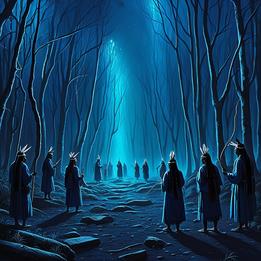
Tribal Gathering
Tribal gatherings represent the core of community life, highlighting social connections, cultural identity, and shared rituals.
Tribal Gathering Dream Meaning
Tribal gatherings represent the core of community life, highlighting social connections, cultural identity, and shared rituals.
Interpretive Themes
Community Bonding
highThe gathering strengthens ties between individuals, creating a stronger community.
Cultural Identity
highCelebration of cultural attributes reinforces self-identity.
Rituals and Traditions
mediumRituals serve as a means to reaffirm cultural ties and legitimize social structures.
Collective Memory
mediumSuch gatherings help refresh and maintain the cultural narrative for future generations.
Identity
lowEnsures a balanced social environment that allows for personal growth.
Mythological Resonance
The Round Table
CelticArthur's knights gathering as equals in circular council, where every voice finds place in shared purpose.
The Powwow
Native AmericanSacred gatherings where tribes unite through dance, drum, and ceremony to renew cultural identity and community bonds.
Cultural Lenses
African Perspective
View Context →Tribal gatherings serve as occasions for celebrations, rituals, and community governance. Ceremonies often involve music, dance, and vocal performances. [African Tribes] Strong emphasis on oral storytelling and community participation.
African Perspective
View Context →Gatherings during emancipation celebrations and community events symbolize resilience and heritage. Incorporates music styles like jazz and gospel. [African American] Highlights the ongoing struggle and celebration of cultural identity.
Historical Authorities
Want a deeper analysis?
Get a personalized interpretation of your entire dream including this symbol.
Interpret My DreamThe Oracle's Prediction
Combine multiple symbolsThe discovery or strengthening of chosen family ties.
Timeframe
Immediate (Next 48h)
Intensity
Deep
A reconnection with ancestral roots and cultural identity.
Timeframe
Seasonal (~3 Months)
Intensity
Deep
Common Appearances & Contexts
| Context | Emotion | Interpretation |
|---|---|---|
| Context Participating in communal dances | Emotion Exhilaration | Interpretation Symbolizes the joy of being part of something larger than oneself. |
| Context Witnessing a communal feast | Emotion Satisfaction | Interpretation Reflects a sense of abundance and sharing in one's life. |
| Context Being chosen as a leader in a group setting | Emotion Pride | Interpretation Indicates a recognition of one's abilities and role within a community. |
| Context Hearing storytelling and legends from elders | Emotion Nostalgia | Interpretation Represents a longing for connection with past traditions and history. |
| Context Engaging in rituals around a fire | Emotion Comfort | Interpretation Emphasizes the warmth of community and the safe sharing of experiences. |
| Context Feeling excluded from a gathering | Emotion Loneliness | Interpretation Brings awareness to personal feelings of isolation or disconnection from a community. |
| Context Seeing diverse generations mingling | Emotion Hope | Interpretation Highlights the continuation of cultural legacy across time. |
| Context Engaging in a group discussion about future plans | Emotion Anticipation | Interpretation Navigates the collective vision for growth within a tribe. |
| Context Experiencing rituals of initiation | Emotion Fear | Interpretation Reflects the anxiety of transitioning into new roles or phases of life. |
| Context Remembering past celebrations | Emotion Bittersweetness | Interpretation Addresses the duality of joy and loss in communal experiences. |
Interpret Your Full Dream
Beyond this symbol, every dream carries a unique story. Share your dream for a personalized AI-powered interpretation.