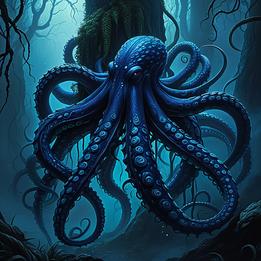
Tentacle
A flexible, grasping appendage often representing entanglement, hidden influence, or primal instincts.
Tentacle Dream Meaning
A flexible, grasping appendage often representing entanglement, hidden influence, or primal instincts.
Interpretive Themes
Cultural Lenses
Jungian Perspective
View Context →Represents the shadow self or collective unconscious forces that grasp at consciousness. Historically seen in mythological sea monsters, now symbolizes aspects of personality trying to integrate.
Freudian Perspective
View Context →Phallic symbol representing repressed sexual desires or anxieties. Historically linked to taboo impulses, in modern context may indicate unconscious libidinal energy seeking expression.
Gestalt Perspective
View Context →Projection of parts of self that feel grasping or invasive. Historically in therapy as disowned aspects, modernly represents qualities one refuses to acknowledge as their own.
Cognitive Perspective
View Context →Mental representation of entanglement problems. Historically as problem-solving metaphor, modernly indicates cognitive processing of complex, multi-faceted situations requiring flexible thinking.
Evolutionary Perspective
View Context →Primordial fear response to multi-limbed predators. Historically survival mechanism, modernly triggers ancient neural pathways when facing overwhelming, grasping threats in life.
East Asian Perspective
View Context →In Japanese folklore, tentacled creatures like krakens represent nature's uncontrollable power. Modern anime/manga often use tentacles symbolically for technology's pervasive influence or social entanglement.
European Perspective
View Context →Medieval sea monster imagery representing chaos versus order. Historically in maps as 'here be monsters,' modernly symbolizes bureaucratic or systemic entanglements in society.
African Perspective
View Context →In some coastal traditions, octopus represents wisdom and adaptability. Historically as trickster figure, modernly symbolizes navigating complex social networks with intelligence and flexibility.
Middle Eastern Perspective
View Context →Ancient sea monster myths like Tiamat's creatures representing primordial chaos. Historically in creation stories, modernly symbolizes fundamentalist or extremist ideologies grasping at society.
Latin American Perspective
View Context →Pre-Columbian water deities with tentacle-like features representing fertility and danger. Historically in Moche pottery, modernly symbolizes political corruption's grasping tendrils in society.
Modern Western Perspective
View Context →Science fiction/horror trope representing technology's invasive nature. Historically from Lovecraftian horror, now symbolizes data collection, surveillance, or algorithmic control in digital age.
Global/Universal Perspective
View Context →Cross-cultural symbol of the unknown deep, both oceanic and psychological. Historically in seafaring cultures worldwide, modernly represents globalization's interconnected yet controlling networks.
Want a deeper analysis?
Get a personalized interpretation of your entire dream including this symbol.
Interpret My DreamCommon Appearances & Contexts
| Context | Emotion | Interpretation |
|---|---|---|
| Context Being grabbed | Emotion Terror | Interpretation Feeling overpowered. |
| Context Observing tentacles | Emotion Curiosity | Interpretation Exploring unknown aspects. |
| Context Multiple tentacles | Emotion Overwhelm | Interpretation Too many demands. |
| Context Tentacle emerging | Emotion Surprise | Interpretation Unexpected influence appears. |
| Context Cutting tentacle | Emotion Relief | Interpretation Breaking free. |
| Context Tentacle as tool | Emotion Empowerment | Interpretation Using hidden resources. |
| Context Tentacle in water | Emotion Unease | Interpretation Subconscious fears surfacing. |
| Context Tentacle touching | Emotion Disgust | Interpretation Boundary violation. |
| Context Tentacle retreating | Emotion Hope | Interpretation Threat diminishing. |
| Context Tentacle transforming | Emotion Confusion | Interpretation Changing influences. |
| Context Tentacle as limb | Emotion Acceptance | Interpretation Integrating new abilities. |
| Context Tentacle in darkness | Emotion Dread | Interpretation Unknown dangers lurking. |
Interpret Your Full Dream
Beyond this symbol, every dream carries a unique story. Share your dream for a personalized AI-powered interpretation.