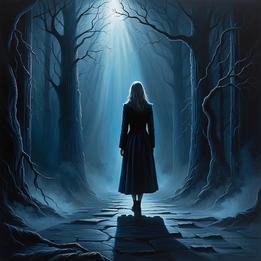
Tenebrism
A dramatic painting technique using stark contrasts between light and shadow, often symbolizing the struggle between clarity and obscurity, knowledge and ignorance.
Tenebrism Dream Meaning
A dramatic painting technique using stark contrasts between light and shadow, often symbolizing the struggle between clarity and obscurity, knowledge and ignorance.
Interpretive Themes
Cultural Lenses
Jungian Perspective
View Context →Represents the shadow archetype - the unconscious aspects of personality. The contrast symbolizes integration of dark and light aspects of self for wholeness and individuation.
Freudian Perspective
View Context →Symbolizes repression and the id's hidden desires. Light represents conscious awareness, shadows represent suppressed sexual or aggressive impulses seeking expression.
Gestalt Perspective
View Context →Emphasizes the figure-ground relationship. The dreamer's perception shifts between what is illuminated (foreground) and what remains in shadow (background), revealing incomplete gestalts.
Cognitive Perspective
View Context →Represents cognitive processing of ambiguous information. The brain attempts to resolve the contrast, symbolizing problem-solving or decision-making under uncertainty.
Evolutionary Perspective
View Context →Taps into primal fear of darkness and appreciation for light as safety signals. The contrast triggers survival mechanisms related to predator detection and safe navigation.
European Perspective
View Context →Rooted in Baroque art, particularly Caravaggio. Historically represents divine intervention (light) in human darkness, now symbolizes artistic expression and psychological depth.
East Asian Perspective
View Context →Reflects yin-yang philosophy - complementary opposites creating harmony. The balance between light and shadow represents cosmic order and the necessity of both for completeness.
Middle Eastern Perspective
View Context →Echoes Sufi mysticism where darkness represents divine mystery and light represents revelation. The contrast symbolizes spiritual journey from ignorance to enlightenment.
African Perspective
View Context →In many traditions, represents ancestral presence - shadows as spirit manifestations, light as living reality. The interplay symbolizes communication between physical and spiritual realms.
Modern Western Perspective
View Context →Associated with cinematic techniques and psychological narratives. Represents moral complexity, hidden motives, and the tension between public persona and private self.
Global/Universal Perspective
View Context →Cross-cultural symbol of knowledge vs. ignorance, good vs. evil. The dramatic contrast universally represents fundamental human experiences of clarity, mystery, and moral choice.
Latin American Perspective
View Context →In magical realism, represents coexistence of ordinary and extraordinary. The contrast blurs reality boundaries, symbolizing how magic infuses daily life through unexpected illumination.
Want a deeper analysis?
Get a personalized interpretation of your entire dream including this symbol.
Interpret My DreamCommon Appearances & Contexts
| Context | Emotion | Interpretation |
|---|---|---|
| Context Dark room spotlight | Emotion Fear | Interpretation Feeling exposed, vulnerable. |
| Context Shadowy figure emerges | Emotion Dread | Interpretation Unconscious threat appearing. |
| Context Light pierces darkness | Emotion Hope | Interpretation Clarity overcoming confusion. |
| Context Faces half-lit | Emotion Suspicion | Interpretation Uncertainty about others. |
| Context Objects in shadow | Emotion Curiosity | Interpretation Hidden aspects revealed. |
| Context Moving through darkness | Emotion Anxiety | Interpretation Navigating unknown territory. |
| Context Sudden illumination | Emotion Surprise | Interpretation Unexpected realization. |
| Context Contrasting landscapes | Emotion Awe | Interpretation Beauty in opposition. |
| Context Shadow patterns shift | Emotion Unease | Interpretation Reality feels unstable. |
| Context Light source hidden | Emotion Frustration | Interpretation Truth obscured deliberately. |
| Context Darkness receding slowly | Emotion Relief | Interpretation Gradual understanding dawning. |
| Context Sharp light edges | Emotion Tension | Interpretation Clear boundaries emerging. |
Interpret Your Full Dream
Beyond this symbol, every dream carries a unique story. Share your dream for a personalized AI-powered interpretation.