Symmetry
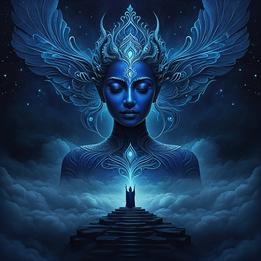
A fundamental principle of balance, harmony, and order, often representing perfection, stability, and the resolution of opposites.
Symmetry Dream Meaning
A fundamental principle of balance, harmony, and order, often representing perfection, stability, and the resolution of opposites.
Interpretive Themes
Cultural Lenses
Jungian Perspective
View Context →Represents the Self, the union of conscious and unconscious, and the individuation process. Mandalas symbolize psychic wholeness. Historical: Alchemical symbolism of opposites. Modern: Integration of personality aspects.
Freudian Perspective
View Context →May symbolize sexual balance, particularly in body imagery, or represent repressed desires for order against chaotic impulses. Historical: Oedipal resolution. Modern: Defense mechanisms creating psychic equilibrium.
Gestalt Perspective
View Context →The whole being greater than parts; perception seeks balance (Pragnanz). Historical: Wertheimer's laws. Modern: Cognitive tendency to complete patterns, seeking closure in experience.
Cognitive Perspective
View Context →Brain's pattern recognition favoring symmetrical stimuli as predictable and safe, reducing cognitive load. Historical: Evolutionary advantage. Modern: Aesthetic preference linked to processing fluency.
Evolutionary Perspective
View Context →Indicator of genetic fitness and health in mate selection (bilateral symmetry). Historical: Survival advantage. Modern: Subconscious assessment of quality in partners and environments.
East Asian Perspective
View Context →Yin-Yang balance, representing complementary forces in Taoism. Historical: Daoist philosophy. Modern: Feng Shui principles for harmonious living spaces and life energy flow.
South Asian Perspective
View Context →Mandala as cosmic diagram and meditation tool in Hinduism/Buddhism. Historical: Vedic rituals. Modern: Spiritual practice for centering and accessing higher consciousness.
Middle Eastern Perspective
View Context →Geometric patterns in Islamic art reflecting divine order and infinity. Historical: Aniconic tradition. Modern: Architectural and artistic expression of spiritual perfection.
European Perspective
View Context →Classical ideals of beauty and proportion from Greek philosophy. Historical: Golden Ratio. Modern: Architectural and artistic standards of aesthetic perfection.
African Perspective
View Context →Symbolic balance in community relationships and ancestral connections. Historical: Adinkra symbols. Modern: Social harmony and cultural identity preservation.
North American Perspective
View Context →Native American medicine wheels representing life balance and directions. Historical: Spiritual ceremonies. Modern: Holistic healing practices and environmental harmony.
Latin American Perspective
View Context →Pre-Columbian dualistic cosmology (e.g., Aztec Ometeotl). Historical: Mesoamerican temples. Modern: Cultural symbolism in art representing cosmic balance.
Want a deeper analysis?
Get a personalized interpretation of your entire dream including this symbol.
Interpret My DreamCommon Appearances & Contexts
| Context | Emotion | Interpretation |
|---|---|---|
| Context Perfectly symmetrical face | Emotion Awe | Interpretation Idealized beauty standard. |
| Context Symmetrical building | Emotion Calm | Interpretation Architectural order. |
| Context Breaking symmetry | Emotion Anxiety | Interpretation Disruption of order. |
| Context Symmetrical mandala | Emotion Peace | Interpretation Spiritual wholeness. |
| Context Symmetrical dance | Emotion Joy | Interpretation Harmonious movement. |
| Context Asymmetry emerging | Emotion Fear | Interpretation Loss of control. |
| Context Symmetrical reflection | Emotion Wonder | Interpretation Self-recognition. |
| Context Forced symmetry | Emotion Unease | Interpretation Artificial order. |
| Context Natural symmetry | Emotion Awe | Interpretation Divine perfection. |
| Context Symmetrical pattern | Emotion Focus | Interpretation Mental organization. |
| Context Symmetry shattering | Emotion Shock | Interpretation Sudden chaos. |
| Context Creating symmetry | Emotion Satisfaction | Interpretation Achieving balance. |
Interpret Your Full Dream
Beyond this symbol, every dream carries a unique story. Share your dream for a personalized AI-powered interpretation.