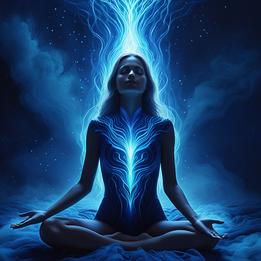
Subtle Aura
A faint energy field surrounding the body, often perceived as a glow or vibration, representing emotional states, spiritual presence, or intuitive awareness.
Subtle Aura Dream Meaning
A faint energy field surrounding the body, often perceived as a glow or vibration, representing emotional states, spiritual presence, or intuitive awareness.
Interpretive Themes
Spiritual Awareness
highIndicates spiritual awakening or sensitivity.
Clarity
highTrue emotions leaking through social masks.
Boundary Issues
mediumOverly permeable or rigid energetic defenses.
Intuitive Development
highDeveloping psychic or empathic abilities.
Vulnerability
mediumFear of being truly seen by others.
Mythological Resonance
Halos
ChristianThe luminous rings depicted around saints' heads, symbolizing divine grace, spiritual purity, and enlightened presence.
Prana
HinduThe vital life force or subtle energy that flows through the body, perceived as an aura in yogic traditions.
Cultural Lenses
Jungian Perspective
View Context →Represents the subtle body or psychic atmosphere, connecting to the collective unconscious. The aura's appearance reflects archetypal energies and the dreamer's individuation process, showing how personal unconscious contents manifest visibly.
Freudian Perspective
View Context →Symbolizes repressed libidinal energy or sexual aura. The subtle nature suggests sublimated desires trying to emerge from the unconscious, representing the dreamer's hidden attractions or repulsions in waking relationships.
Gestalt Perspective
View Context →Represents the dreamer's present-moment awareness and how they project themselves into the environment. The aura's qualities show what aspects of self the dreamer is currently owning or disowning in their waking experience.
Cognitive Perspective
View Context →Manifestation of metacognitive awareness about one's emotional state. The brain's attempt to visualize abstract concepts like mood or presence, helping process social information and self-monitoring during sleep consolidation.
Evolutionary Perspective
View Context →Ancient survival mechanism for assessing social threats and opportunities. Represents the brain's processing of pheromonal and micro-expression data, evolved to quickly evaluate others' emotional states and intentions for group cohesion.
South Asian Perspective
View Context →Connected to prana (life force) and the subtle body's koshas (sheaths). In Ayurveda and yoga traditions, the aura reflects doshic balance, chakra alignment, and karmic imprints from past lives affecting current spiritual progress.
East Asian Perspective
View Context →Relates to qi (vital energy) flow and yin-yang balance. In Traditional Chinese Medicine, the aura shows meridian health, while in Japanese Reiki it indicates energy healing needs. Buddhist contexts see it as karmic residue.
Middle Eastern Perspective
View Context →In Islamic mysticism (Sufism), represents the nafs (ego states) and spiritual light (nur). The subtle aura indicates proximity to divine presence, with colors showing spiritual stations on the path to annihilation in God (fana).
European Perspective
View Context →Historically linked to the Christian concept of the soul's radiance and medieval alchemical transformations. In modern European esotericism, relates to the etheric body in Theosophy and anthroposophy as a bridge between physical and spiritual realms.
African Perspective
View Context →In many indigenous traditions, represents the vital force (like nyama or ashe) connecting to ancestors and nature spirits. The aura's appearance indicates spiritual protection, ancestral blessings, or need for ritual cleansing from negative energies.
Latin American Perspective
View Context →Blends indigenous Mesoamerican concepts of tonalli (vital force) with Catholic mysticism and African diaspora traditions. In curanderismo, the aura shows spiritual health, with specific colors indicating needs for limpias (cleansings) or protection work.
Modern Western Perspective
View Context →Popularized by New Age movements and alternative medicine as measurable energy fields. Often discussed in psychology as 'personal space' or 'vibe,' with scientific skepticism balanced by widespread cultural acceptance in wellness and mindfulness practices.
Historical Authorities
Want a deeper analysis?
Get a personalized interpretation of your entire dream including this symbol.
Interpret My DreamThe Oracle's Prediction
Combine multiple symbolsA deepening of intuitive or psychic abilities will open new avenues of perception.
Timeframe
Lunation (~29 Days)
Intensity
Deep
You will attract or recognize a soul-level connection based on energetic resonance.
Timeframe
Seasonal (~3 Months)
Intensity
Deep
Common Appearances & Contexts
| Context | Emotion | Interpretation |
|---|---|---|
| Context Seeing own aura | Emotion curious | Interpretation Self-discovery and introspection. |
| Context Aura changing colors | Emotion confused | Interpretation Emotional transition or conflict. |
| Context Aura being touched | Emotion violated | Interpretation Boundary violation in waking life. |
| Context Brightening aura | Emotion hopeful | Interpretation Personal growth or healing. |
| Context Dimming aura | Emotion depressed | Interpretation Energy depletion or illness. |
| Context Protecting aura | Emotion defensive | Interpretation Need for emotional shielding. |
| Context Merging auras | Emotion intimate | Interpretation Deep connection with another. |
| Context Aura attracting attention | Emotion exposed | Interpretation Fear of standing out. |
| Context Cleansing aura | Emotion relieved | Interpretation Emotional purification process. |
| Context Aura being read | Emotion vulnerable | Interpretation Fear of being judged. |
| Context Invisible aura | Emotion insecure | Interpretation Feeling unseen or invalidated. |
| Context Aura expanding | Emotion powerful | Interpretation Growing confidence or influence. |
Interpret Your Full Dream
Beyond this symbol, every dream carries a unique story. Share your dream for a personalized AI-powered interpretation.