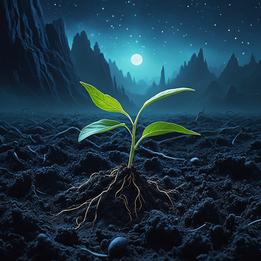
Seedling
A symbol of nascent potential, fragile beginnings, and organic growth emerging from within the self or emotional landscape.
Seedling Dream Meaning
A symbol of nascent potential, fragile beginnings, and organic growth emerging from within the self or emotional landscape.
Interpretive Themes
Cultural Lenses
Jungian Perspective
View Context →Represents the nascent Self or a new psychic content emerging from the unconscious. Symbolizes individuation's early, fragile stage where conscious nurturing is required for integration and wholeness.
Freudian Perspective
View Context →Often a phallic symbol of latent sexual energy or potential. Can represent a nascent idea, child, or creative project stemming from subconscious drives, requiring a nurturing environment to develop.
Gestalt Perspective
View Context →The dreamer as the seedling; an expression of the self's current state of becoming. The dream explores feelings of vulnerability, support needs, and the environmental 'soil' of one's life.
Cognitive Perspective
View Context →A mental schema for 'beginning' or 'potential.' The brain processes concerns about new endeavors, using the seedling as a metaphor for evaluating risk, care requirements, and growth expectations.
Evolutionary Perspective
View Context →Taps into deep-seated recognition of plant life cycles as a proxy for survival and provisioning. Symbolizes investment in future resources, offspring, or community, triggering caregiving instincts.
East Asian Perspective
View Context →In Daoist and Buddhist contexts, symbolizes the subtle, initial movement of Qi or the 'Buddha-nature' within all beings. In Shinto, can represent a kami's (spirit's) presence in nature.
South Asian Perspective
View Context →In Hindu philosophy, often represents the Atman (individual soul) or a samskara (mental impression) taking root. In Ayurveda, linked to the concept of Ojas, the vital essence needing cultivation.
Middle Eastern Perspective
View Context →In ancient Mesopotamian and Egyptian traditions, a potent symbol of resurrection and cyclical renewal (e.g., Osiris). In Islamic thought, can reflect the fitrah (innate human nature) or God's subtle creative act.
European Perspective
View Context →In Celtic lore, associated with druidic knowledge of sacred groves. In later Christian allegory, represents the soul's growth or the 'mustard seed' of faith. In folklore, can signify a family's future lineage.
African Perspective
View Context →In many traditions, symbolizes ancestral continuity and the vital force (like Ashe or Nyama) passed down. Represents the community's future, with rituals often involving planting to mark new beginnings.
North American Perspective
View Context →For many Indigenous nations, represents a sacred relationship with Mother Earth and the responsibility of stewardship. In modern context, tied to sustainability movements and personal wellness journeys.
Global/Universal Perspective
View Context →A near-universal archetype of hope, new life, and potential. Cross-culturally recognized as representing the fragile yet powerful start of any organic process, from a child to an idea to a community.
Want a deeper analysis?
Get a personalized interpretation of your entire dream including this symbol.
Interpret My DreamCommon Appearances & Contexts
| Context | Emotion | Interpretation |
|---|---|---|
| Context Planting a seedling | Emotion Hopeful | Interpretation Intentional new beginning. |
| Context Seedling wilting | Emotion Anxious | Interpretation Fear of failure. |
| Context Watering seedling | Emotion Caring | Interpretation Nurturing the self. |
| Context Seedling in darkness | Emotion Isolated | Interpretation Hidden potential. |
| Context Seedling growing rapidly | Emotion Excited | Interpretation Quick development. |
| Context Protecting seedling | Emotion Protective | Interpretation Guarding vulnerability. |
| Context Seedling among weeds | Emotion Overwhelmed | Interpretation Struggle to thrive. |
| Context Gifting a seedling | Emotion Generous | Interpretation Offering potential. |
| Context Seedling breaking soil | Emotion Triumphant | Interpretation Overcoming obstacle. |
| Context Many seedlings | Emotion Abundant | Interpretation Multiple possibilities. |
| Context Transplanting seedling | Emotion Nervous | Interpretation Risking change. |
| Context Seedling in hand | Emotion Responsible | Interpretation Holding potential. |
Interpret Your Full Dream
Beyond this symbol, every dream carries a unique story. Share your dream for a personalized AI-powered interpretation.