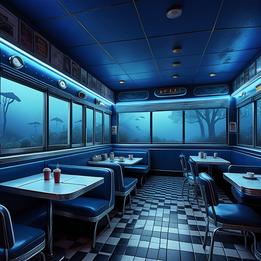
Retro Diner
The retro diner represents nostalgia, comfort, and a connection to simpler times, often evoking feelings of community and belonging.
Retro Diner Dream Meaning
The retro diner represents nostalgia, comfort, and a connection to simpler times, often evoking feelings of community and belonging.
Interpretive Themes
Nostalgia
highThe diner embodies cherished memories and a sense of belonging.
Comfort
highThe diner’s warm environment provides solace amidst chaos.
Community
mediumDiners often serve as meeting spots for friends and families.
Simplicity
highThe diner highlights the charm of unpretentious and straightforward joy.
Culinary Tradition
mediumDiners often represent regional dishes and family recipes.
Mythological Resonance
The Symposium
GreekSacred gathering places where philosophers shared food, drink, and ideas, creating community through nourishing both body and soul in ritualized fellowship.
The Cauldron of Cerridwen
CelticThe magical vessel that provided endless nourishment and inspiration, where all who partook were transformed by its contents.
Cultural Lenses
Modern Western Perspective
View Context →Diners became popular in the mid-20th century as social hubs. Used for social gatherings and late-night meetings. [American] Represent a quintessential aspect of American culture.
European Perspective
View Context →Diners reflect consumerism and the rise of fast food culture. Often associated with casual dining experiences. [Western Consumer Culture] A symbol of the blend between nostalgia and modernity.
Latin American Perspective
View Context →Similar concepts exist with fondness towards simple, family-oriented restaurants. Gatherings revolve around communal dining. [Hispanic] Celebrated for their role in familial and social interactions.
Historical Authorities
Want a deeper analysis?
Get a personalized interpretation of your entire dream including this symbol.
Interpret My DreamThe Oracle's Prediction
Combine multiple symbolsA reconnection with someone from your past will bring unexpected comfort and insight.
Timeframe
Seasonal (~3 Months)
Intensity
Deep
You will find healing through revisiting childhood memories with new perspective.
Timeframe
Lunation (~29 Days)
Intensity
Deep
Common Appearances & Contexts
| Context | Emotion | Interpretation |
|---|---|---|
| Context Eating a meal in the diner | Emotion Satisfaction | Interpretation Experiencing fulfillment from simple pleasures. |
| Context Meeting a lost friend at the diner | Emotion Joy | Interpretation Reconnecting with past relationships and shared memories. |
| Context Working in the diner | Emotion Contentment | Interpretation Finding purpose and happiness in everyday tasks. |
| Context Hearing old music in the diner | Emotion Melancholy | Interpretation Reflecting on the passage of time and lost moments. |
| Context Diner is crowded with happy families | Emotion Warmth | Interpretation Experiencing a sense of belonging and community. |
| Context The diner is closing down | Emotion Sorrow | Interpretation Fear of losing meaningful connections and comfort. |
| Context Trying to recreate a diner meal at home | Emotion Frustration | Interpretation Longing for familiarity and facing challenges in replication. |
| Context Watching a cooking competition in the diner | Emotion Excitement | Interpretation Joy in culinary creativity within a familiar setting. |
| Context Seeing importance of the diner in community events | Emotion Pride | Interpretation Recognizing the value of shared spaces in building community. |
| Context Going to the diner alone | Emotion Loneliness | Interpretation Feeling disconnected despite being in a familiar environment. |
Interpret Your Full Dream
Beyond this symbol, every dream carries a unique story. Share your dream for a personalized AI-powered interpretation.