Requiem
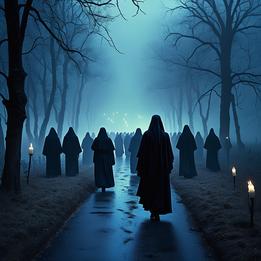
A musical composition for the dead, symbolizing mourning, transition, and honoring the departed. Represents a journey from life to afterlife.
Requiem Dream Meaning
A musical composition for the dead, symbolizing mourning, transition, and honoring the departed. Represents a journey from life to afterlife.
Interpretive Themes
Cultural Lenses
Global/Universal Perspective
View Context →Universal human ritual for honoring the dead, transcending specific religions. Represents collective acknowledgment of mortality and the need for ceremonial closure across cultures.
Jungian Perspective
View Context →Symbol of the collective unconscious processing death archetypes. Represents individuation through confronting mortality, integrating shadow aspects of loss into conscious awareness for psychological wholeness.
Freudian Perspective
View Context →Expression of death wish or unresolved grief from childhood. May represent repressed feelings about parental figures or unconscious desires for reunion with lost objects through symbolic musical representation.
Gestalt Perspective
View Context →Projection of unfinished business with the deceased. The dreamer may be completing conversations or relationships through the symbolic performance, creating closure in the present moment.
Cognitive Perspective
View Context →Mental processing of loss through structured narrative. The brain organizes grief memories using musical patterns as cognitive schemas, helping integrate traumatic experiences into long-term memory.
Evolutionary Perspective
View Context →Adaptive ritual behavior promoting social cohesion after death. Enhances group survival by formally processing loss, reinforcing bonds, and transmitting cultural values about mortality across generations.
European Perspective
View Context →Rooted in Catholic Latin Mass for the Dead, evolving into concert hall tradition. From Mozart to modern composers, represents artistic sublimation of grief into cultural heritage that transcends religious boundaries.
East Asian Perspective
View Context →In Buddhist contexts, music aids soul's journey to afterlife. In Japan, gagaku court music accompanies memorials; in China, funeral music guides ancestors while maintaining family continuity through ritual remembrance.
African Perspective
View Context →Community celebration of ancestor transition. Drumming and chanting accompany the deceased's journey to spirit world, with music maintaining connection between living and dead in ongoing relational networks.
Latin American Perspective
View Context →Syncretic blend of indigenous death rituals with Catholic traditions. Día de Muertos incorporates music honoring ancestors, viewing death as natural cycle rather than end, with festive remembrance celebrations.
Middle Eastern Perspective
View Context →In Islamic tradition, simplicity in mourning contrasts with elaborate requiems. However, Sufi musical traditions use sama (listening) for spiritual connection with divine, including remembrance of mortality.
Modern Western Perspective
View Context →Secular memorial concerts and personalized funeral music. From rock anthems to classical pieces, represents individual expression of grief beyond religious frameworks, focusing on personal meaning and legacy.
Want a deeper analysis?
Get a personalized interpretation of your entire dream including this symbol.
Interpret My DreamCommon Appearances & Contexts
| Context | Emotion | Interpretation |
|---|---|---|
| Context Attending funeral | Emotion sadness | Interpretation Processing personal loss. |
| Context Hearing music | Emotion nostalgia | Interpretation Remembering past relationships. |
| Context Composing requiem | Emotion catharsis | Interpretation Creative grief expression. |
| Context Empty cathedral | Emotion awe | Interpretation Spiritual contemplation space. |
| Context Leading procession | Emotion responsibility | Interpretation Guiding others through grief. |
| Context Ancient ruins | Emotion melancholy | Interpretation Historical loss awareness. |
| Context Storm approaching | Emotion anxiety | Interpretation Impending change fear. |
| Context Light breaking through | Emotion hope | Interpretation After grief renewal. |
| Context Singing alone | Emotion loneliness | Interpretation Isolated mourning process. |
| Context Candlelit vigil | Emotion peace | Interpretation Quiet remembrance ritual. |
| Context Broken instrument | Emotion frustration | Interpretation Incomplete grief expression. |
| Context Rehearsing with choir | Emotion connection | Interpretation Shared healing process. |
Interpret Your Full Dream
Beyond this symbol, every dream carries a unique story. Share your dream for a personalized AI-powered interpretation.