Architecture & Places

Prayer Beads Dream Meaning

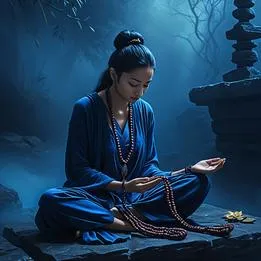
Prayer Beads represent focused intention and spiritual discipline, serving as a tactile tool for meditation and prayer, enhancing spirituality across various cultures.

Common Appearances & Contexts

Context Emotion Interpretation
Using prayer beads during meditation Calm Indicates a deep sense of peace and groundedness.
Receiving prayer beads as a gift Gratitude Represents acknowledgment and respect for one's spiritual journey.
Counting beads during a stressful moment Focus Symbolizes finding clarity and centering in chaotic times.
Creating one's own prayer beads Empowerment Represents personal investment in one's spiritual practice.
Discussing the significance of prayer beads with others Connection Suggests a desire for shared spiritual experiences.
Losing prayer beads during a ritual Anxiety Indicates fear of losing spiritual connection or grounding.
Listening to the sound of beads during prayer Tranquility Enhances the meditative experience through sensory engagement.
Seeing prayer beads displayed in a sacred place Reverence Symbolizes the sacredness of the practice.
Challenging oneself to use beads daily Determination Indicates commitment to a spiritual discipline.
Sharing prayer beads with a loved one Joy Reflects the joy of sharing one's spiritual path with someone else.

Interpretive Themes

Cultural Lenses

Global/Universal Perspective

Full Hub →

Universal symbol of devotion and meditation. Used across religions (rosaries, malas, tasbih) for counting prayers, focusing intention, and connecting with the divine. Represents spiritual discipline and repetitive ritual practice.

Jungian Perspective

Full Hub →

Symbol of individuation and connection to the Self. Represents the cyclical nature of psychological development, with beads as individual aspects of psyche integrated through repetitive ritual. Mandala-like structure for wholeness.

Freudian Perspective

Full Hub →

Phallic symbol representing repressed sexual energy sublimated into religious devotion. The repetitive handling suggests obsessive-compulsive behavior, with beads as substitute objects for unconscious desires and childhood fixations.

Gestalt Perspective

Full Hub →

Represents the whole (string) and parts (beads) relationship. Each bead as individual experience or memory, connected in a meaningful sequence. The act of touching beads grounds awareness in present moment sensations.

Cognitive Perspective

Full Hub →

Mnemonic device for maintaining focus during meditation. The tactile feedback creates neural pathways linking physical sensation to spiritual concepts. Represents cognitive scaffolding for complex religious or philosophical thought patterns.

Evolutionary Perspective

Full Hub →

Extension of primitive counting/tallying behaviors applied to ritual. Represents evolved capacity for abstract thought and symbolic representation. The repetitive motion triggers calming responses similar to grooming behaviors in primates.

South Asian Perspective

Full Hub →

Mala beads in Hinduism/Buddhism with 108 beads representing cosmic principles. Used in japa meditation to repeat mantras. Rudraksha seeds believed to have spiritual properties. Historical use dates to Vedic period.

Middle Eastern Perspective

Full Hub →

Islamic misbaha/tasbih with 99 beads for Allah's names. Used in dhikr (remembrance of God). Originated from Prophet Muhammad using date stones. Emotional comfort object during stress, with specific prayer sequences.

European Perspective

Full Hub →

Catholic rosary with 59 beads for Marian devotion. Developed from medieval prayer ropes. Used in contemplative prayer since 13th century. Emotional associations with protection, comfort during crises, and family tradition.

East Asian Perspective

Full Hub →

Buddhist juzu beads in Japan (108 beads). Used in nenbutsu practice. Materials vary by sect (wood, crystal). Modern use extends beyond religion to stress relief and mindfulness practices in secular contexts.

African Perspective

Full Hub →

Adapted Islamic tasbih across North/West Africa with local materials (amber, wood). Combined with indigenous spiritual practices. Used in Sufi traditions for rhythmic dhikr ceremonies. Symbol of Islamic identity and spiritual protection.

Modern Western Perspective

Full Hub →

Secular mindfulness tool divorced from religious context. Used in stress reduction, anxiety management. Commercialized as fashion accessory. Represents search for meaning in post-religious society, blending Eastern and Western meditation practices.

AI-Powered

Interpret Your Full Dream

Beyond this symbol, every dream carries a unique story. Share your dream for a personalized AI-powered interpretation.