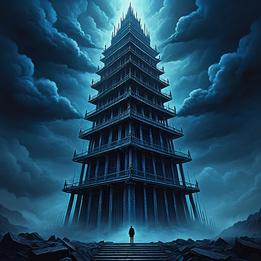
Power Structure
A hierarchical system of authority, control, and influence within a society, organization, or relationship, often representing one's position and agency within it.
Power Structure Dream Meaning
A hierarchical system of authority, control, and influence within a society, organization, or relationship, often representing one's position and agency within it.
Interpretive Themes
Mythological Resonance
The Labyrinth of Minos
GreekDaedalus built an intricate maze to contain the Minotaur, representing both the genius of structured design and the prison of hierarchical control.
Ma'at
EgyptianThe goddess who personified cosmic order, truth, and justice, representing the divine balance that all earthly power structures should mirror.
Cultural Lenses
Jungian Perspective
View Context →Represents the archetype of the ruler or tyrant, symbolizing the dreamer's relationship with authority figures or their own inner governance, often pointing to the need for integrating shadow aspects of power.
Freudian Perspective
View Context →Symbolizes the superego's imposition of societal rules and the id's primal desires, reflecting childhood experiences with parental authority and unresolved Oedipal conflicts over control and submission.
Gestalt Perspective
View Context →Represents projected parts of the self—the controller and the controlled—inviting the dreamer to reclaim disowned aspects of power or vulnerability to achieve wholeness and self-acceptance.
Cognitive Perspective
View Context →Manifests from waking-life schemas about social hierarchies, processing memories of power interactions to problem-solve or rehearse responses to authority, dominance, or subordination scenarios.
Evolutionary Perspective
View Context →Rooted in survival instincts for social ranking and coalition-building, this symbol processes threats or opportunities within group dynamics, optimizing strategies for status, alliance, or resource access.
East Asian Perspective
View Context →Often reflects Confucian values of harmony and hierarchical duty, where dreams may emphasize one's role within family or society, balancing respect for authority with personal cultivation and moral integrity.
South Asian Perspective
View Context →Influenced by caste and dharma, it symbolizes cosmic order (rita) and social duty; dreams may critique or reinforce hierarchical systems, linking individual karma to societal position.
Middle Eastern Perspective
View Context →Tied to historical caliphates and tribal structures, it represents divine authority and communal loyalty; modern dreams often grapple with traditional patriarchy versus contemporary egalitarian ideals.
European Perspective
View Context →Draws from feudal and monarchical histories, symbolizing class struggle and institutional power; dreams may explore Enlightenment ideals of liberty against entrenched aristocratic or bureaucratic systems.
African Perspective
View Context →Reflects communal leadership models like elder councils or chiefdoms, emphasizing collective well-being over individualism; dreams often balance ancestral authority with modern democratic aspirations.
North American Perspective
View Context →Informed by colonial history and democratic ideals, it symbolizes meritocracy and individualism; dreams frequently critique systemic inequalities or celebrate self-made success within competitive structures.
Latin American Perspective
View Context →Merges indigenous hierarchies with colonial legacies and revolutionary movements; dreams often address social justice, machismo, and the tension between authoritarianism and grassroots empowerment.
Historical Authorities
Want a deeper analysis?
Get a personalized interpretation of your entire dream including this symbol.
Interpret My DreamThe Oracle's Prediction
Combine multiple symbolsA significant shift in your position within an organizational hierarchy.
Timeframe
Seasonal (~3 Months)
Intensity
Deep
A confrontation about boundaries and influence dynamics.
Timeframe
Lunation (~29 Days)
Intensity
Deep
Common Appearances & Contexts
| Context | Emotion | Interpretation |
|---|---|---|
| Context Climbing a ladder | Emotion Determination | Interpretation Ambition for advancement. |
| Context Crumbling building | Emotion Fear | Interpretation System collapse anxiety. |
| Context Being trapped | Emotion Panic | Interpretation Feeling powerless within. |
| Context Giving orders | Emotion Confidence | Interpretation Exercising authority. |
| Context Rebelling against rules | Emotion Defiance | Interpretation Challenging constraints. |
| Context Observing hierarchy | Emotion Awe | Interpretation Respect for order. |
| Context Being judged unfairly | Emotion Resentment | Interpretation Perceived injustice. |
| Context Leading a group | Emotion Pride | Interpretation Accepting responsibility. |
| Context Following blindly | Emotion Shame | Interpretation Lack of autonomy. |
| Context Negotiating power | Emotion Anxiety | Interpretation Navigating dynamics. |
| Context Destroying a throne | Emotion Liberation | Interpretation Overthrowing authority. |
| Context Building a pyramid | Emotion Purpose | Interpretation Creating order. |
Interpret Your Full Dream
Beyond this symbol, every dream carries a unique story. Share your dream for a personalized AI-powered interpretation.