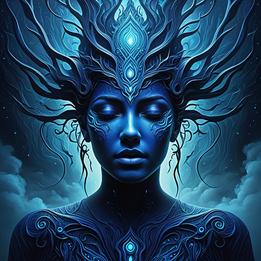
Phasing
A dream symbol representing the sensation of shifting between states of existence, consciousness, or identity, often linked to transformation and instability.
Phasing Dream Meaning
A dream symbol representing the sensation of shifting between states of existence, consciousness, or identity, often linked to transformation and instability.
Interpretive Themes
Mythological Resonance
Proteus
GreekThe shape-shifting sea god who could phase between forms—lion, serpent, water, tree—but would reveal prophecies if held fast through all transformations.
Loki
NorseThe trickster god who frequently phased between forms—salmon, mare, old woman—representing both creative adaptation and dangerous instability.
Cultural Lenses
Jungian Perspective
View Context →Symbolizes the individuation process, where the psyche phases between conscious and unconscious elements, integrating archetypes like the Shadow for wholeness, reflecting modern identity exploration.
Freudian Perspective
View Context →Represents phasing between id, ego, and superego, often linked to repressed desires or childhood conflicts manifesting as instability in adult life, with modern ties to anxiety.
Gestalt Perspective
View Context →Indicates unfinished business or fragmented self-perception, where phasing highlights parts of the personality seeking integration, relevant in therapy for holistic healing in contemporary settings.
Cognitive Perspective
View Context →Arises from brain processing glitches during sleep, reflecting memory consolidation or problem-solving attempts, with modern parallels to information overload and cognitive flexibility demands.
Evolutionary Perspective
View Context →May stem from ancestral survival mechanisms, such as alertness to environmental shifts or predator evasion, adapted today for navigating social and technological changes.
Global/Universal Perspective
View Context →Common across cultures as a metaphor for life transitions (e.g., birth, death), often ritualized in rites of passage, now symbolizing global connectivity and change.
East Asian Perspective
View Context →Linked to Taoist concepts of yin-yang balance and Buddhist impermanence, historically seen in meditation states, modernly reflecting societal harmony amidst rapid industrialization.
South Asian Perspective
View Context →Associated with Hindu reincarnation and yogic practices of transcending maya (illusion), historically in spiritual texts, now symbolizing identity in diaspora communities.
Middle Eastern Perspective
View Context →Tied to Islamic Sufi mysticism and phases of spiritual ascent (mi'raj), historically in poetry, modernly representing political and personal transformations in the region.
European Perspective
View Context →Rooted in Celtic and Norse mythology of shape-shifting, historically in folklore, now reflects postmodern identity fluidity and existential questioning in Western thought.
African Perspective
View Context →Connected to ancestral spirit communication and ritual trances, historically in oral traditions, modernly symbolizes resilience and adaptation in post-colonial contexts.
North American Perspective
View Context →Influenced by Indigenous beliefs in dreamwalking and pioneer adaptability, historically in creation stories, now represents cultural blending and digital identity shifts.
Historical Authorities
Want a deeper analysis?
Get a personalized interpretation of your entire dream including this symbol.
Interpret My DreamThe Oracle's Prediction
Combine multiple symbolsA significant personal transformation is occurring at multiple levels of your being.
Timeframe
Seasonal (~3 Months)
Intensity
Deep
Existing relationships will undergo redefinition or transformation.
Timeframe
Lunation (~29 Days)
Intensity
Deep
Common Appearances & Contexts
| Context | Emotion | Interpretation |
|---|---|---|
| Context Fading in/out | Emotion Fear | Interpretation Loss of control. |
| Context Shifting forms | Emotion Confusion | Interpretation Identity crisis. |
| Context Time skipping | Emotion Anxiety | Interpretation Unprepared for change. |
| Context Ghostly presence | Emotion Awe | Interpretation Spiritual connection. |
| Context Melting into objects | Emotion Panic | Interpretation Boundary dissolution. |
| Context Voice modulation | Emotion Disorientation | Interpretation Communication breakdown. |
| Context Partial invisibility | Emotion Isolation | Interpretation Social detachment. |
| Context Reality glitching | Emotion Shock | Interpretation System failure. |
| Context Body vibrating | Emotion Excitement | Interpretation Energy surge. |
| Context Memory overlapping | Emotion Nostalgia | Interpretation Past integration. |
| Context Space warping | Emotion Wonder | Interpretation New perspectives. |
| Context Consciousness splitting | Emotion Overwhelm | Interpretation Multitasking stress. |
Interpret Your Full Dream
Beyond this symbol, every dream carries a unique story. Share your dream for a personalized AI-powered interpretation.